
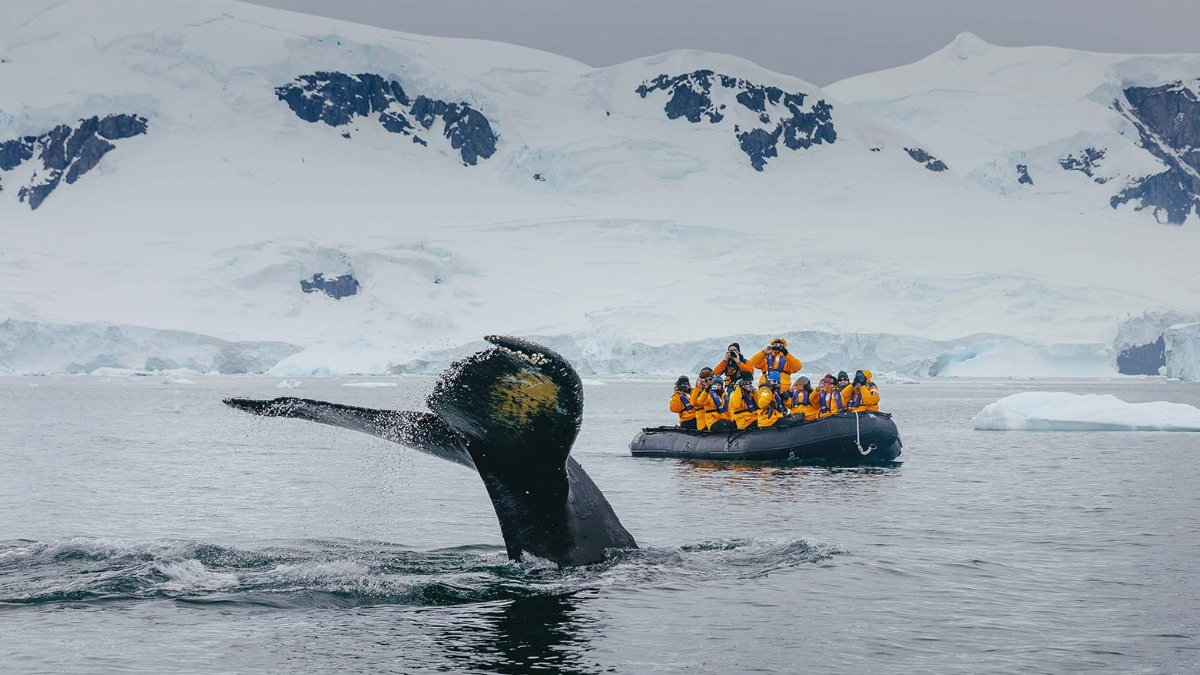
Sustainable Antarctica travel isn’t a marketing phrase here — it’s a set of binding, specific rules that shape what your ship can do, where it can go, and how close you can stand to a penguin. Most travelers only discover this once they’re aboard and the expedition team starts explaining why everyone is about to vacuum their coat pockets.
It’s worth understanding before you book, because these rules also determine which ships can take you where, and that affects the trip you’ll actually have.
What IAATO Is and Why It Exists
The International Association of Antarctica Tour Operators was founded in 1991 by seven operators who recognized something unusual: no government owns Antarctica, so nobody was going to regulate tourism there on their behalf. They decided to do it themselves.
IAATO now covers effectively every reputable operator sailing the continent. Its members work within the Antarctic Treaty System, adhering to visitor guidelines agreed at Antarctic Treaty Consultative Meetings — the most recent update to those general guidelines came in 2025 — alongside IAATO’s own operational standards, which in several areas go further than the Treaty requires.
The scale this governs is smaller than people expect. Around 118,500 visitors travelled to Antarctica in the 2024–25 season, down slightly on the year before, and roughly 98% of those voyages operate in the Peninsula region during the austral summer. For comparison, that’s fewer people across an entire continent in a whole season than visit a single popular European museum in a fortnight.
Sustainable Antarctica Travel: The Rules That Shape Your Trip
Four rules do most of the work, and all four directly affect your voyage.
Ships carrying more than 500 passengers cannot land anyone.
They can sail Antarctic waters, and passengers can watch from the deck, but nobody goes ashore. If setting foot on the continent matters to you, check your vessel’s capacity before booking — this catches people out every season. Vessels carrying 201 to 500 passengers face additional restrictions on where and when they can land.
No more than 100 passengers ashore at any one site at any one time.
This is why a 90-guest expedition ship lands everyone together while a 200-guest ship runs landings in rotation, and why smaller vessels generally mean more time on land per person.
Only one ship may visit a site at a time.
Operators coordinate schedules between themselves to make this work, which is a genuinely unusual piece of industry cooperation — competitors sharing a booking system so that nobody arrives at Neko Harbor to find another ship already there.
A guide-to-passenger ratio of at least 1:20 on every landing.
More at sites where the guidelines require it.
Those last two explain something travelers often notice: the landing sites feel quiet. Neko Harbor took 220 landing calls across the whole 2024–25 season, Whalers Bay 194 — but because of the sequencing rules, you’ll rarely see evidence of anyone else having been there.
Wildlife Guidelines: How Close Is Too Close
The baseline is five meters from wildlife on land, with greater distances where species or site guidelines require them. Fur seals get a wider berth — 15 to 25 meters where practicable, because they’re territorial, fast, and considerably less relaxed about your presence than they look.
Here’s the part that surprises people: the rule governs your behavior, not the animals’. You maintain distance. If a curious gentoo decides to waddle over and inspect your boots, you stand still and let it. Penguins in Antarctica have no land predators and no reason to fear you, and plenty of them are openly nosy. The guides’ instruction is always the same — don’t back away suddenly, don’t reach out, just let it happen.
Drones are prohibited near wildlife, which disappoints a certain kind of photographer every season but prevents a genuine disturbance problem.
Biosecurity: The Vacuum and the Boot Wash
Before your first landing, you’ll be asked to vacuum your outer clothing and bags and check Velcro, pockets, cuffs, and boot treads for seeds, soil, and plant material. Going ashore and returning, you’ll scrub your boots in disinfectant.
It feels fastidious the first time. By the third landing, nobody needs reminding, because the reasoning has landed: a single seed carried in a boot tread could establish a non-native species on a continent that has almost none. Antarctica’s ecosystems have no defences against introduced plants, and no way to remove them once they arrive.
Cleaning between sites matters for the same reason — avian influenza protocols in recent seasons have made this considerably more rigorous than it once was.
Why Your Ship Choice Is a Sustainability Decision
Because the rules are tied to vessel capacity, the ship you choose determines your environmental footprint as directly as it determines your comfort.
Smaller expedition vessels land everyone at once, spend longer ashore, and reach sites that larger ships simply cannot access. Larger ships bring more passengers to the same small set of accessible landing sites, which is exactly the pressure the guidelines are designed to manage.
Operators also differ considerably in how far they go beyond the minimum. Hybrid propulsion, waste-to-energy systems, onboard science programs and research partnerships vary a great deal between vessels — the kind of detail that sits on individual fleet pages rather than in any general guide, and worth reading before you commit.
What Sustainable Antarctica Travel Looks Like in Practice
For you, it mostly looks like this: a slightly longer briefing on day one, a vacuum session before the first landing, boot washes at the gangway, and guides who will ask you to move if you’ve drifted too close to a colony.
None of it diminishes the experience. If anything, it sharpens it, because the rules are the reason the place still looks the way it does. Standing on a beach with ten thousand penguins and no other ship in sight is not an accident of remoteness — it’s the product of an industry that agreed, three decades ago, to limit itself.
Choosing an IAATO member operator is the single most meaningful decision you make here, and every operator we work with is one.
Ready to Plan a Responsible Antarctic Voyage?
Expedition cruising to Antarctica carries a real responsibility, and the operators who take it seriously are the ones worth sailing with. If you’d like help finding a vessel whose sustainability standards match your own — or simply understanding what a particular ship can and can’t do under the guidelines — message us on WhatsApp, send an enquiry or drop us an email. After 25 years working across these operators, we know which ones go furthest.