
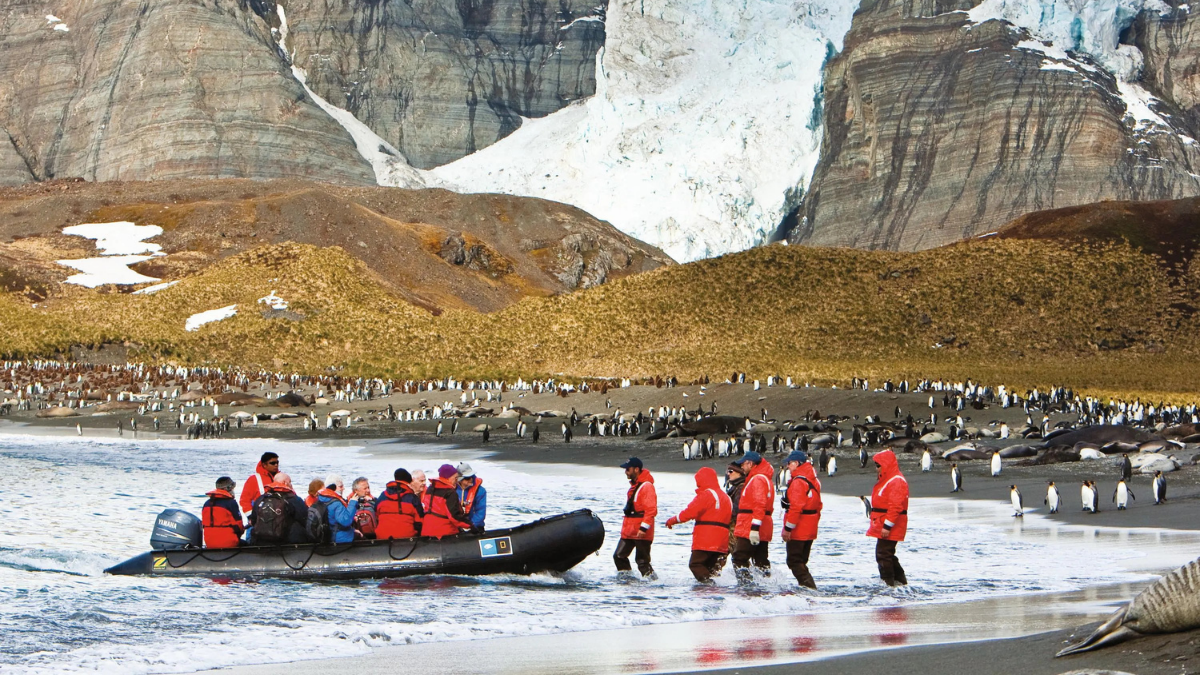
If the Antarctic Peninsula is Antarctica’s front door, South Georgia is arguably the planet’s greatest wildlife spectacle. This remote sub-Antarctic island, roughly two days’ sailing from the Falklands, hosts wildlife in numbers that are genuinely difficult to comprehend until you’ve stood on its beaches yourself — hundreds of thousands of king penguins, enormous elephant seal colonies, and albatross nesting sites so dense they blanket entire hillsides.
Add a deep connection to polar exploration history, and South Georgia earns its reputation as one of the most extraordinary destinations included in any expedition itinerary.
This guide covers everything you need to know about South Georgia — its essential wildlife sites, its history, when to visit, and how it typically fits into a broader Antarctic voyage.
Why South Georgia Is Considered the World’s Greatest Wildlife Spectacle
The Peninsula spreads its wildlife across many smaller colonies. South Georgia concentrates it, and the difference is the entire point.
The island sits directly in the path of the Southern Ocean’s nutrient-rich currents, which means krill and fish in enormous quantities, which in turn supports penguins, seals, and seabirds in numbers that would be unsustainable almost anywhere else. The scale isn’t a marketing claim. It’s a consequence of where the island happens to sit.
Add almost no native land predators, and the wildlife here has never learned to be wary of anything walking upright. Fur seals will come and have a look at you. King penguins will stand close enough to inspect your boots. People get emotional on these beaches fairly regularly, and nobody finds it strange.
Salisbury Plain: The King Penguin Capital
Salisbury Plain defines the island. Well over 100,000 breeding pairs of king penguins stand at the edge of that, one of the few genuine wildlife experiences left that nothing prepares you for.
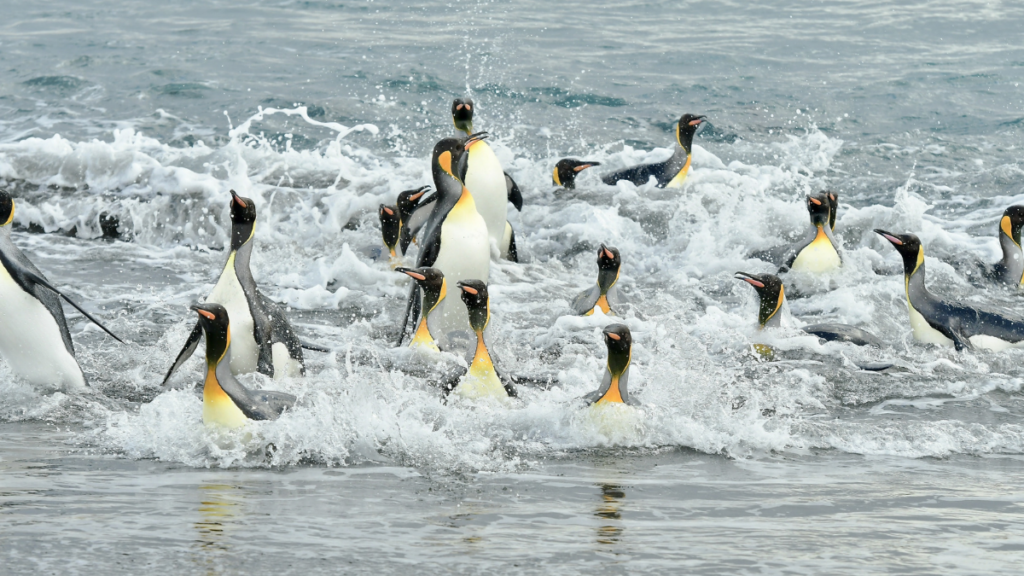
Kings are striking birds — tall, sleek, with vivid orange-and-black head markings and a bearing that borders on smug. Their breeding cycle runs over a year, so a colony contains chicks at every stage at once. Including the “oakum boys”: enormous, brown, fluffy things that look nothing like their parents. Early explorers assumed they were a different species entirely, which is understandable once you’ve seen a chick standing taller than the adult beside it, wearing what looks like a badly fitted fur coat.
The noise is something else too — a constant, trumpeting din that carries a long way down the beach. Fur seals and elephant seals share the shoreline, so it’s never just a penguin stop.
Grytviken: Whaling History and Shackleton’s Grave
Grytviken holds South Georgia’s history. Established in 1904, it was once among the busiest whaling stations in the Southern Ocean, and what remains — rusted machinery, abandoned buildings, and a small, genuinely excellent museum — tells the story of an industry that shaped the island and nearly emptied these waters.
It’s also where Sir Ernest Shackleton is buried, having died here in 1922, setting out on another expedition. Many ships mark the stop with a graveside toast, and it’s one of those traditions that sounds slightly performative until you’re standing there doing it.
Shackleton’s connection to the island goes deeper. In 1916, he and five companions arrived here after an open-boat journey from Elephant Island, then crossed South Georgia’s mountainous interior on foot — unmapped, underequipped, in conditions that should have killed them — to reach the whaling station and raise the alarm for the crew still stranded after Endurance was crushed. Standing in Grytviken with the mountains behind you makes the scale of that crossing considerably harder to shrug off.
Wildlife Beyond Salisbury Plain
While Salisbury Plain is the headline stop, South Georgia’s wildlife extends across numerous other sites typically visited during a voyage:
- Elephant seals haul out on beaches across the island in enormous numbers, particularly during the breeding season, with dominant males engaging in dramatic, thunderous battles for territory.
- Fur seals are abundant along the coastline, having recovered dramatically from near-extinction due to historic sealing.
- Albatross colonies, including wandering albatross, nest on the island’s hillsides in numbers dense enough to blanket entire slopes — a genuinely rare sight, since these birds are increasingly threatened across much of their range elsewhere.
- Macaroni penguins, gentoo penguins, and various smaller seabird species round out an already extraordinary wildlife list.
Best Time to Visit South Georgia
South Georgia is typically visited between October and March, aligning with the broader Antarctic and sub-Antarctic expedition season, with October through January generally considered the peak window for wildlife activity.
October and November bring the start of the breeding season — elephant seals arrive to give birth and battle for territory, and albatross begin their courtship displays.
December and January see king penguin chicks at various stages of development and fur seal pups appearing on the beaches in large numbers.
By February and March, wildlife activity is winding down somewhat, though king penguins remain visible year-round given their unusually long breeding cycle, and this later window can offer a quieter, less crowded experience.
How South Georgia Fits Into Your Itinerary
South Georgia is rarely visited on its own — it’s most commonly included as part of a longer expedition itinerary that also covers the Falkland Islands and the Antarctic Peninsula, given its position roughly between the two.
These voyages run two to three weeks rather than the standard 10 to 12 days, because the distances are real — South Georgia is about 800 miles east of the Falklands, and a similar distance again from the Peninsula. That’s a lot of sailing.
What you get for it is the fullest version of the trip: the sub-Antarctic and the Antarctic in one voyage, with South Georgia as the part most people end up talking about afterwards. If time allows, it’s hard to argue against.
South Georgia Island Guide: At a Glance
| Site/Feature | Known For |
| Salisbury Plain | 100,000+ breeding pairs of king penguins |
| Grytviken | Whaling history, Shackleton’s grave and museum |
| Various beaches | Elephant seals, fur seals |
| Island hillsides | Wandering albatross colonies |
| Best time to visit | October–January for peak wildlife activity |
| Typical itinerary length | 2–3 weeks, combined with the Falklands and Antarctica |
Ready to Include South Georgia in Your Expedition?
South Georgia is, for many travelers who’ve experienced it, the single most unforgettable stop on an entire Antarctic voyage — the scale of its wildlife and the weight of its history combine into something genuinely hard to put into words beforehand.
If you’d like help planning an itinerary that includes South Georgia alongside the Falklands and Antarctica, get in touch with us — we’ve sailed these waters ourselves and are always happy to help you build the right voyage.