
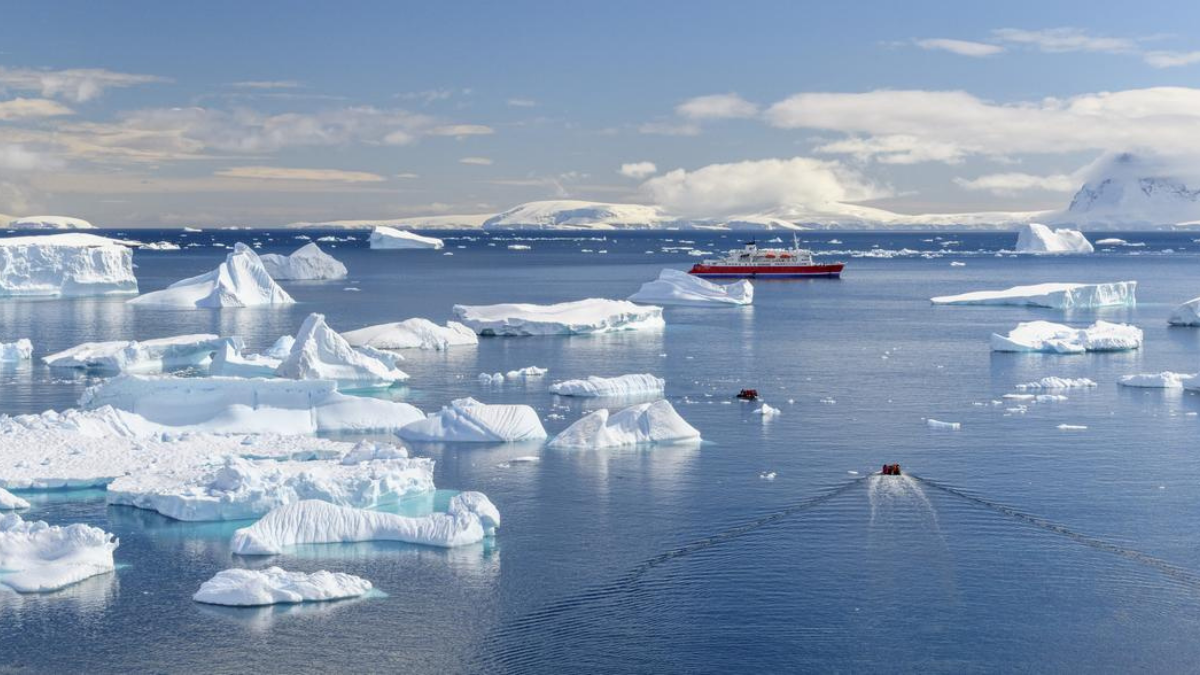
A budget Antarctica cruise sounds like a contradiction. It isn’t — but getting there takes flexibility rather than luck, and it helps to understand how expedition pricing actually works behind the scenes.
This is familiar ground for us. Antarctica Travels was founded in Ushuaia in 2000, when our founder Alicia became the first independent agent there selling Antarctic voyages, largely because travelers turning up hoping to find a berth weren’t being looked after properly. Twenty-five years on, helping flexible travelers find genuine value is still a meaningful part of what we do.
Why a Budget Antarctica Cruise Is More Achievable Than You Think
Expedition ships sail with a fixed number of cabins and a fixed departure date. Those two facts drive everything below.
An empty cabin earns nothing, so operators would rather fill it at a reduced fare than sail with it closed. Shoulder-season departures are harder to fill than peak ones. Cabins designed for three or four people cost less per person than cabins for two. And agents with long operator relationships see options that never reach a public website.
None of these are tricks. They’re the ordinary mechanics of how the industry works, and knowing them is most of the advantage.
Remaining Inventory: How Late Availability Pricing Works
As a departure date approaches, operators look to fill whatever cabins are left. These become what the industry calls remaining inventory opportunities, or flash sales — sometimes labeled last-minute fares, though that term undersells what’s actually going on.
Timing varies by voyage, but most of this activity happens within 60 days of departure, and the sharpest offers often appear in the final month. Discounts typically run between 30% and 50% off the published fare.
Some of these are Cruise Only fares, sometimes called pier sales. These exclude elements a standard booking would include — the pre-voyage hotel night, or the charter flight to the embarkation port from your city of origin. The headline figure looks lower because you’re buying less, so it’s worth checking exactly what’s covered before comparing it against anything else.
What you give up.
Once you’ve booked, nothing about the voyage itself changes: the ship sails, your cabin is yours, and your safety and inclusions are identical to every other passenger aboard. What’s constrained is choice. These fares usually apply to specific cabin categories, sometimes to particular decks, so you take what’s available rather than selecting it.
Accessing these fares also often involves signing a confidentiality agreement about the price you paid, which prevents you from discussing it with other passengers on the voyage. That’s standard practice, not a red flag.
This route suits flexible travelers — people who can move on short notice, who aren’t tied to a specific cabin, and who’d rather sail than wait. It works particularly well for travelers already in South America, or anyone traveling in Argentina or Chile who’s in a position to act quickly.
Shoulder Season Savings
November and March sit either side of the peak December-to-February window, and fares reflect that. The difference typically runs 20% to 25%, widening to around 35% as dates get closer and operators work to fill remaining space.
You’re not getting a lesser Antarctica for that. November brings pristine, untracked landing sites, penguin courtship at its most active and the fewest other ships you’ll encounter all season. March delivers the best light of the year, excellent whale activity and fledging chicks, with the season winding down around you.
What shifts is the specific wildlife on offer. November is too early for chicks; March is too late. If one particular thing is the reason you’re going, check it against the calendar before booking on price alone — our month-by-month breakdown covers what each part of the season actually delivers.
Triple and Quad Cabin Sharing
Cabins built for three or four people cost meaningfully less per person than twin cabins. A triple typically runs around 25% below the double-occupancy fare; a quad somewhere between 35% and 40% below.
Two things to know. Few operators offer them at all, and fewer still offer quads, so availability is genuinely limited. And because the value is obvious, these cabins are usually among the first to go.
The important caveat: the cabin has to be booked in full from the start. Very few operators match individual passengers into shared cabins, so being willing to share isn’t enough on its own. This works if you’re a group of three or four booking together — friends, a family, siblings — and it works well. It isn’t a route for solo travelers hoping to be paired up.
Solo Travelers: Single Supplements and How to Reduce Them
Solo travelers face a structural problem: cabins are priced for two, so one person occupying a cabin typically pays a single supplement of around 1.75 times the double-occupancy fare.
There are two practical ways around it. Some ships carry dedicated single cabins, priced without a supplement — limited in number, and quick to book out. More commonly, private offers arranged through an agent can bring the supplement down to around 1.25 times the double fare, and occasionally remove it altogether.
That second route is worth knowing about, because it isn’t something you’ll find by searching. These are negotiated rates rather than published ones.
Working With a Specialist Agent
This is where the difference is largest, and it’s worth being specific rather than vague about it.
As authorized agents with more than 25 years of experience across the main operators and ships in expedition cruising, we see fares that aren’t published publicly. Through direct conversation with operators we can also build options that don’t exist as advertised packages — additional inclusions, adjusted arrangements, opportunities that appear nowhere on the operator’s own website.
There’s also a simpler advantage. Looking across every voyage available for a given date or date range means we can identify the option that genuinely fits your timeframe, priorities and budget, rather than the one that happens to be in front of you.
One commitment worth stating plainly: Antarctica Travels will never sell a voyage above the operator’s published price, and frequently has access to fares below it.
Budget Antarctica Cruise: Realistic Price Expectations
Here’s a grounded example rather than a vague range. For a 9-night, 10-day Antarctic Peninsula voyage, remaining inventory offers appearing around 30 days before embarkation can start from roughly USD 6,500 per person in double occupancy, depending on the ship and cabin category.
That figure is the voyage. A realistic total budget needs a few additions:
| Cost | Approximate | Notes |
|---|---|---|
| Voyage (9 nights, double occupancy) | From USD 6,500 pp | Remaining inventory fare, ~30 days out |
| Flight, Buenos Aires to Ushuaia | ~USD 600 pp return | Required unless included in your fare |
| Pre-voyage accommodation | 1 night minimum | Always arrive a day before departure |
| Travel insurance | Varies | Mandatory, with medical evacuation cover |
The savings levers, for reference:
| Lever | Typical saving |
|---|---|
| Remaining inventory / flash sale | 30–50% |
| Shoulder season (November, March) | 20–25%, up to 35% closer in |
| Triple cabin vs. double | ~25% per person |
| Quad cabin vs. double | 35–40% per person |
| Reduced single supplement via agent | 1.25x vs. 1.75x standard |
Arriving a day early isn’t optional padding, incidentally. Ushuaia has limited daily flights, and weather at the bottom of the continent does what it likes. Ships don’t wait.
Ready to Find Your Voyage?
Expedition cruising to Antarctica will never be cheap, but the gap between the published fare and what a flexible traveler actually pays is wider than most people realize.
If you can move on dates, share a cabin, or travel either side of peak season, we can usually find something that works. Message us on WhatsApp, send an enquiry or drop us an email, and tell us your timeframe and what matters most — we’ll tell you honestly what’s achievable.