
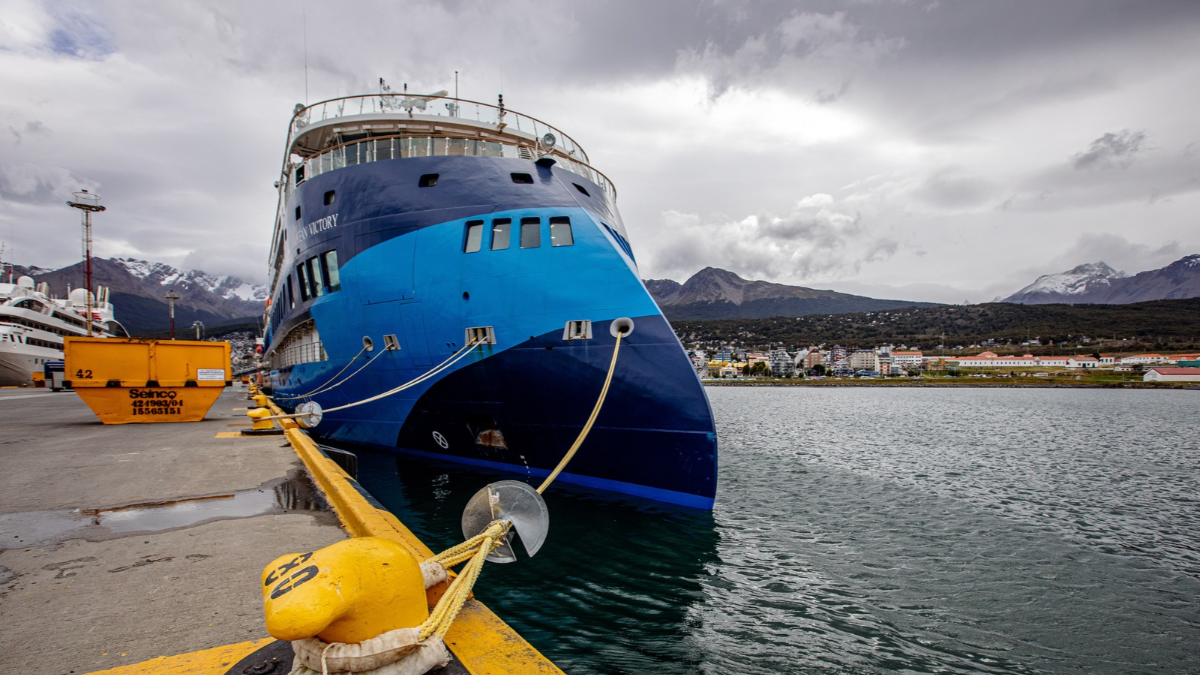
Ushuaia is where almost every Antarctic voyage begins, and getting there is a proper journey in its own right. We’ve been sending travelers through this port for 25 years — from the UK, from both American coasts, from more or less everywhere — and the logistics are worth taking seriously rather than booking in a hurry the week before.
As the world’s southernmost city and the gateway to well over 90% of Antarctic voyages, getting here is a journey in itself, and it’s worth planning properly rather than leaving it to the last minute.
This guide covers the best routes from the UK, Europe, and North America; how much buffer time to build in; where to stay once you arrive; and what embarkation day actually looks like.
Why Ushuaia Is Antarctica’s Gateway
Ushuaia sits at the southern tip of Argentina, on Tierra del Fuego, making it the closest significant port to the Antarctic Peninsula anywhere on Earth. From here, the Drake crossing takes about two days. From anywhere else, it takes considerably longer — which is why the overwhelming majority of expedition ships leave from this one small town rather than Chile, New Zealand, or South Africa.
That geography has built an entire local infrastructure around polar travel: a working cruise port, hotels used to expedition travelers and their enormous bags, and a town that understands exactly what you need in the days before you sail.
It’s also where this company started. Back in 2000, our founder, Alicia, became the first independent agent in Ushuaia selling Antarctic voyages, after noticing that travelers turning up looking for a last-minute berth weren’t being looked after properly. Twenty-five years on, we’re still sending people south from this same port.
Getting to Ushuaia from the UK and Europe
There are no direct flights from the UK or Europe to Ushuaia, so your journey will involve at least one, and usually two, connections.
The most common route is to fly into Buenos Aires (typically via a major European hub), then take a domestic connecting flight south to Ushuaia. Buenos Aires has two airports—international flights typically arrive at Ezeiza (EZE), while the domestic flight to Ushuaia usually departs from Aeroparque Jorge Newbery (AEP) — so build in time and, if needed, arrange transport between the two airports rather than assuming they’re the same location.
Depending on your route and connection times, the total journey from the UK or mainland Europe typically takes 20 to 30 hours door to door, including layovers.
Getting to Ushuaia from North America
From North America, most routes also connect through Buenos Aires, though the specific gateway city depends on where you’re departing from. East Coast travelers often find direct or near-direct flights to Buenos Aires from major hubs, while West Coast travelers may find better connections routing through a Central or South American hub before continuing on.
As with the European routes, plan for a transfer between Buenos Aires’s two airports if your international and domestic flights don’t align, and expect a total journey time in a similar range — generally 18 to 26 hours depending on your starting point and connections.
Why You Should Build in Buffer Days
This is, without exaggeration, one of the most important pieces of practical advice we can offer: build at least one full buffer day into your schedule before your ship departs.
Ushuaia is served by a limited number of flights per day, and South American domestic aviation, while generally reliable, is not immune to weather delays, especially given Ushuaia’s position at the continent’s tip. If your connecting flight is delayed or canceled and you’re on a tight same-day connection, you risk missing your ship entirely, since departures wait for no one. Most experienced polar travelers, and virtually every specialist agent, recommend arriving at least a day, and ideally two, before your scheduled departure.
This buffer also gives you a genuine, if brief, opportunity to explore Ushuaia itself before you sail — more on that below.
Where to Stay in Ushuaia
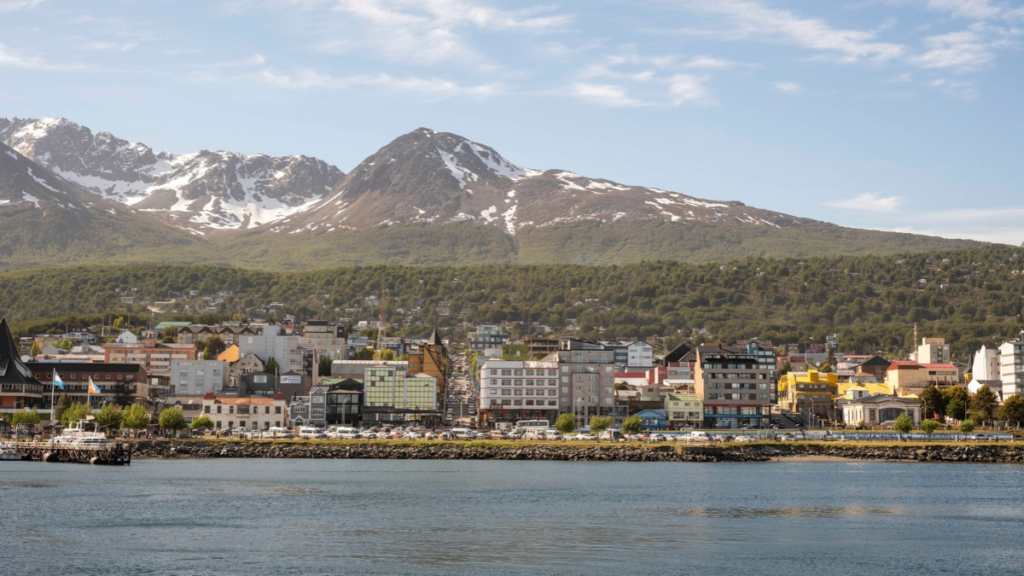
Ushuaia offers a range of accommodation for travelers passing through en route to Antarctica, from comfortable mid-range hotels to higher-end options with views over the Beagle Channel. Given the town’s relatively small size, most accommodation sits within easy walking distance or a short taxi ride from the port, which matters on embarkation day when you’ll need to make your way to the ship with luggage in tow.
Since Ushuaia sees significant traffic during the Antarctic season (November through March), book accommodation well in advance rather than assuming availability closer to your travel dates, especially during peak season.
What to Do With Your Buffer Day in Ushuaia
If you’ve built in an extra day or two, Ushuaia itself is well worth exploring rather than treating purely as a layover. The town sits at the edge of Tierra del Fuego National Park, offering short hikes with dramatic mountain and coastal scenery, and the Beagle Channel offers its own wildlife-watching boat excursions, including sightings of sea lions, cormorants, and occasionally penguins, well before you even board your Antarctic ship. Ushuaia’s compact downtown also has a genuine local character worth a wander, along with restaurants specializing in local Patagonian lamb and king crab.
Embarkation Day: What to Expect
On the day of departure, most operators require passengers to check in at a designated point in town, often a hotel lobby or the operator’s local office, before being transferred to the port for boarding. Luggage handling, final documentation checks, and a boarding briefing typically happen at this stage, so confirm your specific check-in time and location with your operator well ahead of time, since this varies by ship and operator.
Once aboard, most ships spend their first hours sailing the Beagle Channel before entering the open waters of the Drake Passage overnight, giving you a gentle, scenic start to the voyage before the crossing itself begins.
Ushuaia Travel at a Glance
| Consideration | Detail |
| Typical route from UK/Europe | Fly to Buenos Aires, then connect domestically to Ushuaia |
| Typical route from North America | Fly to Buenos Aires (via hub depending on origin), then connect |
| Total journey time | Roughly 18–30 hours depending on origin and connections |
| Recommended buffer | At least 1–2 full days before departure |
| Key airports in Buenos Aires | Ezeiza (EZE) international, Aeroparque (AEP) domestic |
| What to do with buffer time | Tierra del Fuego National Park, Beagle Channel boat trips |
Ready to Plan Your Journey South?
Getting to Ushuaia is genuinely part of the adventure of an Antarctic expedition, and after 25 years of watching travelers arrive from every part of the world, we know exactly what makes the journey smoother.
If you’d like help planning your flights, buffer days, or pre-cruise stay in Ushuaia, get in touch with us — as a team based right here, we’re always happy to help you get the logistics right before you even set sail.