
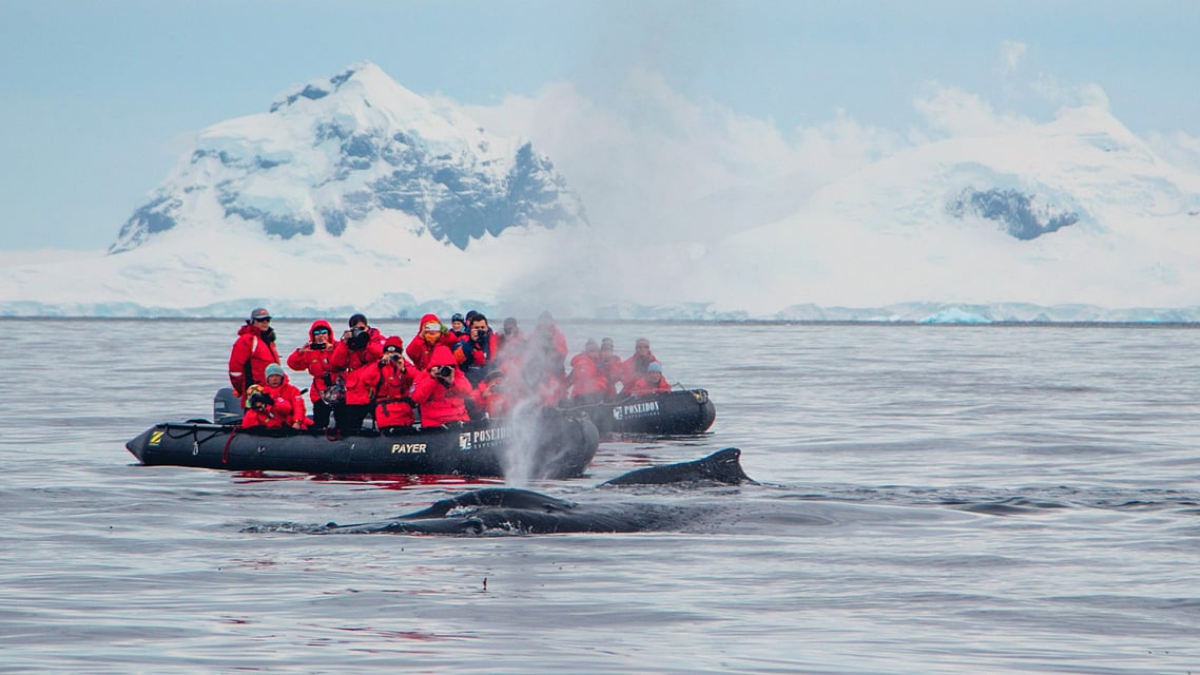
Antarctica is absurdly photogenic and genuinely difficult to shoot, often in the same moment. The snow fools your meter. Wildlife appears and vanishes in three seconds. You’re handheld in a moving Zodiac, wearing gloves, with spray in the air and a battery quietly dying in your pocket.
None of which is a reason not to try. It’s a reason to sort a few things out before you sail. These Antarctica photography tips cover what actually matters for coming home with pictures that look like what you saw.
Three Common Challenges with Antarctic Photography
Photographing Antarctica presents problems you simply don’t encounter anywhere else.
- Dynamic range
One frame can contain brilliant white ice, near-black water and a penguin’s hard-edged black-and-white plumage, which is well beyond what any camera handles in a single exposure.
Left to itself, your camera will underexpose every time, and your snow will come out a disappointing grey.
- Unpredictability
This isn’t a safari, where you might sit with a subject for twenty minutes. Antarctic moments are fast. A whale surfaces with no warning. A chick does something brilliant and then stops doing it.
And you’re frequently shooting from a boat moving in three directions at once, with no time to change a setting between frames.
- The environment itself
Salt spray, sub-zero air, and the constant cycle between a freezing deck and a warm cabin all work against your equipment — often in ways that catch experienced photographers out.
Sorting the fundamentals before you sail is the difference between a frustrating trip and a genuinely good one.
Gear and Technical Setup
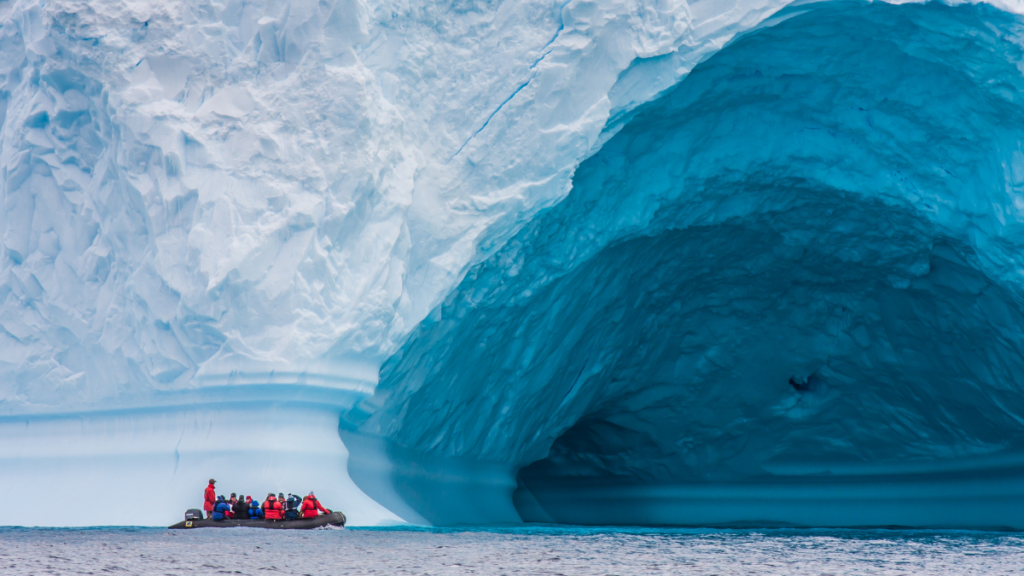
Getting your equipment and settings right before you sail matters more in Antarctica than almost anywhere else, because you won’t have the luxury of experimenting once a whale surfaces beside the Zodiac. The three sections below cover what to bring, how to configure your camera for extreme contrast, and how to keep everything working across a two-week voyage in punishing conditions.
Camera Gear for Cold and Wet Conditions
You don’t need professional-grade equipment to take excellent photographs in Antarctica, but a few choices make a disproportionate difference.
A telephoto zoom lens in the 100–400mm range is the single most useful piece of kit you can bring. Wildlife is often further away than you’d like, and swapping lenses on a Zodiac in sea spray is genuinely inadvisable, so a versatile zoom that covers both distant wildlife and closer landscape work earns its place.
A wide-angle lens for landscapes and iceberg work, ideally on a second body if you have one, so you’re not switching glass in wet conditions.
Weather sealing matters more here than in most environments. A sealed body and lens combination will handle sea spray and light snow far better than unsealed equipment, though even sealed gear benefits from additional protection.
Extra batteries are non-negotiable. Cold drains batteries dramatically faster than you’re used to, and a battery that shows half charge in a warm cabin may die within minutes on deck. Carry spares in an inside pocket close to your body where they’ll stay warm.
A dry bag or waterproof camera case protects your equipment during Zodiac cruising and wet landings, where spray is essentially guaranteed rather than merely possible.
For a complete list of what to bring, including the non-photography essentials, see our Antarctica cruise packing list.
Camera Settings for White Landscapes
This is where most first-time polar photographers lose shots, and the fix is straightforward once you understand the problem.
Use positive exposure compensation. Camera meters are calibrated for mid-grey, so a frame dominated by snow tricks them into underexposing to compensate. Dialing in +1 to +2 stops of exposure compensation restores snow to genuine white rather than muddy grey. Check your histogram rather than trusting the rear screen, which is difficult to read in bright polar light.
Shoot RAW, always. The dynamic range in Antarctic scenes is extreme, and RAW files give you significantly more latitude to recover highlight and shadow detail in post-processing than JPEGs allow.
Prioritize shutter speed for wildlife. For a breaching whale or a penguin in motion, 1/1000th of a second or faster is a sensible baseline. Shooting from a moving Zodiac, keep it fast even for static subjects, since the boat’s movement introduces blur that has nothing to do with your subject.
Consider auto ISO with a minimum shutter speed if you’re comfortable with it. Light conditions shift constantly in Antarctica, and letting the camera handle ISO while you lock in a fast shutter speed removes one variable from a fast-moving situation.
Watch your white balance. Polar light shifts noticeably across the day, particularly in the long, low light of late season. Shooting RAW means you can correct this later, but getting it roughly right in-camera saves editing time.
Protecting Your Gear in Polar Conditions
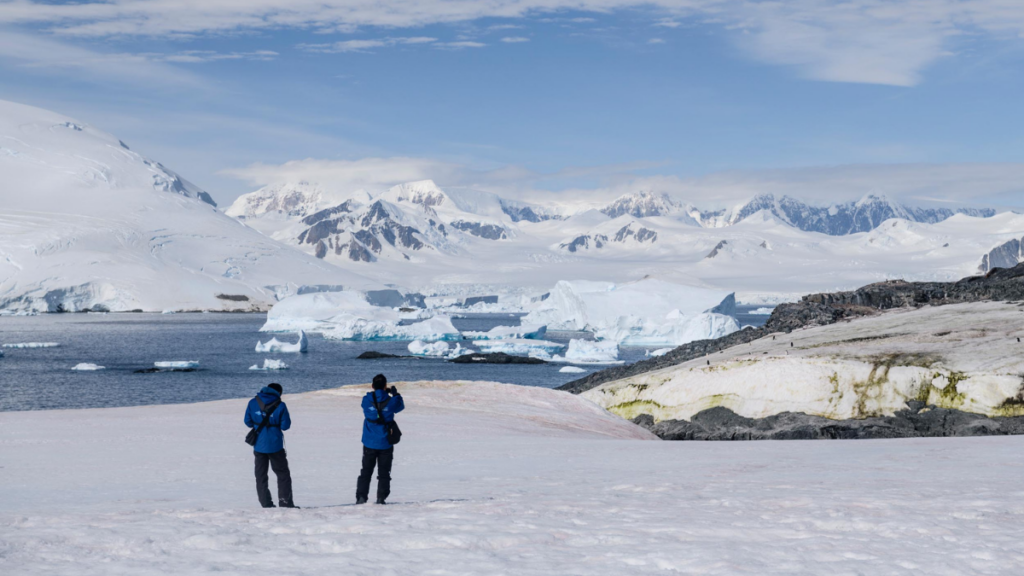
Condensation is the problem most people don’t anticipate. Moving a cold camera into a warm ship interior causes moisture to form on and inside the lens and body, which can take a long time to clear and risks damage over repeated cycles. The simplest fix is to seal your camera in a plastic bag or padded case before coming inside, and let it warm gradually before opening it.
Rinse salt spray promptly. Sea spray dries into salt crystals that are corrosive over time. A lightly damp cloth on external surfaces after Zodiac work makes a real difference across a two-week voyage.
Keep spare batteries warm in an inside pocket, and rotate them rather than running one flat before switching.
Shooting Techniques in Antarctica
Beyond gear and settings, Antarctica asks for techniques you may not have needed elsewhere. Shooting from an inflatable boat in swell and photographing ice — a subject with almost no inherent sense of scale — both take a slightly different approach than standard landscape or wildlife work.
Shooting from a Zodiac
Zodiac cruising delivers some of the best photographic opportunities of any Antarctic voyage, and also the most difficult shooting conditions.
Brace yourself rather than your camera. Sit low, plant your feet, and use your body as the stabilizer rather than trying to rest the camera on the boat itself, which transmits engine vibration directly into your shots. Keep your camera strap around your neck or wrist at all times — dropped equipment in Antarctic water is gone permanently.
Keep your gear accessible but protected. A dry bag on your lap that you can open quickly beats a bag stowed under a seat, since the best moments rarely come with warning. And be mindful of the other people in the boat: everyone wants the shot, so avoid standing, leaning across others, or blocking sightlines.
Landscape and Iceberg Photography
Icebergs are deceptively difficult to photograph well, largely because scale disappears without a reference point. Including a Zodiac, a bird, or the ship itself in frame transforms an abstract white shape into something that conveys genuine size.
Texture matters more than you’d expect. Overcast, flat light — which many travelers see as disappointing — often reveals the blue tones and surface detail in ice far better than harsh direct sunlight, which blows out highlights and flattens contour. Don’t put the camera away because the sun isn’t out.
Golden hour behaves strangely in a land of near-continuous daylight. In peak season, the sun barely sets, so the warm, low light photographers chase elsewhere stretches across hours rather than minutes, or in some periods, doesn’t properly arrive at all. Late season brings the most dramatic light of the entire year as days shorten again.
Photographing Antarctic Wildlife
Each species group in Antarctica presents different technical demands, and knowing what to expect from each makes a genuine difference to your hit rate.
Penguins
Penguins reward getting low. Shoot from standing height and you’ll bring home the same downward-angle photograph as everyone else; crouch or lie down where guides allow it and you’re suddenly at eye level with the subject, which changes everything.
Go for behavior over portraits. A pebble theft in progress, a chick being fed, a first swim that goes badly — these tell a story that a static bird doesn’t. Our penguin species guide covers what to expect from each species and when.
Whales
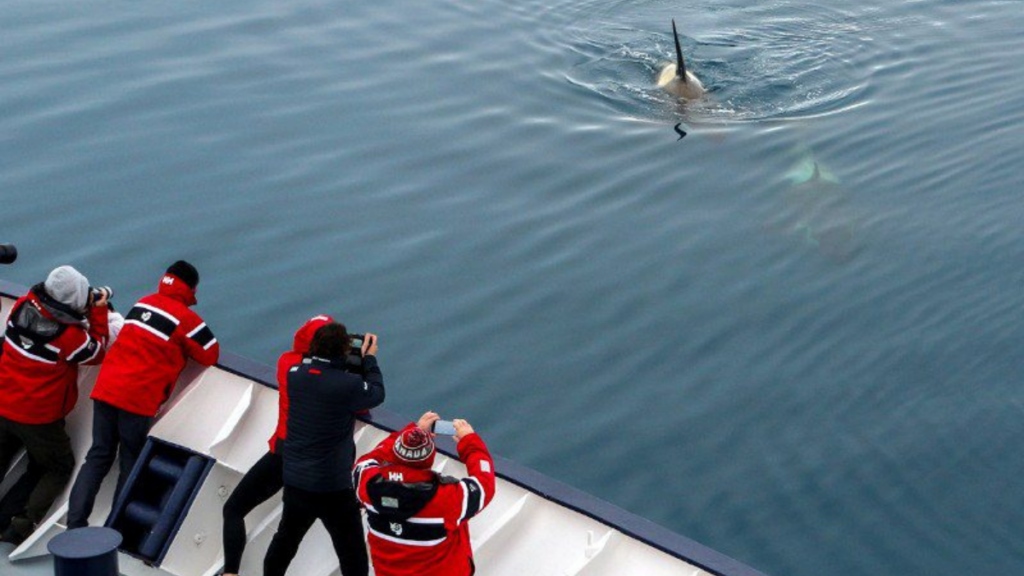
Whales need anticipation. The blow comes first and buys you a second or two, so watch the water rather than your viewfinder. Shoot wider than feels right and crop later, because they surface where they want to. Burst mode is essential. Our whales in Antarctica guide covers the most reliable sighting locations.
Seals
Seals are the forgiving ones — frequently hauled out and motionless for long stretches, which makes them ideal for working on composition and getting comfortable with longer focal lengths. Our seals in Antarctica guide covers which species you’ll meet and when.
Seabirds
Seabirds want panning practice. Tracking an albatross alongside the ship takes smooth, continuous motion and a fast shutter speed, so it’s worth practicing on something easier before you need it. Our seabirds of Antarctica guide covers what to look for.
Photography Kit Checklist
Everything covered above comes down to a manageable list, and the good news is that most of it is either equipment you already own or inexpensive to add.
The essentials genuinely are essential — skipping the dry bag or the spare batteries is the kind of decision people regret by day two, when a battery dies mid-whale-sighting or spray reaches a lens at the worst possible moment.
The optional items are worth considering rather than skipping outright, particularly if photography is the main reason for your trip. A second body removes the need to change lenses in wet conditions, which is genuinely the riskiest thing you’ll do with your gear on a Zodiac.
Use the table below as a final check before you pack.
| Item | Why You Need It | Priority |
| Telephoto zoom (100–400mm) | Distant wildlife without lens changes | Essential |
| Wide-angle lens | Landscapes, icebergs, scale | Essential |
| Extra batteries | Cold drains charge rapidly | Essential |
| Dry bag / waterproof case | Zodiac spray and wet landings | Essential |
| Memory cards (more than you think) | You’ll shoot far more than expected | Essential |
| Lens cloth | Condensation and spray | Essential |
| Second camera body | Avoids lens swaps in wet conditions | Optional |
| Rain cover | Extra protection in heavy spray | Optional |
| Monopod | Stability without tripod bulk | Optional |
Planning Your Photography Trip
Timing and vessel choice both affect your photographic results as much as any setting on your camera. Different months deliver genuinely different subjects and light, and not all ships suit photographers equally.
Best Months for Antarctica Photography
November delivers pristine, untracked snow and courtship behavior, with landing sites still unmarked by the season’s traffic. Colder conditions, but visually the cleanest landscapes of the year.
December and January bring near-24-hour daylight and penguin chicks, giving you the longest shooting windows of the season and the most active colonies.
February is peak whale month, with humpbacks, minkes, and orcas all active and approachable — the best window if marine mammals are your priority.
March offers the most dramatic light of the entire season as days shorten, with long, colorful sunsets and moody conditions, alongside fledging chicks and continued whale activity.
For a fuller breakdown of what’s happening each month, see our guides to the best time to visit Antarctica and the Antarctica wildlife calendar.
Choosing a Photography-Friendly Voyage
Not all Antarctic voyages suit photographers equally. Smaller ships generally offer more Zodiac time, more landing flexibility, and fewer people competing for position at the rail. Some operators also run dedicated photography departures, with professional photographers aboard to provide hands-on instruction.
If photography is the primary reason for your trip, choose your vessel with that in mind — see our fleet pages for ships particularly well suited to photographers, or read our Antarctic Peninsula guide for detail on the landing sites and channels that deliver the most reliable shooting opportunities.
Ready to Plan Your Photography Voyage?
Antarctica rewards photographers who prepare properly, and punishes those who don’t.
If you’d like help choosing a voyage, ship, or time of year built around getting the images you’re after, get in touch with us — we’ve spent 25 years matching travelers to the right Antarctic expedition, and we know which departures work best for people whose camera is the reason they’re going.