
Penguins understandably get all the attention. But spend a crossing on deck with your head tilted back, and you’ll find an entirely different set of animals working the sky above the ship — including a bird with the largest wingspan on Earth, and several that have worked out exactly how profitable a penguin colony can be.
Here are five seabirds and seabird groups you’re likely to meet, and how to tell them apart.
Seabirds in Antarctica: What Makes Them So Distinctive
Antarctic seabirds live in conditions few birds anywhere could manage, spending most of their lives at sea and coming ashore only to breed.
Which means you meet them differently from penguins. Penguins are flightless, encountered ashore, standing around being inspected. Seabirds are seen in motion — gliding beside the ship, riding the wind across the Drake, or circling above a colony waiting for something to go wrong for somebody else.
That aerial life has shaped everything about them. Some have evolved wings long enough to cross oceans on barely any effort at all. Others have become extremely efficient opportunists, exploiting the few seconds an egg or chick spends unguarded in a crowded rookery. It’s a useful reminder that Antarctica isn’t a nature documentary with the violent bits edited out.
Because they’re always moving, sightings tend to arrive unannounced — mid-crossing, from the deck between landings, or wheeling overhead while you’re watching something else entirely. Looking up pays off down here.
1. Wandering Albatross
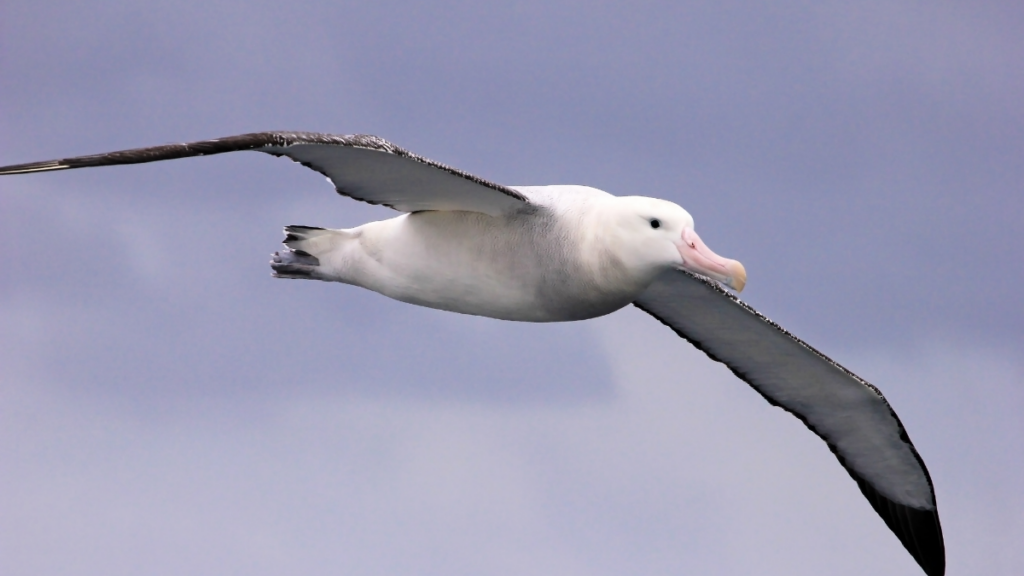
The wandering albatross holds one of the genuinely remarkable records in the bird world: the largest wingspan of any living bird, up to 3.5 meters tip to tip.
The thing nobody prepares you for is how little it does. A wandering albatross will track alongside the ship for minutes at a time without a single flap, adjusting its angle here and there as it rides the wind off the waves. It makes every other bird look like it’s working far too hard.
You’ll most often see them during the Drake crossing and around South Georgia, where they breed. Once you’ve clocked the size, you won’t mistake them for anything else.
2. Skuas
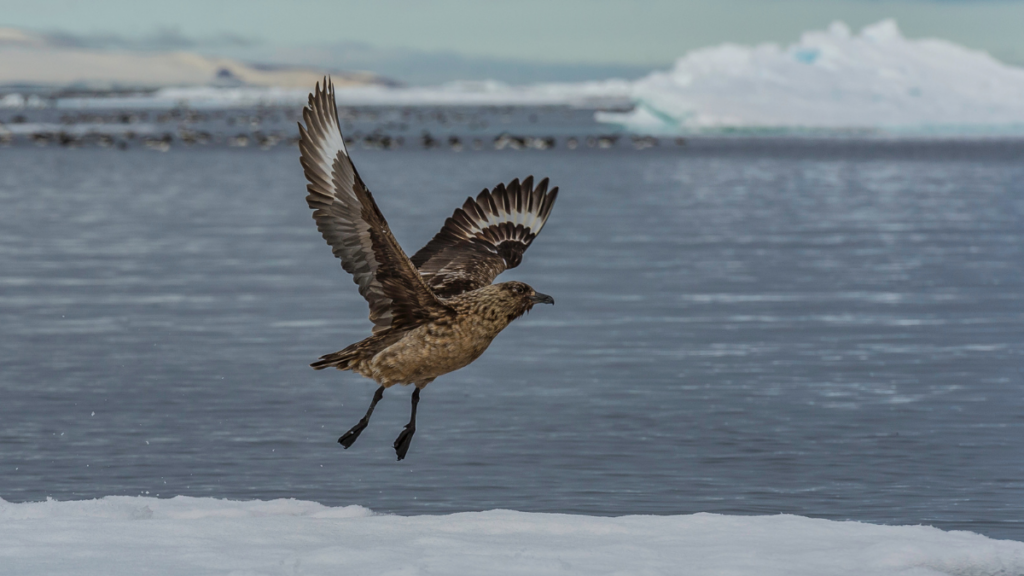
Both brown and south polar skuas are large, powerful and openly predatory, patrolling the edges of penguin colonies for an unguarded egg or chick.
You’ll usually spot them circling above a rookery or perched nearby, watching rather than hunting on the wing — they’re patient, and they don’t need to work hard, because a colony of thousands of birds eventually produces a mistake.
They’re also the clearest reminder that this is a working food chain rather than a picturesque backdrop, and they turn up around nearly every colony you’ll visit.
3. Petrels
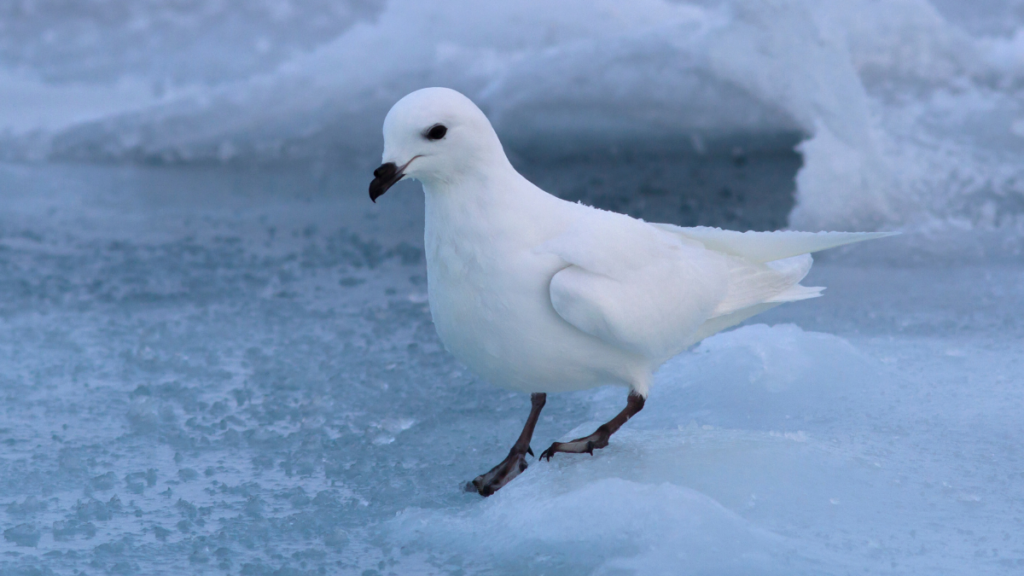
Petrels are the most diverse seabird group in Antarctic waters, including snow petrels, Antarctic petrels, and Wilson’s storm-petrel. Most feed on krill and fish and nest on cliffs and rocky outcrops throughout the region.
Snow petrels are the standout — almost entirely white, and genuinely beautiful against dark rock or open water. They’re one of only a handful of birds that breed exclusively in Antarctica.
Giant petrels are the exception to all of this. Considerably larger than their relatives, they scavenge carcasses and will take a chick given the chance, which makes them behaviourally far closer to a skua than to the rest of the petrel family, whatever the name suggests.
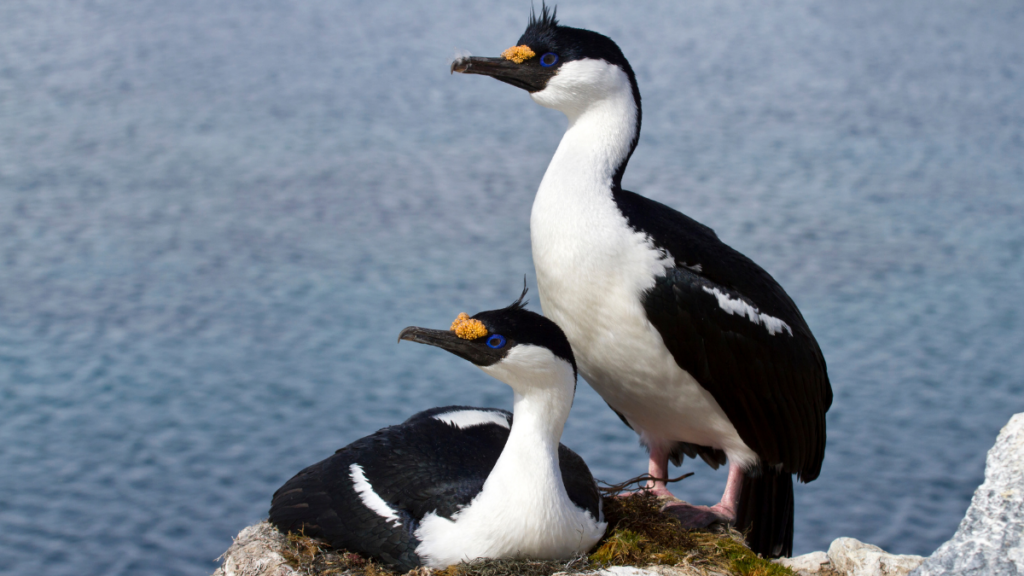
4. Antarctic Blue-Eyed Shag
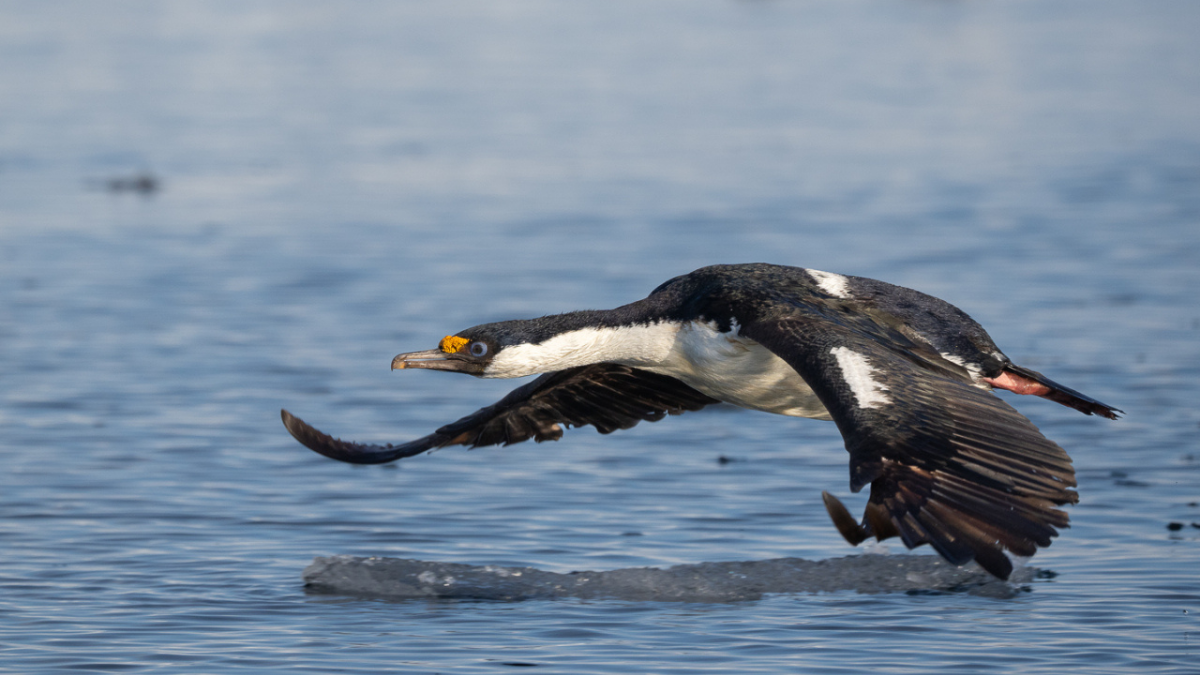
A cormorant, easily identified by that striking blue eye-ring and glossy dark plumage. You’ll find them nesting near penguin colonies at Paulet Island and Port Lockroy, often perched on rocky ledges just above the water.
Unlike the gliders on this list, shags spend their time diving for fish close to shore, which makes them one of the more visibly busy birds during a Zodiac cruise along a rocky coastline.
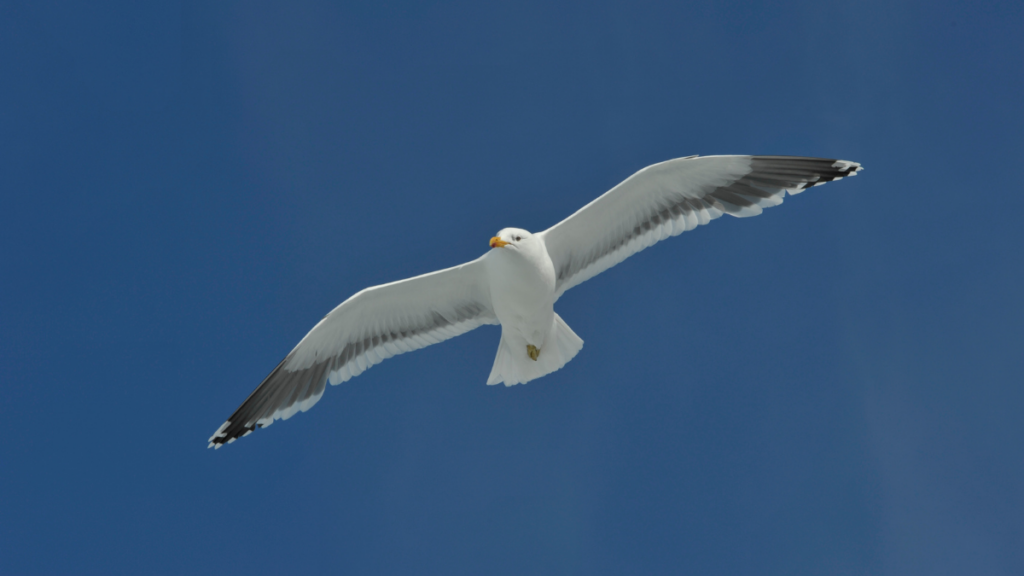
5. Kelp Gull
Antarctica’s resident opportunist. Classic gull silhouette, dark back, white underparts, found throughout the Peninsula.
Less dramatic than an albatross and less fearsome than a skua, but a near-constant presence around colonies and landing sites, alert to anything edible and entirely unembarrassed about it.
Seabirds of Antarctica at a Glance
| Seabird | Key ID Feature | Where to Spot Them |
| Wandering albatross | Enormous wingspan, effortless gliding | Drake Passage, South Georgia |
| Skuas | Bulky, aggressive, patrol colonies | Near penguin rookeries |
| Petrels | Diverse group, mostly white or grey | Cliffs and rocky outcrops |
| Antarctic blue-eyed shag | Blue eye-ring, glossy dark plumage | Paulet Island, Port Lockroy |
| Kelp gull | Classic gull shape, dark back | Throughout the Peninsula |
Where to See Antarctica’s Seabirds
Seabird sightings often begin before you even reach the continent.
Our Drake Passage guide covers what to expect during the crossing itself, when wandering albatross and other seabirds are frequently spotted gliding alongside the ship.
Once ashore, our Antarctic Peninsula guide covers the specific landing sites where skuas, petrels, and shags commonly nest near penguin colonies.
For a full month-by-month breakdown of when to see every Antarctic species, see our Wildlife Calendar, or head back to our main Wildlife Guide for the complete picture of Antarctic animal life.
Ready to Plan Your Wildlife-Focused Expedition?
Antarctica’s seabirds add an entirely different dimension to a polar voyage, rewarding anyone who takes the time to look up as much as those focused on what’s happening at ground level.
If you’d like help planning an itinerary that maximizes your chances of seeing Antarctica’s full range of wildlife, get in touch with us — we’ve spent 25 years matching travelers to the right Antarctic voyage for exactly what they want to see.