
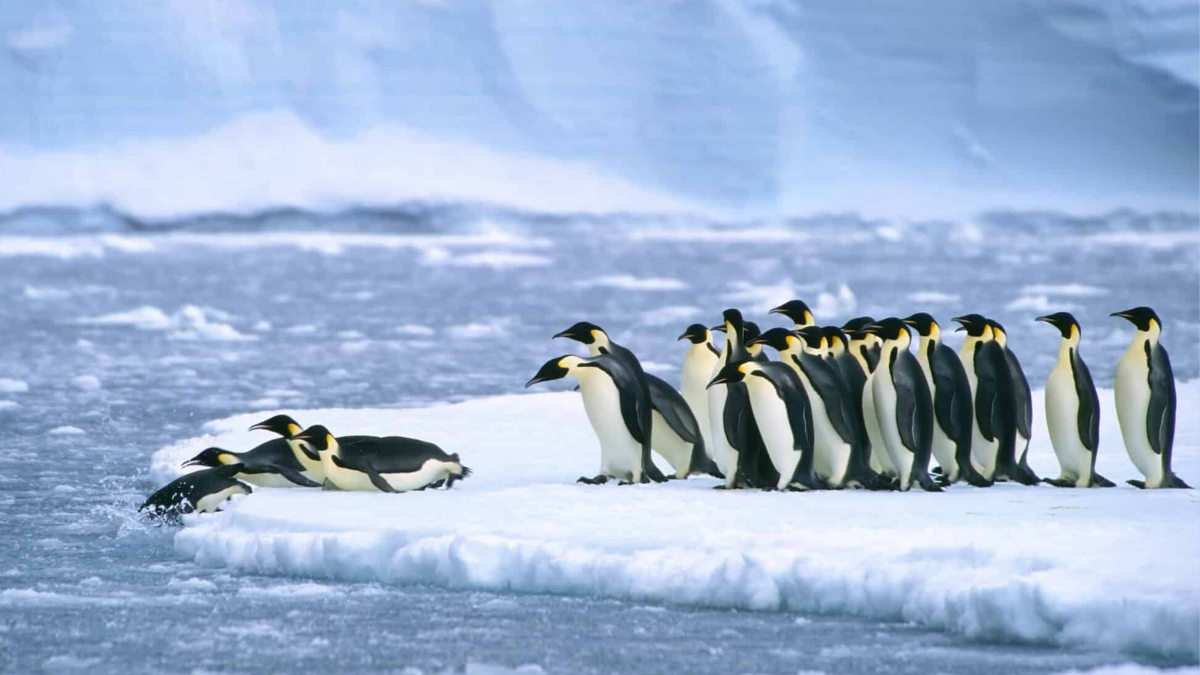
When you picture Antarctica, you probably picture penguins, seals, and whales. But did you know the month you travel can completely change your wildlife experience? Travel in November and you’ll watch courtship. Travel in February and you’ll watch whales. Same continent, genuinely different trip.
Antarctic expeditions run on a fairly narrow window each year, from November through March, and the wildlife calendar during that stretch is dramatic precisely because of it. Nearly every species that spends summer on the continent is racing against the same clock — arriving, breeding, raising young, and moving on before the season closes again.
Here’s your complete guide to who’s waddling, swimming, and showing off throughout the Antarctic season — plus what happens during the rest of the year, when the continent goes quiet.
Animals to See in Antarctica in November
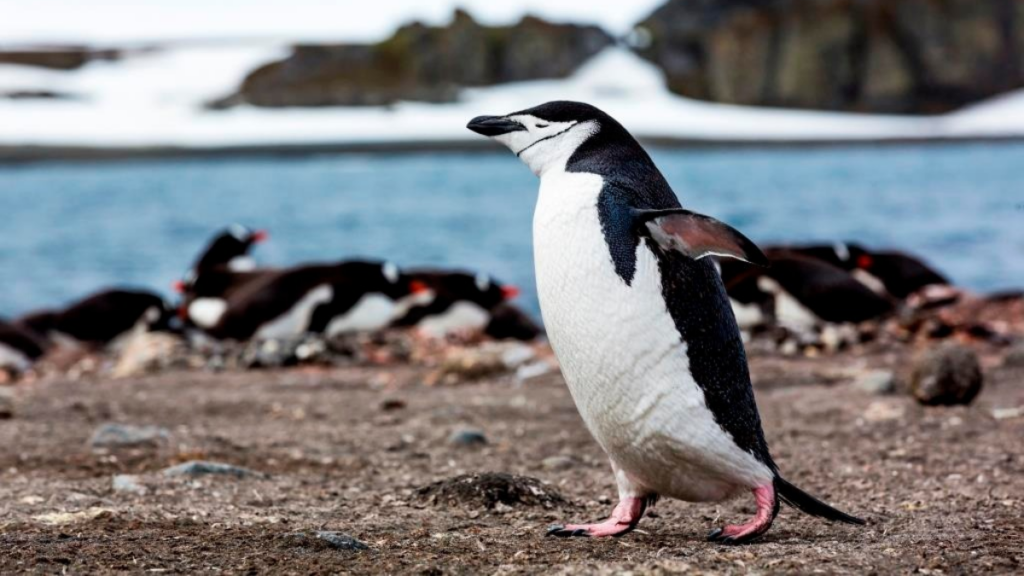
The ice begins to break up, opening the way for expedition ships as the Antarctic season kicks off. Gentoo, chinstrap, and Adélie penguins arrive ashore across the Peninsula and South Shetland Islands, waddling in to build their nests — you’ll see them stealing (or “borrowing”) pebbles from each other, the original soap opera drama of the animal kingdom.
If your itinerary includes South Georgia, you’ll also find king penguins present in large numbers.
Seals haul out on the beaches to bask in the returning sun, and migratory seabirds return in force, with albatross, skuas, and petrels gliding overhead.
This is also the best month to witness courtship displays before nesting is fully underway — many penguin species perform elaborate bowing and calling rituals as pairs reunite or form for the season.
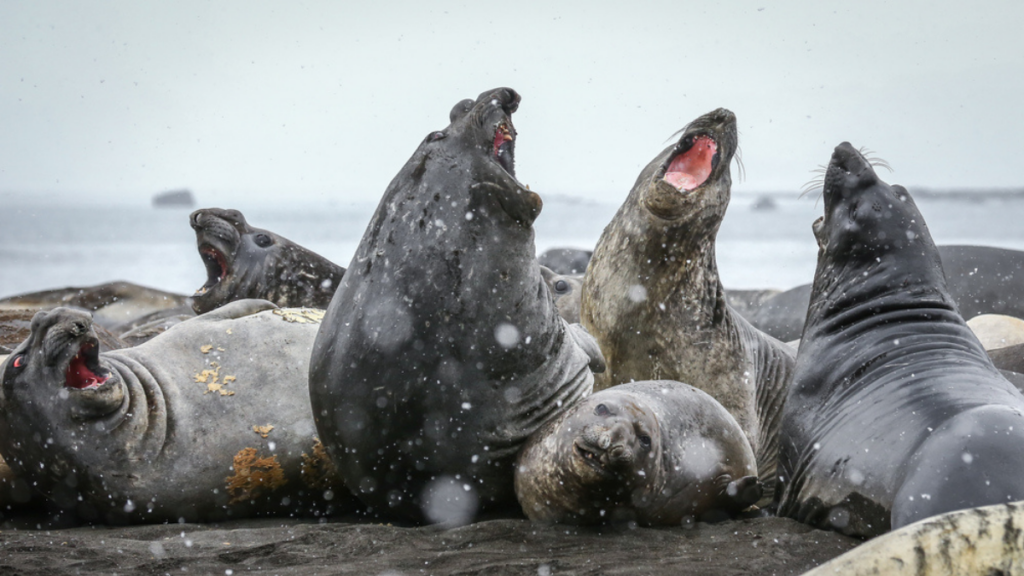
Elephant seals begin their own breeding activity on the beaches of South Georgia and Falkland islands too, with the big males bellowing at each other over territory in a way you’ll hear long before you see.
Late October and November is full of energy and new beginnings — perfect if you love watching nature kick into gear after a long, dark winter.
Animals to See in Antarctica in December
It’s the height of summer, and the sun shines nearly 24 hours a day. Eggs laid by gentoo, chinstrap, and Adélie penguins in November begin hatching after a roughly 30- to 40-day incubation, revealing fluffy grey chicks peeping out from under their parents’ bellies.
King penguins, if you’re visiting South Georgia, follow a longer breeding cycle, so December is more likely to bring sightings of last season’s chicks or overwintering birds rather than freshly hatched ones.
Seal pups make their first wobbly appearances on the ice, while humpback whales begin arriving in greater numbers, alongside early-season minke whales, drawn south by the same seasonal krill bloom that fuels the entire ecosystem.
Skua and petrel colonies are also in full swing this month. Skuas — large, aggressive predatory seabirds — patrol the edges of penguin colonies looking for unguarded eggs or chicks. Petrels, a broader group that includes snow petrels, Antarctic petrels, and Wilson’s storm-petrels, nest on nearby cliffs and mostly feed on krill and fish, though giant petrels are a notable exception known to scavenge and occasionally prey on chicks themselves. It’s a vivid reminder that Antarctica’s food chain is very much active, not just picturesque.
December is ideal for travelers who want baby penguin cuteness overload alongside long hours of daylight for photography.
Animals to See in Antarctica in January
By January, colonies of Gentoo, chinstrap, and Adélie penguins are all in full chick-rearing mode, with chicks large enough to be highly visible and constantly demanding food from exhausted parents — this is often considered one of the best months to observe penguin family behavior up close.
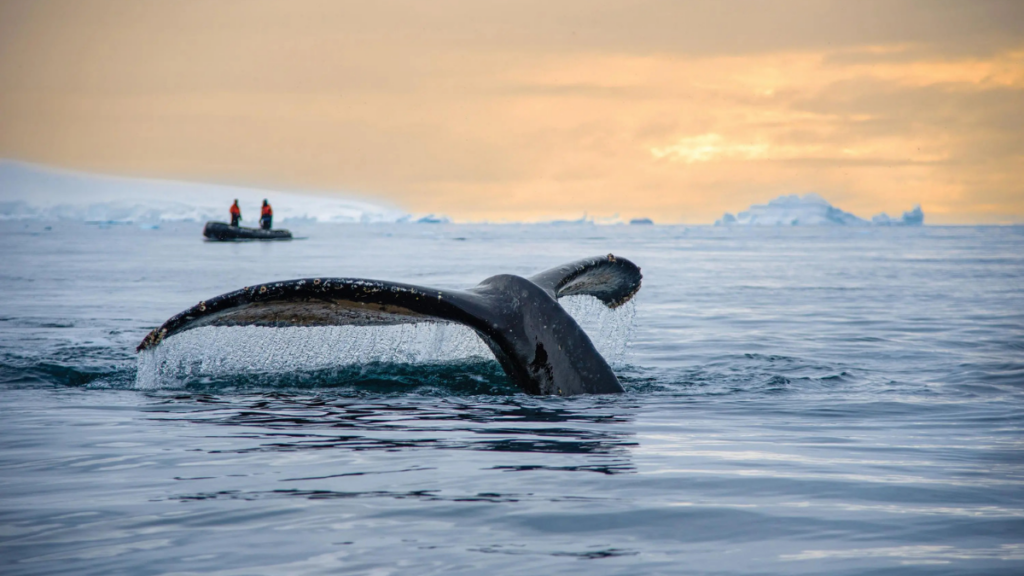
Whale sightings increase dramatically, especially humpbacks bubble-net feeding in coordinated groups, a genuinely spectacular behavior to witness from a Zodiac.
Fur seals appear in larger numbers too, and they can be feisty, which is why guides will remind you to keep a safe distance.
Crabeater seals, one of the most abundant seal species on Earth, are commonly seen hauled out on ice floes during this stretch, and orca sightings pick up as they follow the same food sources drawing in the whales.
January is peak wildlife season, with the weather at its warmest — a toasty 0°C to 5°C (32°F to 41°F).
Animals to See in Antarctica in February
This is the best month for whales, with humpbacks, minkes, and orcas active and easier to spot than earlier in the season. By now the whales have fed well and have time to be curious, which is when they start coming to look at you rather than the other way around.
Penguin chicks turn into fluffy teenagers — awkward, scruffy, and endlessly entertaining to watch as they lose their down and grow adult feathers.
Leopard seals patrol the waters, keeping penguins on their toes as the food chain plays out in real time. You’ll see a group of birds at the water’s edge all refusing to be the one who goes in first.
This is also a strong month for photographers, since chicks are large enough to be active and visible but haven’t yet fledged, giving you a window into behavior you won’t see earlier or later in the season.
If whales are your dream sighting, February is the jackpot month of the entire season.
Animals to See in Antarctica in March
The season winds down, but the wildlife is still spectacular. Whale sightings remain excellent, with many individuals still feeding before heading north for the winter.
Penguin chicks start fledging, testing their swimming skills — and occasionally belly-flopping their way into it. The skies fill with gorgeous sunsets and dramatic light, a dream for photographers chasing that golden hour glow.
Fur seal pups, born earlier in the season, are also weaning and becoming more independent, while adult seals begin fattening up ahead of the long winter to come.
March offers a quieter, more reflective Antarctica, with incredible whale encounters and magical light for photos.
The Rest of the Year: Antarctica’s Off-Season
From April through October, Antarctica becomes inaccessible to travelers entirely. As the brief summer ends, sea ice reforms rapidly and spreads far beyond the coastline, sealing off the routes expedition ships use during the season. Darkness sets in, and temperatures fall dramatically, making conditions too extreme and the waters too frozen for any vessel to operate safely.
Wildlife doesn’t disappear during this period, but it shifts dramatically. Most species that draw visitors south for the summer — penguins, seals, and migratory seabirds — leave the continent for the open ocean or sub-Antarctic islands once the breeding season ends, following retreating food sources north. The remarkable exception is the emperor penguin, the only species that breeds during the depths of the Antarctic winter, incubating a single egg on the sea ice through total darkness, with males famously holding the egg on their feet for warmth for weeks at a stretch. Weddell seals also remain through the winter, relying on breathing holes to survive beneath the ice.
By October, the first signs of the coming season begin to appear — sea ice starts its slow retreat, and wildlife begins moving back toward the coast in anticipation of the summer ahead. But it isn’t until November, when the ice finally opens enough for ships to return, that the cycle begins again in full.
Ready to Book Your Antarctica Expedition Cruise?
No matter when in the November-to-March window you go, Antarctica’s wildlife will steal your heart. From penguin soap operas in November to whale ballets in February, each month has its own magic — and even the off-season tells an extraordinary story of survival that makes the season you do experience feel even more remarkable.
So, when will you meet your wild Antarctic neighbors? Get in touch with us and we’ll help you choose the month that matches exactly what you’re hoping to see.