
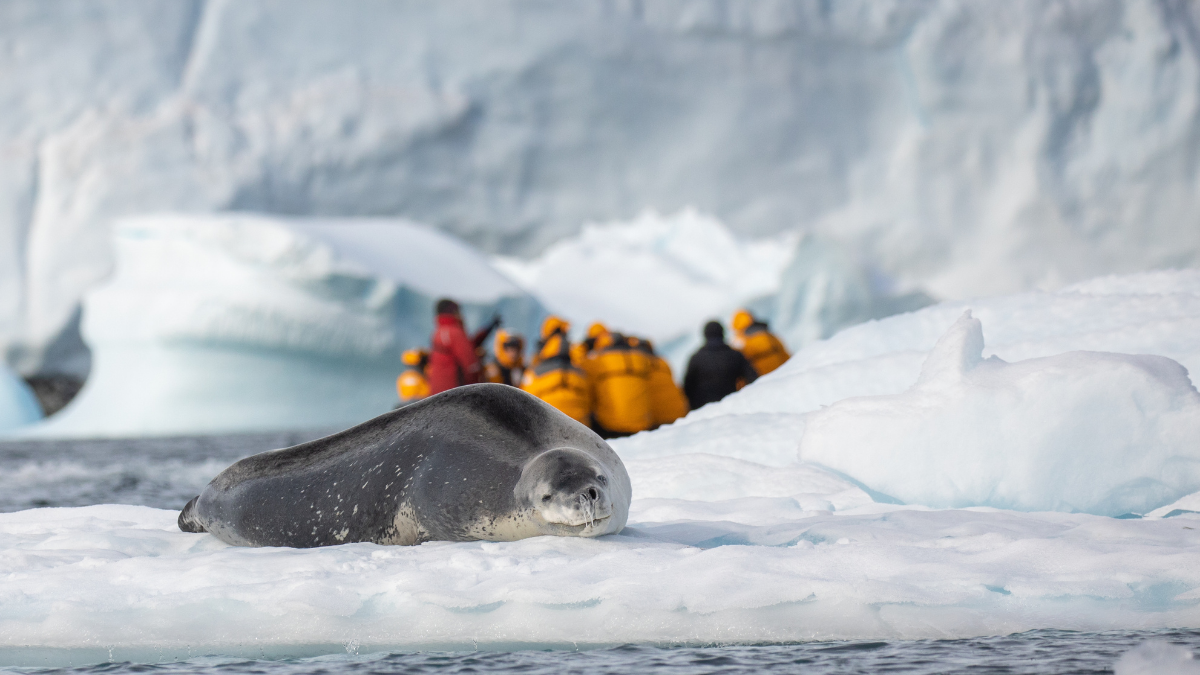
Penguins get the attention and whales get the gasps, but seals quietly reward anyone who pays attention. Six distinct species inhabit Antarctic waters, from the largest seal on Earth to one of the ocean’s most effective predators, each with genuinely different behavior, appearance, and best viewing windows.
This guide covers all six, so you know exactly what you’re looking at when you spot one hauled out on an ice floe or lounging on a beach.
Seals in Antarctica: What Makes Them So Remarkable
Seals here have adapted to conditions that would finish off most mammals, and each species has found its own corner of the Southern Ocean.
They also present differently from penguins. Penguins come in colonies you walk up to, thousands at a time, noisy and chaotic. Seals turn up individually or in small groups — hauled out on a beach, sprawled across a floe, spotted from a Zodiac on drifting ice. It makes each sighting feel more like a private encounter and rather less predictable than a rookery visit.
What strikes most people is the range across just six species. At one end, the elephant seal: several tonnes of animal producing a noise you’ll hear long before you land. At the other, the Ross seal, which even experienced guides treat as a notable day. In between you’ve got active predators, a filter feeder, and one species hard enough to spend the entire Antarctic winter down there alone.
Because they occupy such different habitats, what you see depends heavily on where you’re going and when. Elephant and fur seals show up on most standard voyages with no effort at all. Others want a specific itinerary, considerable luck, or both.
Elephant Seal
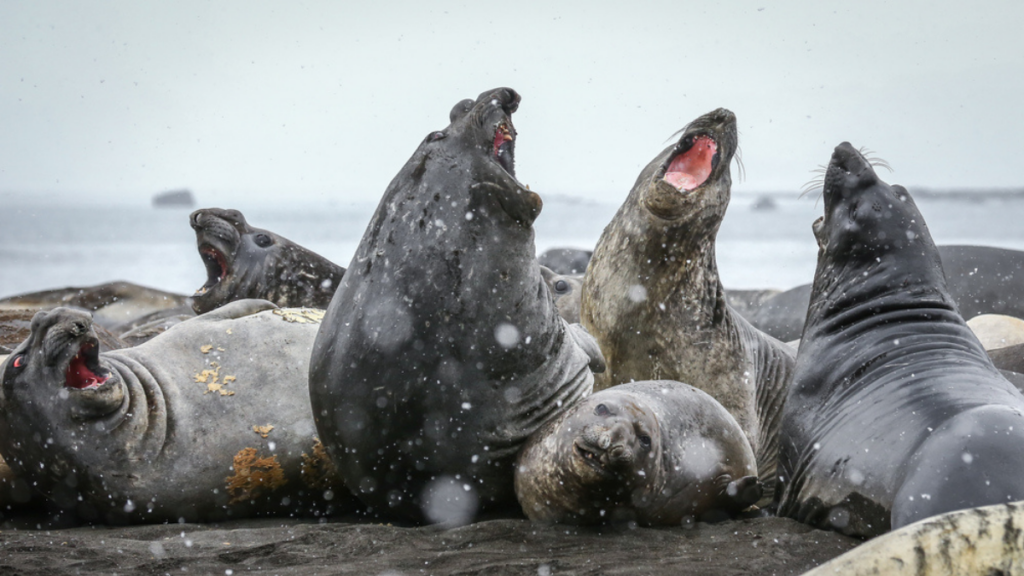
The largest seal in Antarctic and sub-Antarctic waters, and completely unmistakable. Males can weigh several tonnes and carry the absurd trunk-like snout the species is named for, which they inflate to produce a deep, resonant roar during breeding season.
They haul out on beaches in enormous numbers, and from October and November is when it gets dramatic — the breeding peak, when dominant males fight for territory and access to females in confrontations you can hear from the water. Beaches across South Georgia and parts of the Peninsula (South Shetland Islands but rarely) fill with them. Mostly they lie around doing nothing whatsoever, occasionally with astonishing violence.
Fur Seal
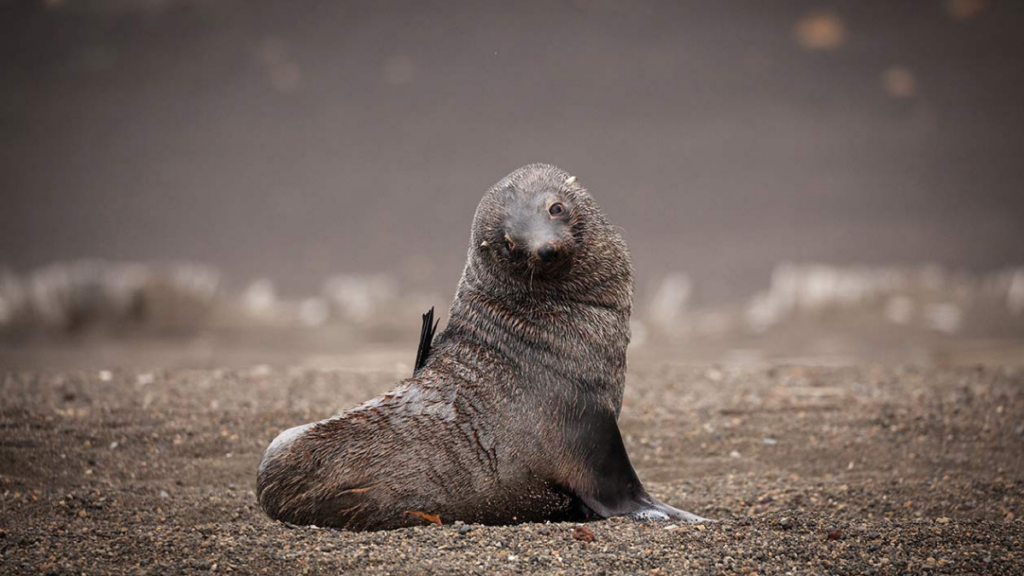
Smaller than elephant seals and easy to tell apart once you know the tell: fur seals have visible external ear flaps, which true seals don’t. They also move completely differently on land, walking on their hind flippers with a quick, dog-like gait rather than shuffling.
They’re also the feisty ones. Fur seals are territorial and quick to react if you get too close, which is why guides keep reminding everyone to keep their distance — particularly on beaches shared with penguin colonies. Numbers build through January, when they become a common sight at most landing sites.
Crabeater Seal
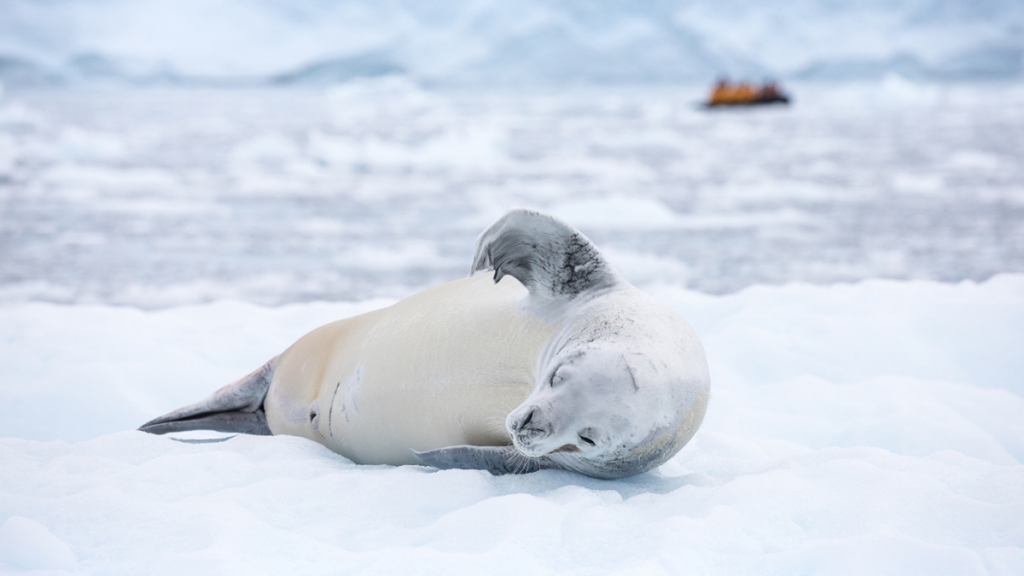
They don’t eat crabs. Not one. The name is a historical misunderstanding that stuck, and crabeaters actually feed almost exclusively on krill, filtering it through specially shaped multi-lobed teeth.
Despite being barely discussed next to Antarctica’s more famous residents, they’re among the most abundant seal species on the planet. You’ll usually find them on ice floes rather than beaches, lying there looking entirely untroubled by anything, with sightings common from January onward as conditions allow more Zodiac cruising among the ice.
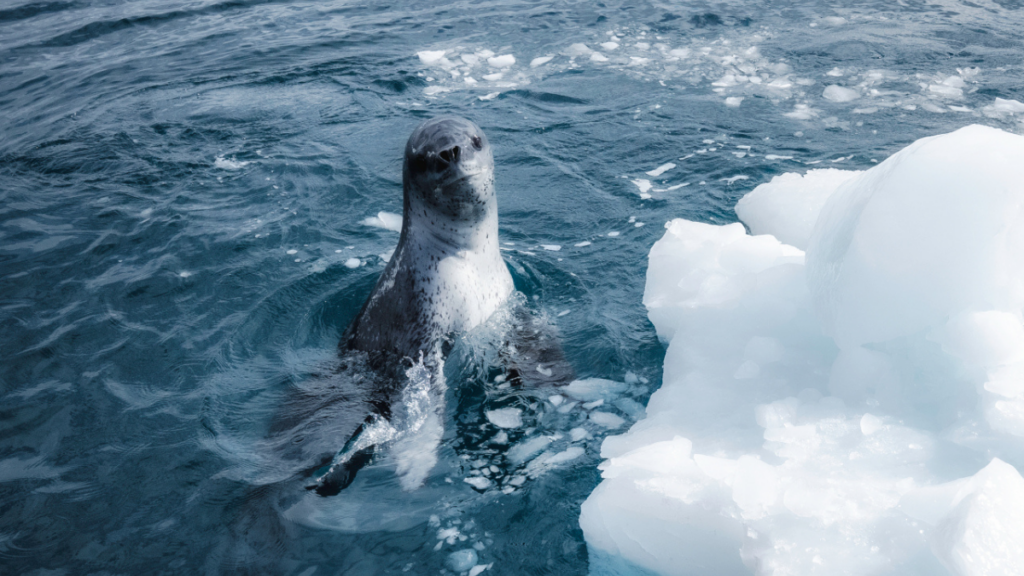
Leopard Seal
Long, slender and faintly reptilian, with a spotted coat and a head that looks a size too large. Leopard seals are one of the few genuine predators of penguins down here, and you can tell when one is around without seeing it — the colony’s atmosphere changes.
They’re most visible from January through March, patrolling the water near colonies while the penguins at the shoreline work themselves up to go in and nobody wants to be first. Sightings usually happen from a Zodiac, where the animal’s size and obvious power register immediately, even at a respectful distance.
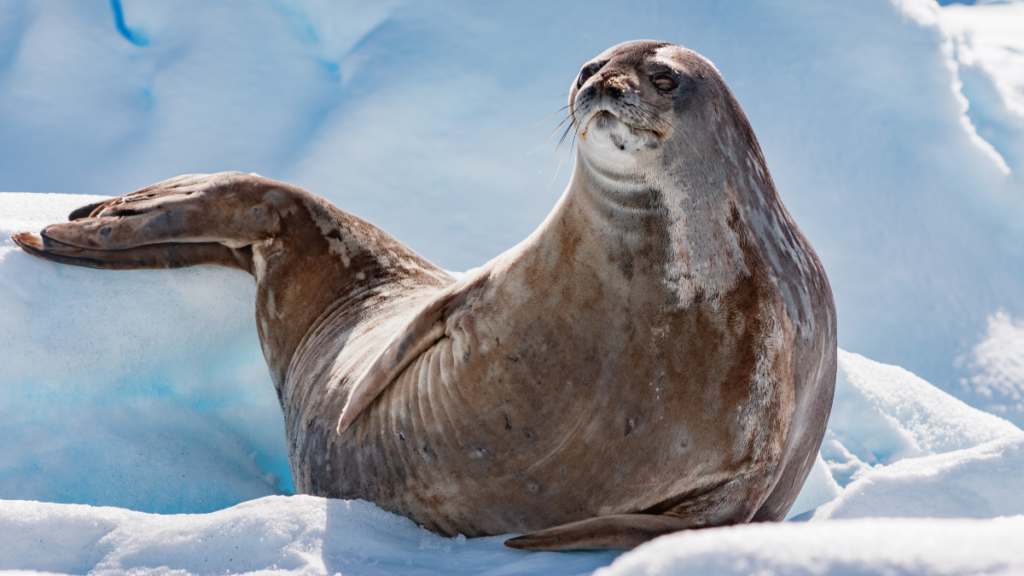
Weddell Seal
Found further south than most of the others, and holder of a genuinely extraordinary claim: Weddell seals stay in Antarctica through the winter. They survive it by maintaining breathing holes in the sea ice, working them open with their teeth, through months of total darkness and temperatures that don’t bear thinking about.
Because they’re year-round residents, you can see them across the season, though sightings are less predictable than the common species. Look for them resting near breathing holes or hauled out close to fast ice.
Ross Seal
The one almost nobody sees. Ross seals live deep in the pack ice, well away from where standard itineraries go, and sightings are rare enough that even guides who’ve spent years down here count them.
If a Ross seal is a specific goal, itineraries pushing further into the pack ice — Crossing the Circle voyages especially — give you meaningfully better odds. Still no guarantees, but better odds.
Seals of Antarctica at a Glance
| Species | Key ID Feature | Best Time to See |
| Elephant seal | Enormous size, trunk-like snout | November (breeding peak) |
| Fur seal | Visible ear flaps, mobile on land | January onward |
| Crabeater seal | Slim build, hauls out on ice floes | January onward |
| Leopard seal | Slender, spotted, reptilian | January–March |
| Weddell seal | Found near breathing holes, further south | Year-round, less predictable |
| Ross seal | Rarely seen, deep pack ice | Rare at any time |
Where to See Antarctica’s Seals
Seal sightings vary significantly by region and itinerary. Our Antarctic Peninsula guide covers the specific landing sites most standard voyages visit, many of which host reliable elephant, fur, and crabeater seal sightings. If South Georgia is part of your itinerary, expect particularly large elephant seal colonies during the November breeding season.
For a full month-by-month breakdown of when to see every Antarctic species, including seals, see our Wildlife Calendar, or head back to our main Wildlife Guide for the complete picture of Antarctic animal life.
Ready to Plan Your Wildlife-Focused Voyage?
Antarctica’s seals are every bit as remarkable as its penguins and whales, from the sheer scale of an elephant seal bull to the quiet menace of a leopard seal patrolling a colony’s edge.
If you’d like help choosing the itinerary and timing that maximizes your chances of seeing specific species, get in touch with us — we’ve spent 25 years matching travelers to the right Antarctic voyage for exactly what they want to see.