
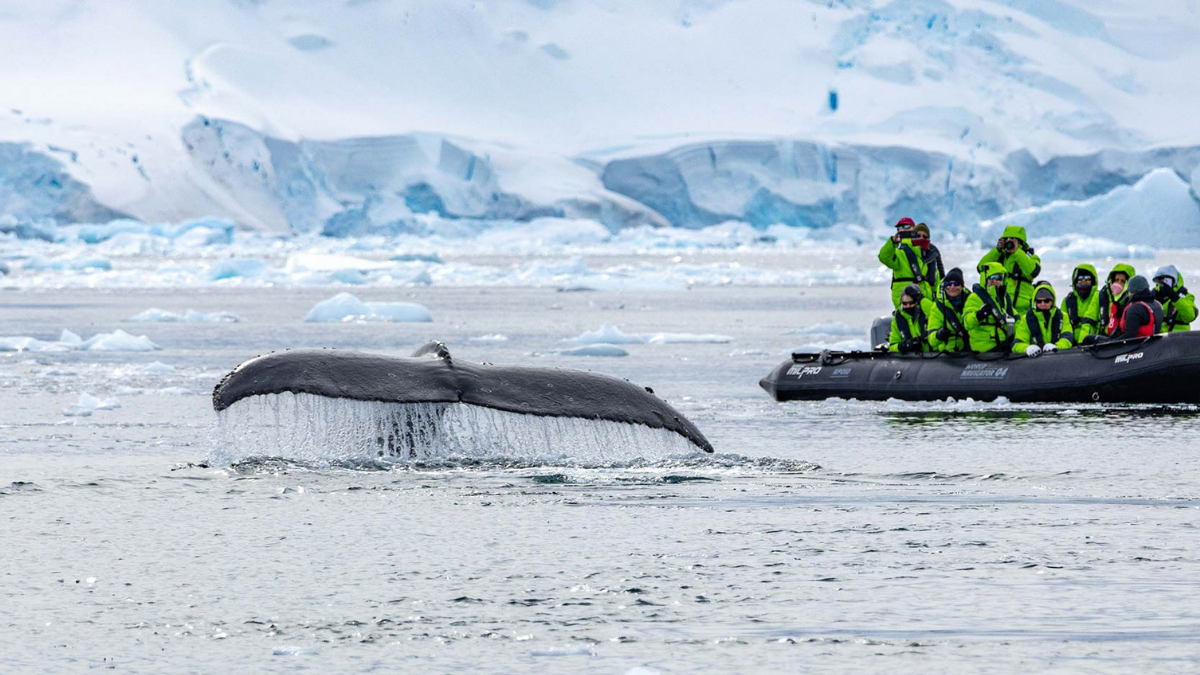
A particular sound stops a Zodiac dead. A deep, wet exhalation somewhere behind you, close enough that everyone turns at once. Then the back of a humpback rolls up out of the water a few meters away, unhurried, enormous, and entirely uninterested in the fact that you’re there.
That moment is why people come. Whales in Antarctica gather here each summer because the Southern Ocean’s krill bloom supports one of the planet’s great feeding events, and for a few months the water is thick with them.
Here’s which species you’ll meet, where to look, and how to get the most out of every sighting.
Whales in Antarctica: Why They Come South
Antarctic whales are visitors, not residents, and that single fact explains most of what you need to know about timing.
Every summer, as the sea ice retreats and the light returns, the Southern Ocean fills with krill — the tiny crustaceans that hold up the entire Antarctic food web. Whales travel thousands of miles for it, arriving steadily through the season and heading north again before winter shuts the door.
So the calendar matters. November voyages see fewer whales, because many are still making their way down after breeding in warmer water further north. December, the numbers climb noticeably. January and February are the peak — whales feeding hard, relaxed around vessels, and often openly curious about what a Zodiac is. By March they’re still here and still feeding intensively, fattening up before the migration.
The behavior is half the experience. Bubble-net feeding is the famous one: humpbacks working together to ring a krill swarm in a wall of exhaled bubbles, then surfacing through the middle with their mouths wide open. You’ll also see breaching, tail-slapping, and spy-hopping, where a whale lifts its head vertically out of the water, apparently just to have a look at you. Later in the season, they come to you more often than not.
Humpback Whale
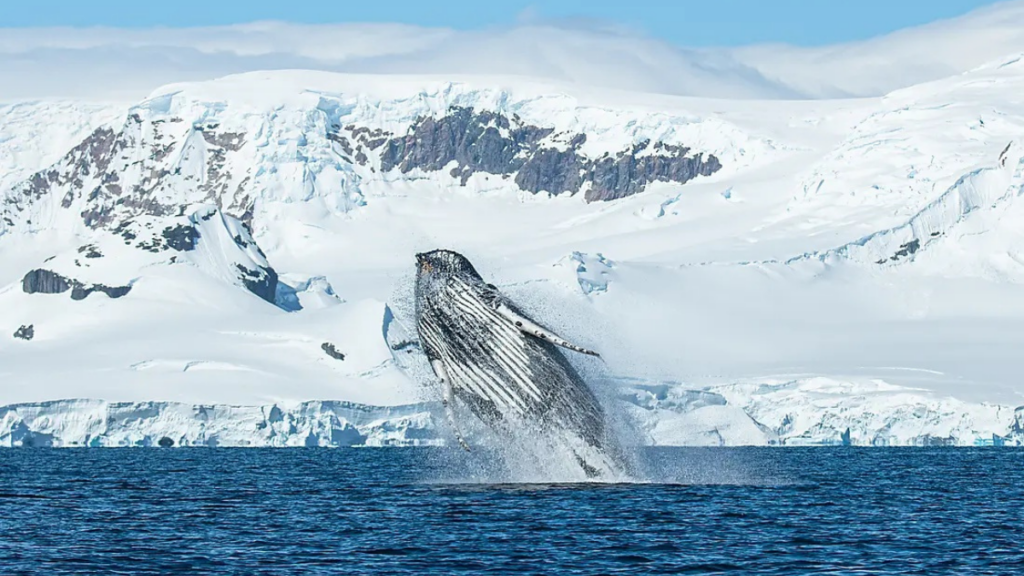
The humpback is the one most people see, and the one most people remember. Exceptionally long pectoral fins, a knobbly head, and that distinctive hump before the dorsal fin as it dives.
They’re also the showmen of the group — the species most likely to breach clear of the water or slap a tail repeatedly against the surface close enough to soak everyone aboard.
Where to see them: Wilhelmina Bay, on the Antarctic Peninsula, has earned the nickname “Whale-mina Bay” because humpbacks gather there to feed. The Gerlache Strait more broadly is also excellent humpback territory.
Best time: December through March, peaking in February.
Minke Whale
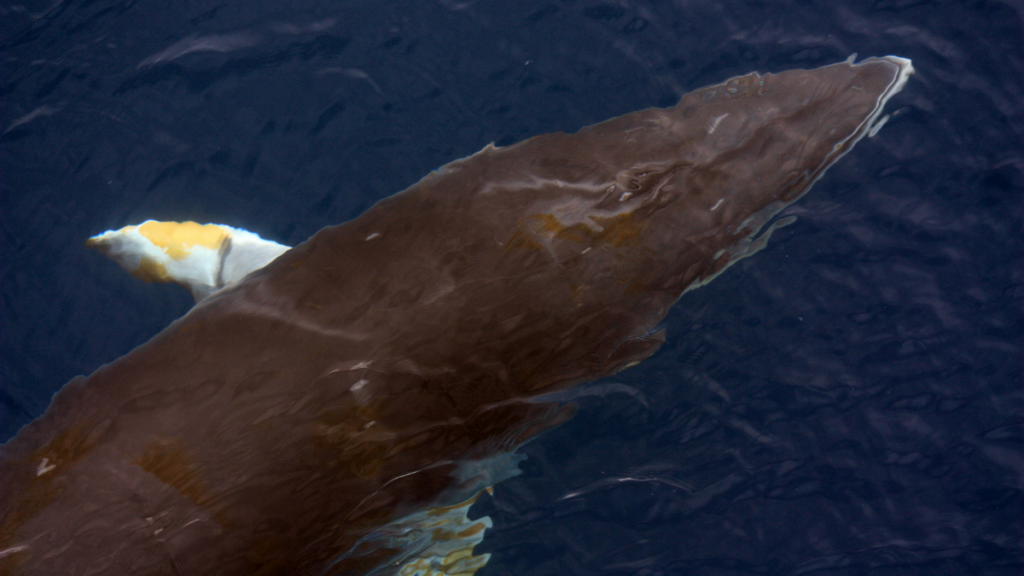
Smaller, faster, and sleeker than humpbacks, with a pointed snout. Harder to photograph because they’re quick and don’t linger, but unmistakable once you’ve got your eye in.
Minke whales are often the first whales of the season, and Antarctic minke whales working the pack ice can be genuinely curious — surfacing beside a stationary Zodiac to have a look before disappearing again.
Where to see them: Throughout Peninsula waters, and particularly around pack ice edges where they feed.
Best time: December through March.
Orca (Killer Whale)
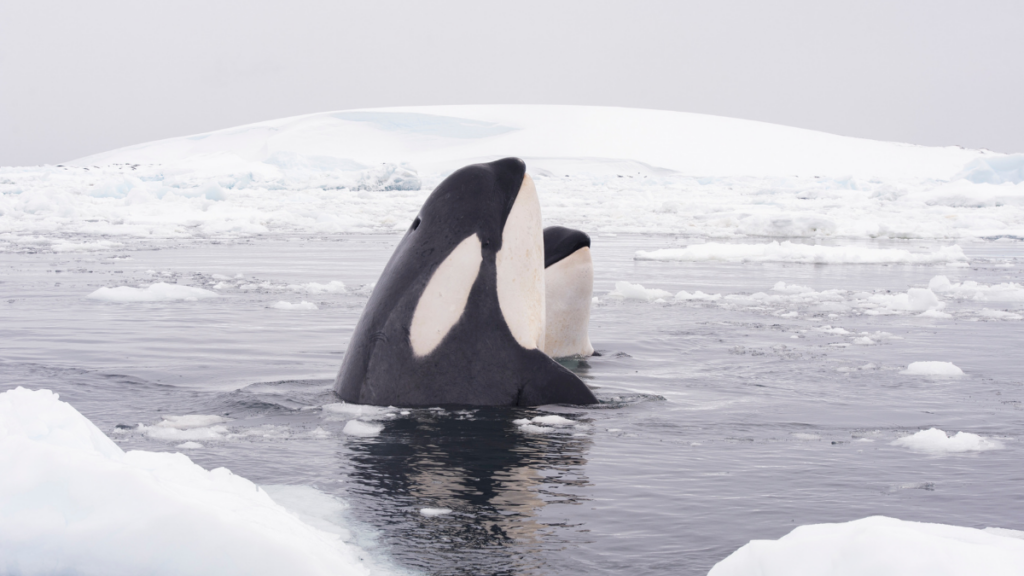
Unmistakable. Black and white, with that tall dorsal fin standing straight up like a sail on the adult males.
Several distinct ecotypes live in Antarctic waters, each with its own prey and hunting method — some specialize in fish, others hunt seals, and some take other whales. Watching a pod work a pack-ice edge with obvious coordination reminds you that these are among the ocean’s most effective predators.
Where to see them: Orcas are seen across Peninsula waters, though the Weddell Sea region offers notable sightings, particularly of ecotypes that hunt along pack-ice edges.
Best time: January and February.
Blue Whale
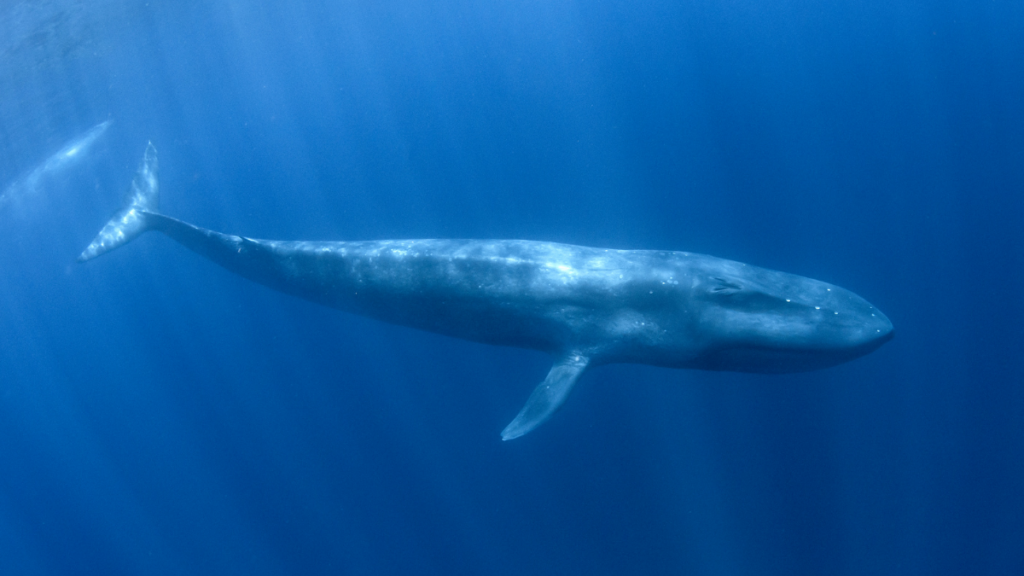
The largest animal ever to have existed. Sightings are far rarer than humpbacks or minkes, but they happen, and nobody who sees one forgets it.
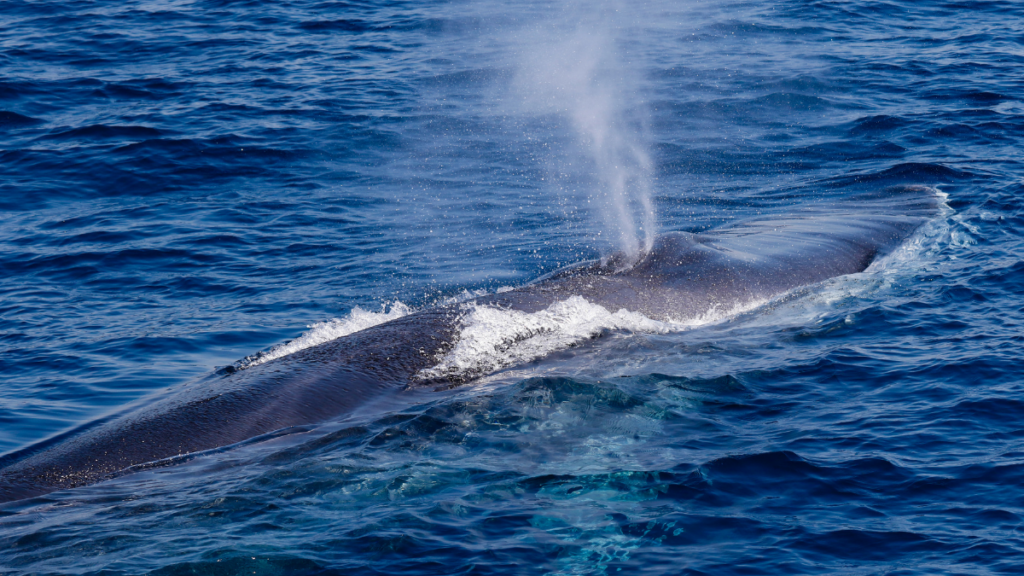
Look for an enormous mottled blue-grey back that just keeps going, and a vertical blow that can reach nine meters. You usually see the blow first from far away, and the scale takes a moment to register.
Where to see them: Open water rather than sheltered bays, often spotted from the ship during transits.
Best time: January through March.
Fin and Sei Whales
Fin whales — the second-largest species — are increasingly common in Antarctic waters as populations slowly recover from the whaling era, and they sometimes gather in large feeding groups.
Sei whales turn up less often, mostly in more northerly sub-Antarctic water.
Where to see them: Open water, including the Drake Passage crossing itself.
Best time: January through March.
Whale Watching Ethics
Antarctic whale watching runs under clear guidelines written to protect the animals rather than maximize your photograph.
Vessels and Zodiacs maintain minimum distances, approach slowly and predictably, and never position themselves in a whale’s path or between a mother and calf. They cut engines or idle when whales are close.
Here’s the thing, though: the rules aren’t the limitation people assume. The best encounters happen when a whale decides to come to you — and they frequently do. A humpback surfacing beside a stationary Zodiac because it chose to is an entirely different experience from one you chase, and every reputable operator understands that.
Photography Tips for Antarctic Whales
Whale photography is genuinely difficult, since sightings are unpredictable and often over within seconds. A few things help significantly:
- Use a fast shutter speed — 1/1000th or faster to freeze a breach or a fluke.
- Shoot wider than you think you need — whales surface unpredictably, and cropping later beats missing the shot.
- Watch for the blow — a whale’s exhalation is usually the first sign of a surfacing animal, giving you a second or two of warning.
- Keep your camera dry — sea spray during Zodiac cruising is near-constant, so a waterproof case or dry bag is essential.
For more on gear and technique across the full range of polar conditions, see our Photography Guide.
Whales of Antarctica at a Glance
| Species | Key ID Feature | Best Location | Best Time |
| Humpback | Long pectoral fins, hump before dive | Wilhelmina Bay, Gerlache Strait | Dec–March (peak: Feb) |
| Minke | Small, fast, pointed snout | Pack ice edges, Peninsula waters | Dec–March |
| Orca | Black and white, tall dorsal fin | Weddell Sea, Peninsula waters | Jan–Feb |
| Blue | Enormous, towering vertical blow | Open water transits | Jan–March |
| Fin / Sei | Large, sleek, often in feeding groups | Open water, Drake Passage | Jan–March |
Where to See Whales in Antarctica
Whale sightings depend heavily on your route. Our Antarctic Peninsula guide covers the specific landing sites and channels where humpback encounters are most reliable, including Wilhelmina Bay and the Gerlache Strait. If your itinerary pushes into the Weddell Sea, expect a different profile, with stronger chances of orca sightings along the pack ice.
For a full month-by-month breakdown of when to see every species, see our Wildlife Calendar, or head back to our main Wildlife Guide for the complete picture of Antarctic wildlife.
Ready to Plan Your Whale-Watching Expedition?
Whale encounters are, for many travelers, the single most memorable part of an Antarctic expedition.
If you’d like help choosing the timing and itinerary that gives you the best chance of seeing them, get in touch with us — we’ve spent 25 years matching travelers to the right Antarctic voyage for exactly what they want to see.