
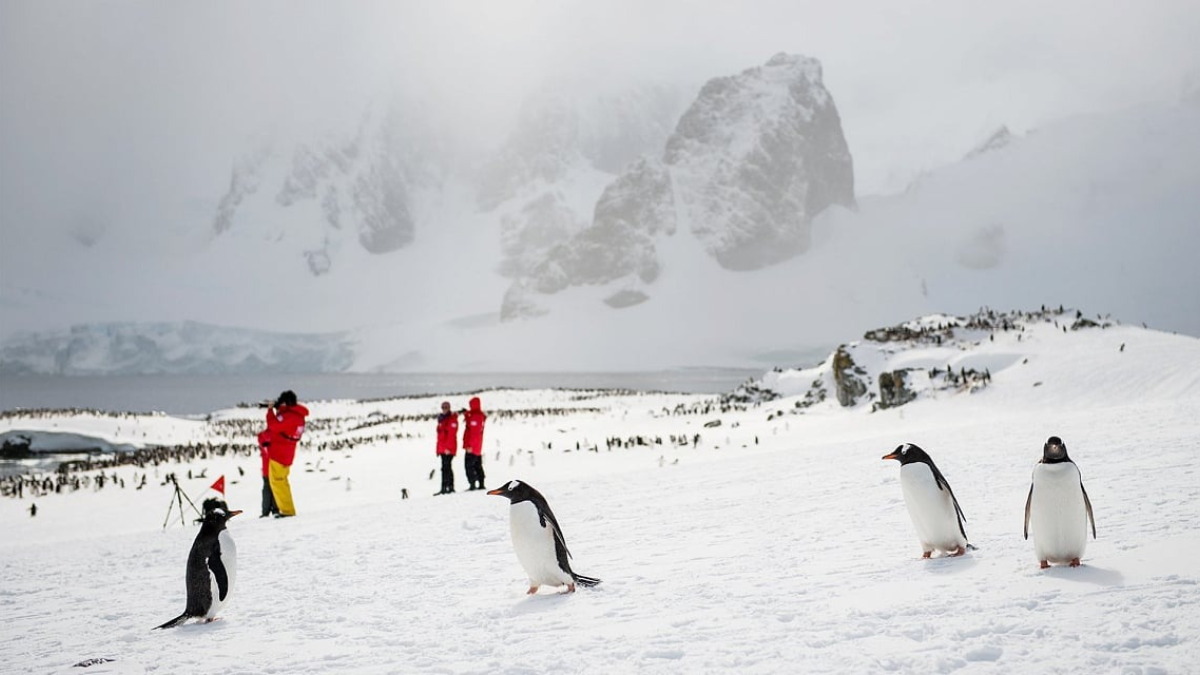
Antarctica is unlike anywhere else on Earth, and that’s exactly why the rules around Antarctica travel insurance are different too. We’ve spent 25 years sending travelers to the White Continent, and one of the most common questions we hear — often after someone has already started planning — is whether their regular travel insurance will actually cover them down there. In almost every case, the honest answer is no: you need dedicated Antarctica travel insurance built specifically for the demands of polar expedition travel.
Here’s what that coverage actually needs to include, why it’s treated differently from a typical vacation policy, and what to look for so you can book with real peace of mind.
Why Standard Travel Insurance Isn’t Enough
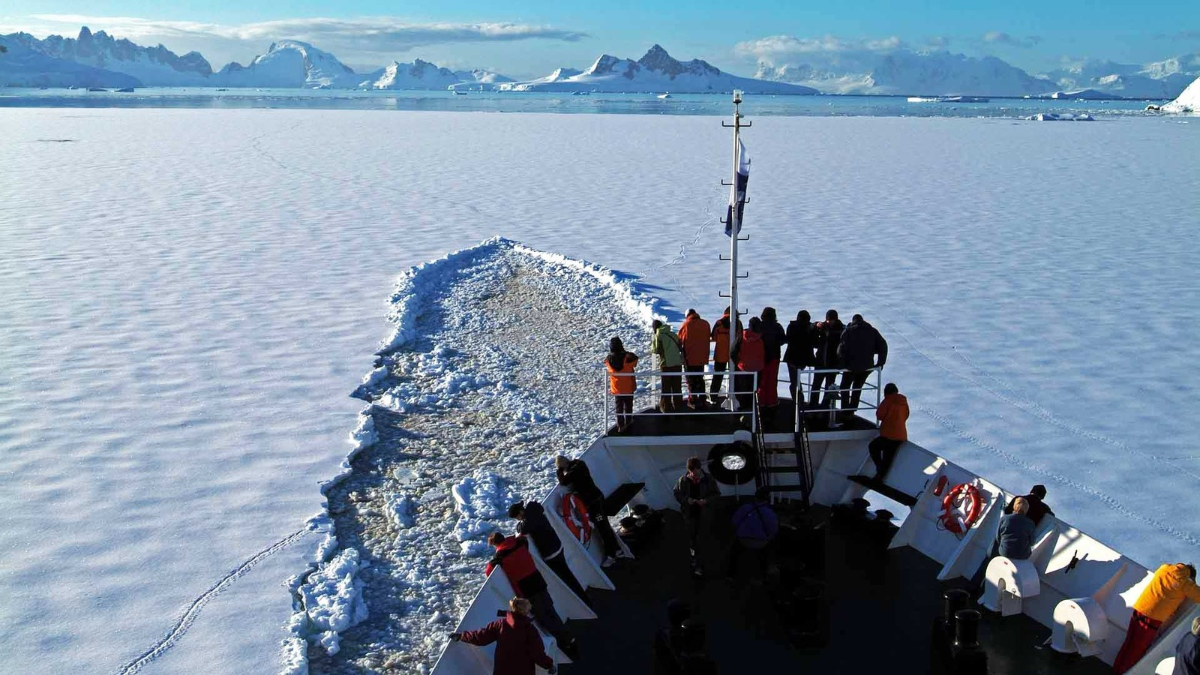
Most travel insurance policies are built around the assumption that help is nearby — a hospital, an airport, a road. Antarctica breaks that assumption completely. You’re sailing through some of the most remote waters on the planet, often days from the nearest port, with no commercial medical infrastructure anywhere near your route.
Because of this, nearly every polar operator requires travelers to carry specific, dedicated coverage before they’re even allowed to board. This isn’t a formality — it’s a genuine safety requirement, and it’s worth understanding well before your final payment is due.
Three Key Reasons You Need Antarctica Travel Insurance
Before getting into the specifics of what to look for, it helps to understand why this matters so much more here than it does for a typical vacation. It comes down to three things:
1. There’s nowhere nearby to turn for help.
Antarctica has no hospitals, no airports, and no roads. If a medical issue arises, getting you to proper care is a genuine logistical undertaking, not a quick taxi ride — and that’s the risk your insurance needs to cover first.
2. It’s a requirement to board, not just a good idea.
Nearly every polar operator requires proof of adequate medical evacuation coverage before you’re allowed on the ship. Without it, you simply won’t be sailing.
3. Your trip is a major financial commitment.
An Antarctic expedition is typically booked and paid for many months in advance. If you’re forced to cancel, that money is only protected if you’ve arranged the right cover beforehand.
Each of these plays out in a different part of your policy, so let’s look at what each one actually requires.
Mandatory Medical and Evacuation Insurance
The one non-negotiable is medical evacuation and repatriation coverage. This is the insurance that gets you off the ship and to proper medical care if something goes wrong — and it needs to account for the reality that “proper medical care” might be hundreds of miles away. It’s worth noting that some operators include this in the passenger fare, so check the inclusions/exclusions section of each voyage to see whether it’s already covered in your payment.
A solid policy for Antarctica should include:
- Emergency medical expenses, including treatment for pre-existing conditions where relevant
- Evacuation costs, covering transport from the vessel to the nearest suitable medical facility, which in the Antarctic Peninsula usually means Ushuaia or Punta Arenas
- Repatriation, should you need to return home for ongoing treatment
- Follow-on medical costs once you’ve reached that first hospital, since evacuation coverage alone doesn’t always extend to treatment after you arrive
Emergency evacuation from Antarctica is genuinely expensive — costs well into six figures are not unusual — which is why operators set high minimum coverage requirements rather than leaving it to chance. Exact minimums vary by operator, so it’s worth checking your specific voyage’s requirements directly, but this is not an area where it makes sense to look for the cheapest possible policy.
We’re always happy to point you toward insurance providers who specialize in polar and expedition travel and understand these requirements properly — though as with anything this personal to your health and circumstances, we’d always recommend speaking with a licensed insurance specialist who can look at your individual situation rather than relying on general guidance alone.
General Travel Insurance: What It Covers (and What It Doesn’t)
Alongside mandatory medical coverage, most travelers also carry a general travel insurance policy. This is the layer that protects the everyday things that can go wrong on any trip:
- Lost, delayed, or damaged luggage
- Flight delays or cancellations that disrupt your connection to the ship
- Missed excursions or portions of your itinerary due to unforeseen circumstances
What general travel insurance typically does not do is protect the full value of your trip if you have to cancel altogether. That’s a separate, and for Antarctica especially important, category of its own.
Why Trip Cancellation Insurance Matters So Much Here
An Antarctic expedition is a significant investment of both time and money, often booked and paid for many months in advance. If something happens before departure — an injury, an illness in the family, a job loss — and you’re forced to cancel, your operator and cruise line still have to apply their standard cancellation terms. Neither we nor your chosen operator can absorb that cost on your behalf; it’s simply outside anyone’s control once a booking is confirmed.
This is exactly the gap trip cancellation insurance is designed to close. If you’ve insured the full value of a non-refundable trip and have to cancel for a covered reason — a qualifying medical issue, for instance — this type of policy can reimburse the prepaid cost you’d otherwise lose entirely.
It’s typically available either as an add-on to a comprehensive travel insurance policy, or in some cases as a benefit already included with certain premium credit cards, so it’s worth checking what you might already have access to before purchasing a separate policy.
Costs for this kind of cover vary depending on your age, the length and value of your trip, and the insurer. As a general guide, premiums are often a small percentage of your total trip cost, though we’d always encourage getting a specific quote rather than budgeting off a rule of thumb, since every policy and provider prices this differently.
A Note for Senior Travelers
We believe age should never stand in the way of a genuine expedition, and we’ve been proud to welcome adventurers well into their 70s and 80s aboard Antarctic voyages. That said, travelers above certain age thresholds — commonly 75 — may find that some standard policies either exclude them or require a specialized senior travel policy instead.
If you’re planning a trip for an older traveler, look for a policy that still covers the essentials — medical evacuation, trip cancellation, pre-existing conditions — but is specifically underwritten for senior travelers. These policies exist precisely because insurers recognize that age alone shouldn’t be a barrier to this kind of once-in-a-lifetime journey, and a good broker can help match the right one to your specific health situation.
When to Sort Out Your Insurance
Insurance is one of those details that’s easy to put off until closer to departure, but it’s worth arranging as soon as your trip is booked. Trip cancellation coverage in particular is most valuable when it’s in place from the moment your deposit is paid, since that’s when your financial exposure begins. Waiting until a few weeks before departure to arrange cover means you may not be protected for the very reasons — illness, injury, family emergency — that are most likely to force a cancellation.
If you’re still finalizing your voyage and want to see what’s available before you commit, our Dates & Prices page is a good place to start comparing departures and understanding what’s included before you also start shopping for insurance.
A Few Providers Worth Knowing
While we can’t advise you on which specific policy is right for your personal circumstances, we can point you toward providers with genuine experience insuring polar and expedition travelers:
- World Nomads (including their senior-focused option for travelers 70+)
- Atlas Travel Insurance
- AIG Travel Guard
- Travelex Insurance
- Arch Insurance / RoamRight
- Allianz Travel Insurance
Each provider structures their polar coverage a little differently, so it’s worth requesting quotes from a couple of them and comparing what’s actually included — particularly around evacuation minimums and pre-existing condition coverage — rather than choosing based on price alone.
Ready to Start Planning Your Antarctica Expedition Cruise?
Insurance can feel like the least exciting part of planning an Antarctic expedition, but it’s also one of the most important pieces to get right. If you have questions about what your specific voyage requires, or you’d like us to point you toward a specialist who can talk you through your options, get in touch with us — we’re always just a message away. We’ve helped travelers navigate this exact question for 25 years, and we’re happy to do the same for you.


