
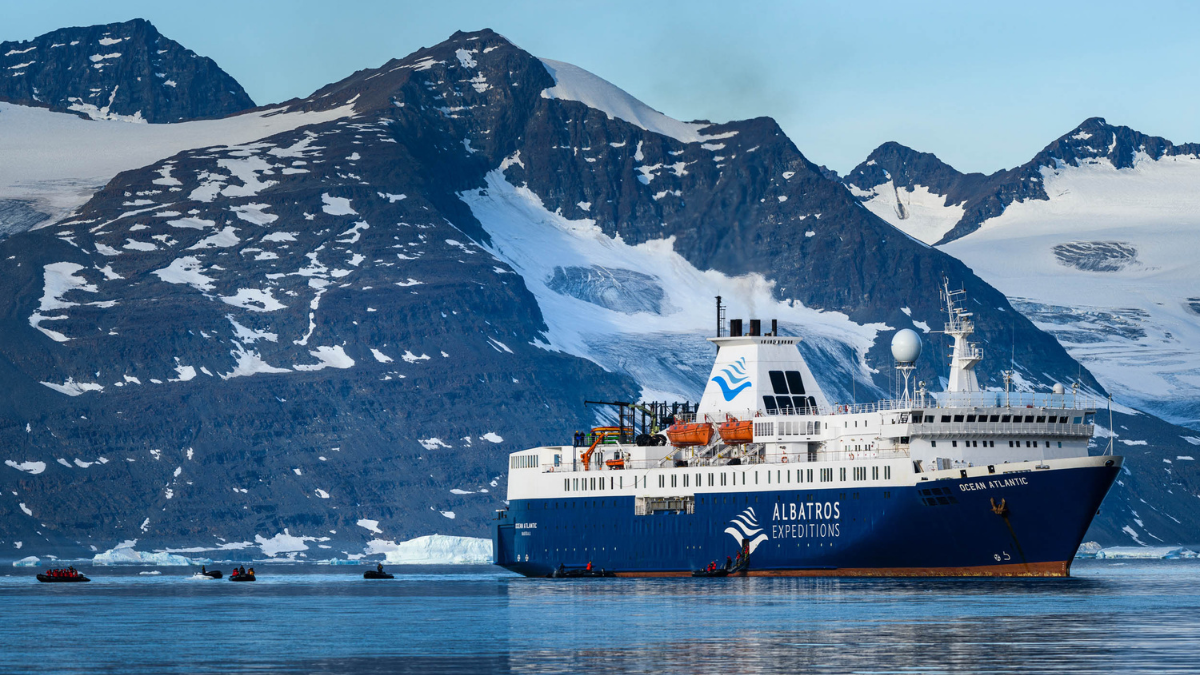
Two Albatros Expeditions ships sail Antarctica with us, and they’re near-identical sisters — same inverted bow, same 104-meter hull, both built this decade. At a glance they look interchangeable.
They aren’t, and the differences matter more than you’d expect. This Albatros Expeditions review covers both, where they diverge, and the thing that genuinely sets this operator apart from most of the Premium category.
Ocean Victory
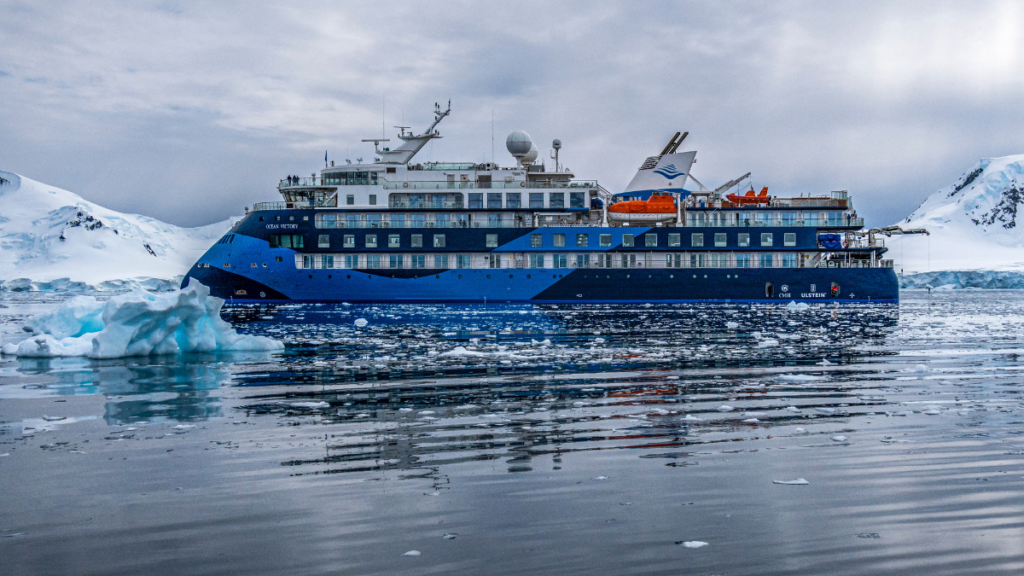
Built in 2021, Ocean Victory carries 175 guests with 120 staff and crew — a ratio of better than three crew to every four guests, which is unusually generous for a ship this size.
She runs Ice Class 1A with Polar Code 6, four diesel engines and two electric, cruising at 13 to 15 knots. Eighteen Zodiacs. Two Rolls-Royce zero-speed stabilizers.
Two features stand out. The heated mudroom with four exterior doors sounds mundane until you’ve waited in line in wet gear on an older ship — four doors means a full Zodiac rotation launches in a fraction of the time, which converts directly into more hours ashore. And the two hydraulic platforms lower to near water level, giving you a vantage point almost no other vessel offers. For photographers, shooting a leopard seal from a meter above the waterline rather than three decks up is a different photograph entirely.
Every stateroom has a generous view, most with private balconies. Observation decks are reachable from multiple indoor locations, and the two outdoor Jacuzzis look out over 360 degrees of ice.
Ocean Albatros
Her sister followed in 2023: 192 guests, 104 crew, 104.4 meters, Polar Code 6 and Ice Class 1A. Four engines totaling 5,600 kW, cruising at 12 knots with a maximum of 15.5. Eighteen Zodiacs, and the same heated mudroom with four exterior doors.
The practical differences from Ocean Victory are worth knowing. Ocean Albatros takes 17 more guests with 16 fewer crew, so the service ratio is noticeably less generous. She carries one stabilizer where Victory has two. And the hydraulic viewing platforms aren’t part of her specification.
In exchange, she’s two years newer and adds a sauna alongside the spa and gym — a small thing, but after a morning on deck in the Drake, not an insignificant one.
Albatros Expeditions Review: What Sets the Operator Apart
The X-Bow.
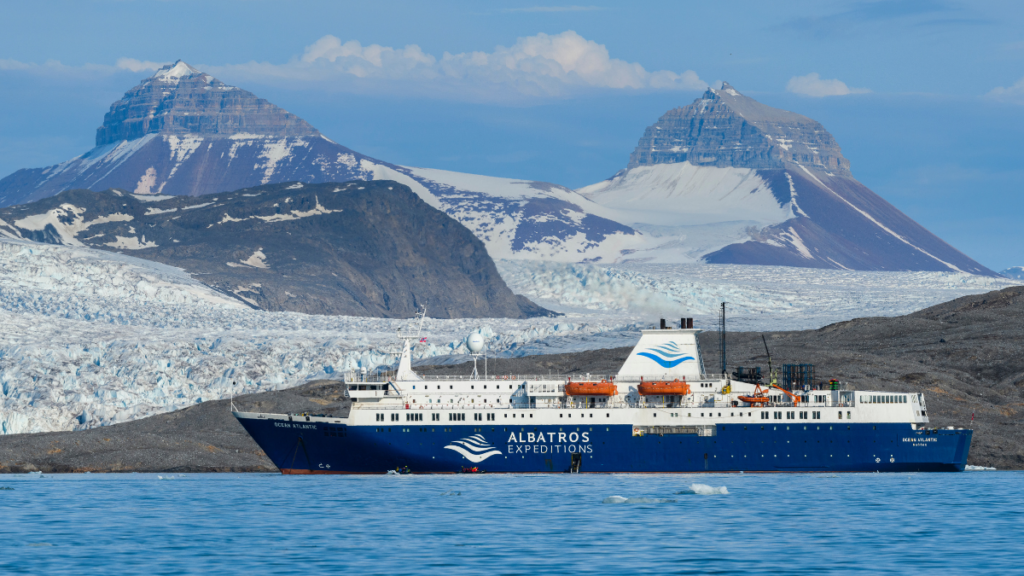
Both ships use the patented inverted bow, and it isn’t styling. The design cuts pitch and slamming in head seas, where a conventional bow drops into a trough and shudders. It won’t make the Drake flat, but it changes the character of the motion. If seasickness genuinely worries you, this is one of the few hull features that makes a tangible difference.
The environmental record, which is more substantial than most.
Both vessels run optimized diesel-electric engines and produce around 60% less carbon than comparable ships in their class. The Green Initiative Program goes further than the usual gestures: near-total elimination of onboard plastics, biodegradable products in bathrooms and laundry, recycling stations, reusable bottles, and expedition jackets made with 50% recycled material.
The citizen science program, which is the strongest reason to choose these ships.
This isn’t a token lecture slot. Guests contribute to active research through NASA GLOBE Observer cloud observations, eBird seabird surveys with the Cornell Lab of Ornithology, phytoplankton sampling for Scripps, water clarity measurements for the Secchi Disk Foundation, and whale identification through Happywhale. Selected voyages add snow algae, macroalgae and penguin population research alongside the Polar Citizen Science Collective. Both ships have a dedicated Citizen Science Area built in.
If the idea of your voyage contributing something appeals, this is among the most comprehensive programs at sea. Our guide to citizen science on expedition ships covers what participating actually involves.
Local First.
The operator prioritizes local guides, regional suppliers and community partners across Greenland, the Canadian Arctic, Svalbard and South America, working directly with local providers rather than through destination management companies, and seeking prior consent from native communities in the Arctic. In Ushuaia it supports La Fundación El Rinconcito del Fin del Mundo de Ayuda y Contención, alongside education and scholarship programs for local high-school and university students.
Where They Sit Against the Rest of the Fleet
Both belong in Premium Expedition Cruising — under 200 guests, balancing genuine adventure against genuine comfort. That puts them alongside the Heritage Adventurer, Ocean Explorer and Greg Mortimer rather than in the luxury tier with Ponant or Hurtigruten.
In practice: balcony cabins, fine dining plus a 24/7 bistro, spa and gym, elevator to every passenger deck, and an expedition program that stays front and center. Beer, wine and soft drinks come with dinner. Our guide to choosing the right ship sets out how the categories compare, and the cost guide covers where Premium sits on price.
Albatros Expeditions Review: Who These Ships Suit
Anyone who wants their trip to count for something. The citizen science program and Local First initiative are the real differentiators here, and both are substantive rather than decorative.
Travelers nervous about the Drake. X-Bow on both, and Ocean Victory’s twin zero-speed stabilizers make her the steadier of the two.
Photographers. Ocean Victory specifically — those hydraulic platforms are a genuine advantage, and eighteen Zodiacs means less waiting.
Anyone wanting comfort without a luxury fare. Modern ships, balconies, Jacuzzis and good food, a tier below luxury pricing.
Less suited to: travelers wanting the smallest possible group. At 175 and 192 guests, both operate under the 100-ashore limit, so landings run in rotation. If maximum landing time and flexibility is the priority, a smaller expedition vessel or a micro ship serves you better.
And between the two: Ocean Victory for the better crew ratio, the extra stabilizer and the viewing platforms. Ocean Albatros if you want the newer ship and the sauna.
At a Glance
| Ocean Victory | Ocean Albatros | |
| Guests | 175 | 192 |
| Crew | 120 | 104 |
| Built | 2021 | 2023 |
| Length | 104 m | 104.4 m |
| Ice class | Ice Class 1A, Polar Code 6 | Ice Class 1A, Polar Code 6 |
| Zodiacs | 18 | 18 |
| Stabilizers | 2 Rolls-Royce zero-speed | 1 |
| Cruising speed | 13–15 knots | 12 knots |
| Notable | Hydraulic viewing platforms | Sauna |
| Category | Premium Expedition Cruising | Premium Expedition Cruising |
Ready to Look at an Albatros Voyage?
These are two of the most quietly impressive ships sailing south — modern, efficient, comfortable without showing off, and backed by an environmental and science program that isn’t just words on a brochure.
If you’d like to know which departures are running, how they compare with the other Premium vessels, or which of the two sisters suits you better, message us on WhatsApp, send an enquiry, or drop us an email. Expedition cruising rewards picking the right ship, and we’re happy to talk it through.