
So, you’ve decided to journey to Antarctica. Congratulations — you’re about to embark on one of the most jaw-dropping adventures of your life. But now comes the big question: what exactly do you pack for an Antarctica cruise? Don’t worry, we’ve got you covered (literally). Here’s your complete packing list, built from 25 years of watching travelers get this right — and occasionally get it hilariously wrong.
Before we get into individual items, it helps to understand the one principle that makes everything else on this list make sense: layering. Antarctic weather can shift from calm and sunny to windy and biting within the same excursion, and the only way to stay comfortable is to be able to add or remove layers as conditions change. Think of your packing list less as “what to bring” and more as “how to build a system.” There are five broad categories of items to bring; we’ll run through all of them here, plus we’ve put together a handy quick-glance checklist at the end.
What to Pack for an Antarctica Cruise
1. Base and Mid Layers
Your layers are the foundation of staying warm and comfortable on deck and during landings. The goal is flexibility — being able to add or shed a layer as temperatures shift throughout the day, rather than relying on one bulky item to do all the work.
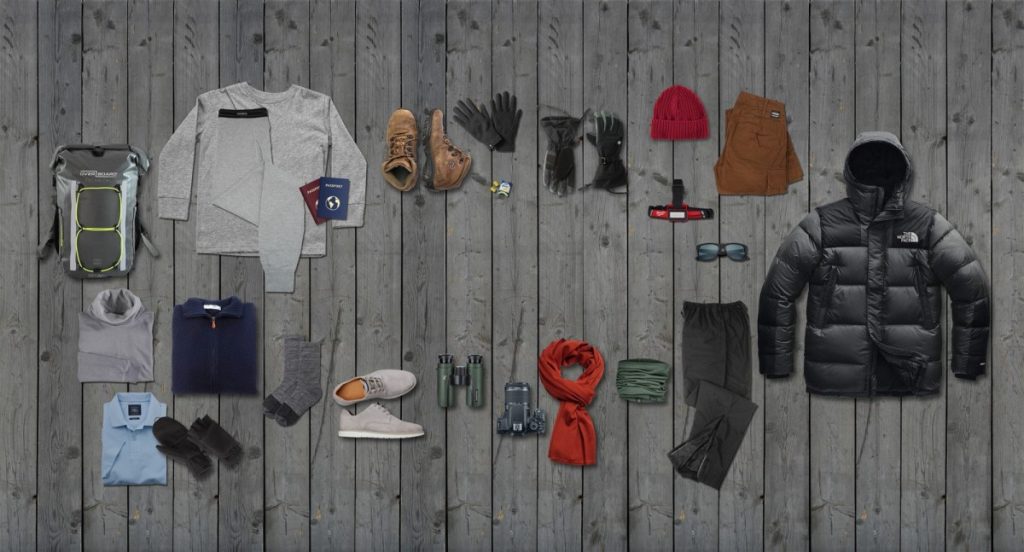
- Thermal base layers – Think of them as cozy hugs for your skin. Pack at least two sets so you always have a dry one in rotation.
- A mid-layer fleece or insulated jacket – This sits between your base layer and parka, and it’s the piece most first-timers forget to pack, since it’s easy to assume the parka alone will be enough. It’s what lets you fine-tune your warmth without overheating indoors or shivering on deck.
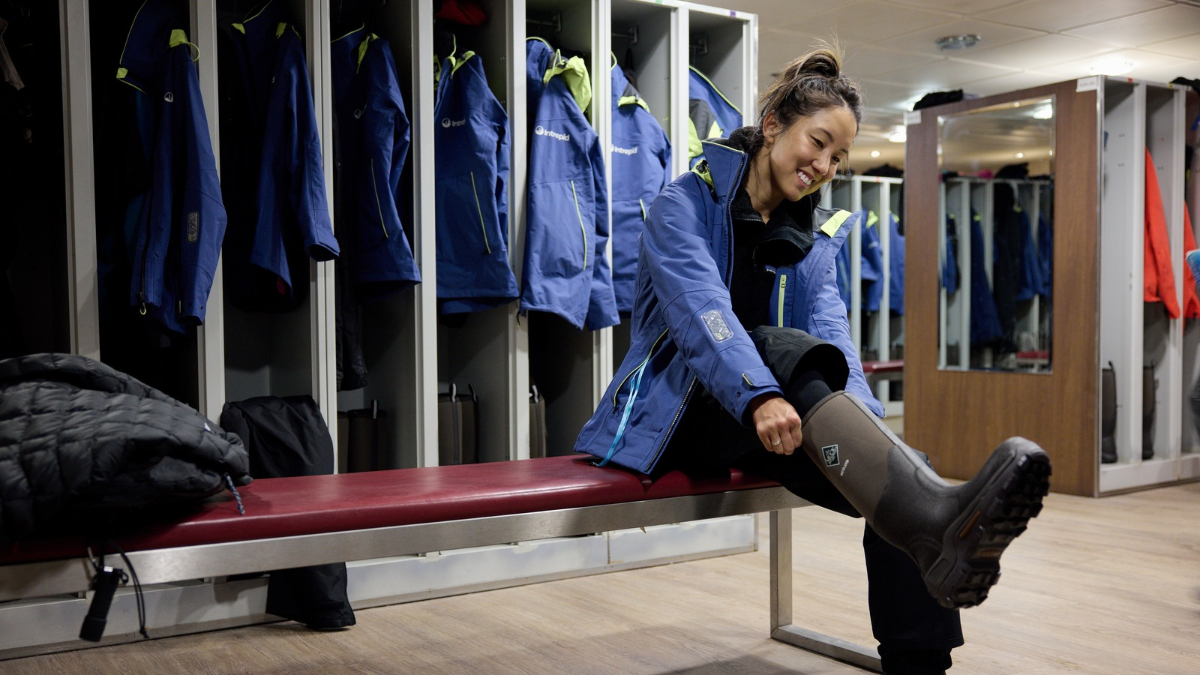
- A waterproof, windproof parka – Most expedition cruises provide one as part of your voyage, but always confirm this in advance since policies vary by operator. This is your best friend against the icy breeze on deck and during landings.
- Insulated waterproof pants – Because nobody wants soggy legs halfway through a Zodiac ride.
2. Footwear
Your feet take the brunt of wet landings and long hours standing on deck, so getting this right matters more than people expect. A good footwear setup keeps you dry and comfortable no matter how many times you’re in and out of the Zodiac.
- Waterproof boots – Often supplied onboard for landings, but confirm this with your operator before you pack your own.
- Wool socks (lots of them) – Bring more than you think you need. Somehow, socks multiply in importance the moment you’re standing in a Zodiac.
- Casual shoes – For onboard comfort during meals, lectures, and evenings in the lounge.
3. Accessories
It’s easy to underestimate how much small accessories affect your overall comfort in polar conditions. These are the details that protect your extremities and your skin from wind, sun, and cold in equal measure.
- Gloves and liners – Layer up your hands the same way you layer your body. A thin liner glove under a waterproof outer glove lets you operate a camera without losing feeling in your fingers.
- Neck gaiter or scarf – Keeps the wind from sneaking in around your collar.
- A warm hat that covers your ears – Bonus points if it makes you look like a documentary explorer.
- Sunglasses – The reflection off ice and snow is no joke, even on overcast days.
- Sunscreen and lip balm with SPF – Yes, really. The sun doesn’t care that it’s cold; UV exposure at these latitudes, especially with light reflecting off snow and water, can catch people off guard.
4. Camera Gear and Electronics
Antarctica is one of the most photogenic places on Earth, and packing the right gear makes a real difference to how much of it you actually capture.
- A camera with a versatile zoom lens – Wildlife is often at a distance, so a zoom in the range of 100–400mm gives you the flexibility to capture both close-up detail and distant sightings without needing to swap lenses on a moving Zodiac.
- A dry bag or waterproof camera case – Protects your camera and phone during Zodiac rides and wet landings, where sea spray is a near-certainty. This is one of the most commonly forgotten items on any Antarctica packing list, since it’s easy to assume your camera bag alone will be enough protection.
- Extra batteries – Cold temperatures drain batteries far faster than you’re used to. Keep spares in an inside pocket close to your body, where they’ll stay warmer.
- Memory cards – Bring more than you think you’ll need. Between wildlife, landscapes, and icebergs, most travelers end up shooting far more than expected.
- A lens cloth – Condensation moving between the cold outdoor air and a warm ship cabin can fog up a lens quickly.
- Binoculars – Essential for spotting whales, seabirds, and distant wildlife that your camera lens might not reach.
- A universal power adapter – Depending on your ship’s origin and registration, outlets onboard may differ from what you’re used to at home.
5. Medications and Health Essentials
Because Antarctica is remote by nature, it’s worth being deliberate about what you pack for your health and comfort, separate from what your travel insurance covers in an emergency.
- Prescription medications – Pack enough for your full trip plus a few extra days as a buffer, and keep them in your carry-on rather than checked luggage, in case of delays.
- Seasickness remedies – The Drake Passage crossing, in particular, can be rough. Whether you prefer tablets, patches, or acupressure bands, bring your preferred remedy rather than relying on what might be available onboard.
- A basic personal first aid kit – Blister plasters, pain relief, and any personal essentials are worth having on hand, even though ships carry medical facilities of their own.
- Hand sanitizer and personal hygiene items – Especially useful given the close quarters of shared expedition spaces.
If you haven’t yet sorted your Antarctica travel insurance, it’s worth doing before you finalize your packing list, since some policies have specific requirements around medication documentation for emergency evacuation scenarios.
What the Ship Actually Provides
One of the most common questions we get is how much of this list is genuinely necessary to buy versus what’s already provided onboard. This varies by operator, but many expedition ships include:
- A waterproof expedition parka, often yours to keep as a souvenir
- Muck boots or waterproof boots for wet landings
- Trekking poles for shore excursions
- Life jackets for all Zodiac and landing activities
It’s worth checking your specific voyage’s inclusions before you buy anything expensive, since duplicating gear the ship already provides is one of the most common — and avoidable — overpacking mistakes we see.
Extra Essentials Worth Packing
- A compact daypack for excursions – Another item that rarely makes anyone’s first list, yet almost everyone wishes they’d brought by day three. Your parka pockets can only hold so much, and you’ll want quick access to your camera, sunscreen, gloves, and a snack during hours-long shore excursions. Look for something water-resistant, since it will get wet.
- Swimwear – For the brave souls attempting the Polar Plunge.
- A reusable water bottle – Staying hydrated matters even in cold climates, and most ships have refill stations onboard.
- Hand and toe warmers – Small, pocket-sized, and genuinely useful during longer landings.
- A journal or notebook – Many travelers find they want to jot down the moments that don’t quite fit in a photograph.
Antarctica Cruise Packing List
| Item | Category | Often Provided by Ship? |
| Thermal base layers (2+ sets) | Base & Mid Layers | No |
| Mid-layer fleece or insulated jacket | Base & Mid Layers | No |
| Waterproof, windproof parka | Base & Mid Layers | Yes — confirm with operator |
| Insulated waterproof pants | Base & Mid Layers | No |
| Waterproof boots | Footwear | Yes — confirm with operator |
| Wool socks | Footwear | No |
| Casual shoes | Footwear | No |
| Gloves and liners | Accessories | No |
| Neck gaiter or scarf | Accessories | No |
| Warm hat (ear-covering) | Accessories | No |
| Sunglasses | Accessories | No |
| Sunscreen and SPF lip balm | Accessories | No |
| Camera | Camera & Electronics | No |
| Dry bag or waterproof camera case | Camera & Electronics | No |
| Extra batteries | Camera & Electronics | No |
| Memory cards | Camera & Electronics | No |
| Lens cloth | Camera & Electronics | No |
| Binoculars | Camera & Electronics | No |
| Universal power adapter | Camera & Electronics | No |
| Prescription medications | Health | No |
| Seasickness remedies | Health | No |
| Personal first aid kit | Health | No |
| Hand sanitizer/ hygiene items | Health | No |
| Compact daypack for excursions | Extras | No |
| Swimwear (for the Polar Plunge) | Extras | No |
| Reusable water bottle | Extras | No |
| Hand and toe warmers | Extras | No |
Packing for an Antarctica cruise isn’t about fashion; it’s about function — though you’ll absolutely rock that bright parka in every photo. Bring the essentials, layer smart, and remember: no one has ever said, “I wish I’d packed fewer socks.”
Ready to Embark on Your Polar Expedition Cruise?
If you have questions about what your specific voyage provides or what else you should bring, get in touch with us — we’re always happy to help you pack with confidence for the adventure of a lifetime.