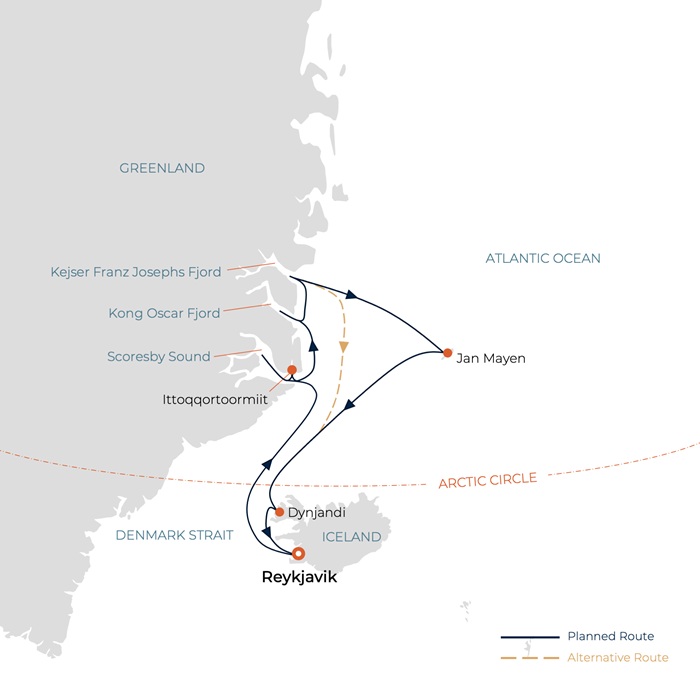
Depart Iceland and sail deep into East Greenland, where vast fjord systems, drifting ice, and towering mountains define the rhythm of exploration. Rather than following a fixed route, each day adapts to ice, weather, and wildlife, allowing you to experience a landscape still governed by nature itself. From a rare visit to one of the Arctic’s most isolated communities to extended exploration within the world’s largest fjord system, the voyage reveals the Arctic as a connected whole rather than a series of individual stops. If lucky, you may cross open polar seas and reach the volcanic isolation of Jan Mayen before returning to Iceland’s dramatic Westfjords. As late September brings longer nights, the voyage also enters a favorable period for aurora activity, with opportunities to witness the Northern Lights under clear skies and suitable conditions. You are not simply visiting remote places, but taking part in a continuous Arctic expedition.
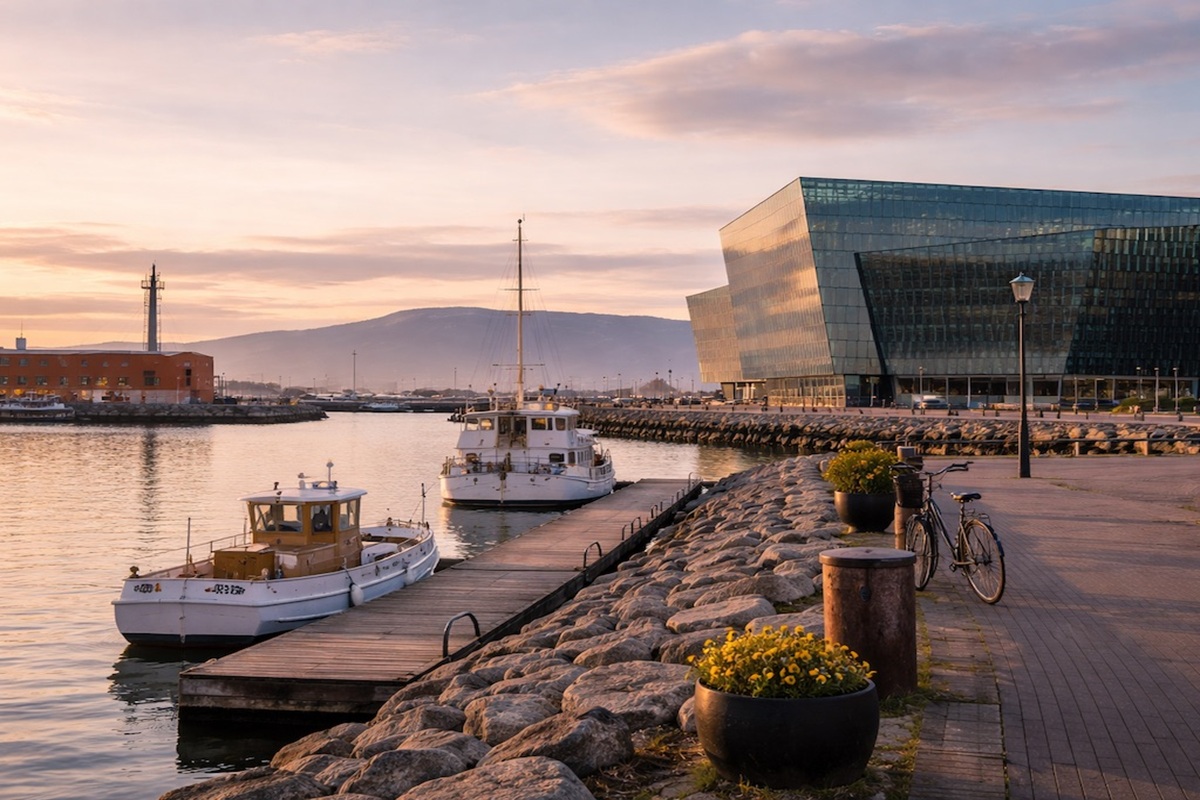
Your journey begins in Reykjavik, Iceland’s vibrant capital. After arriving at the port, you will board the ship and settle into your cabin. In the early evening, the ship departs Reykjavik Bay and heads north into the North Atlantic. As the city fades from view, the voyage transitions from the familiar into the open ocean, marking the start of a true Arctic expedition.
Today is a full day at sea as the ship crosses the Denmark Strait toward East Greenland. Onboard, the expedition team offers briefings and presentations introducing the geography, ice conditions, wildlife, and exploration history of the region ahead. Seabirds often accompany the ship, and sightings of whales are possible as you approach colder Arctic waters.
Over the coming days, venture deep into East Greenland, one of the Arctic’s most remote and least disturbed regions. This vast area encompasses Northeast Greenland National Park and Scoresby Sound, one of the largest fjord systems on Earth. Human presence here is minimal, and natural processes continue largely uninterrupted.
Your exploration throughout East Greenland is entirely guided by conditions. Ice movement, wind, tides, visibility, and wildlife activity together shape each day’s decisions. Rather than following a fixed itinerary, your experienced expedition team adapts plans in response to the environment, allowing you to experience a landscape still governed by nature itself.
Possible landing and cruising sites may include:
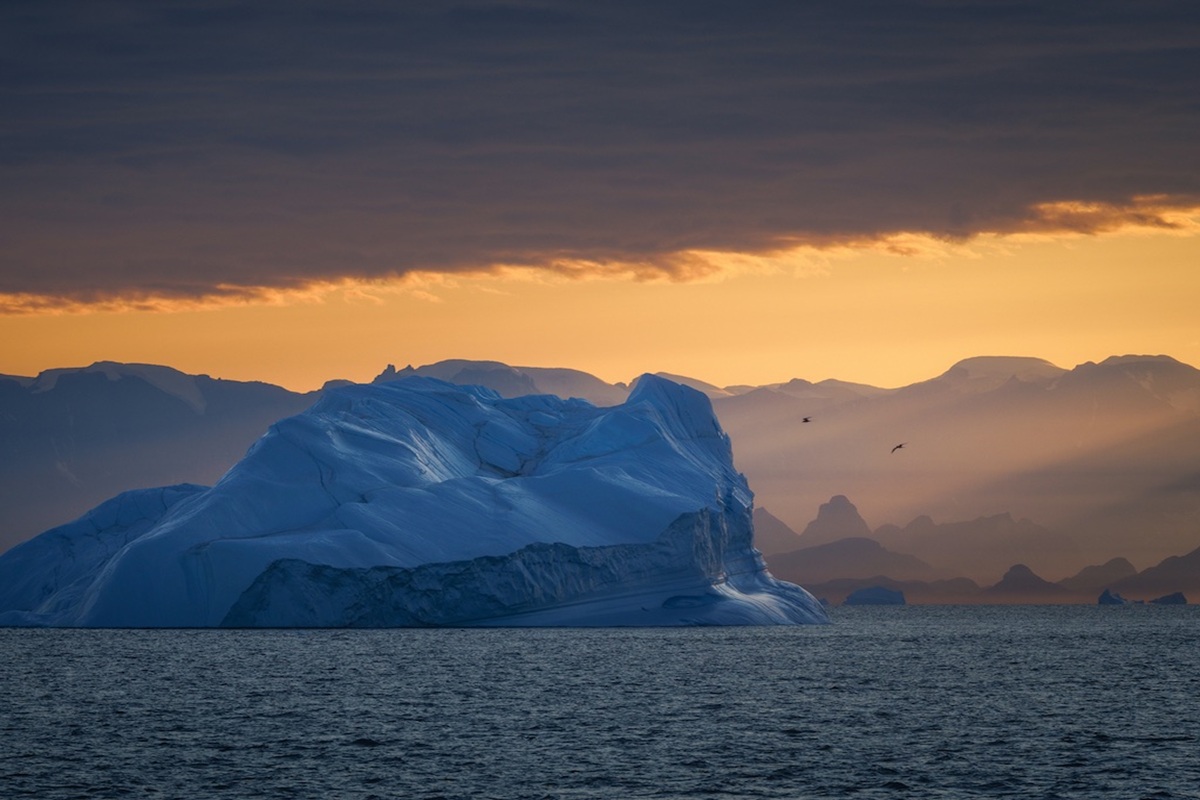
Scoresby Sound: Your exploration begins within Scoresby Sound, widely regarded as the largest fjord system in the world. This immense network of waterways extends deep into Greenland’s interior, where glaciers, towering mountains, and drifting icebergs create one of the Arctic’s most powerful natural settings. Scoresby Sound is also a dynamic marine and sea ice environment. The movement of icebergs and pack ice creates conditions that can attract a range of Arctic wildlife. While encounters are never predictable, this region is known for the possibility of observing polar bears, particularly near ice edges and drifting ice, as well as seals and occasional whale species moving through the fjord system.
Ittoqqortoormiit: Ittoqqortoormiit is one of the most remote permanent settlements in East Greenland, set on the edge of the Scoresby Sound region. Your visit takes the form of an open town experience, offering insight into daily life in a High Arctic community shaped by ice, seasons, and isolation. You may explore at a relaxed pace, visiting the museum, church, and community center to learn about local handicrafts, traditional clothing, and cultural practices. When appropriate, some residents may invite small groups to join a traditional “Kaffemik”, a social gathering centered on conversation and shared stories.
Northeast Greenland National Park: The final phase of your East Greenland expedition is devoted to Northeast Greenland National Park, the largest national park in the world and one of the most pristine wilderness areas on the planet. There are no permanent settlements here. Fjords, glaciers, exposed rock, tundra, and wildlife form a landscape shaped solely by natural forces. You navigate through the fjord systems of Kejser Franz Josephs Fjord and the broader Kong Oscar Fjord region, where steep mountain walls rise directly from the sea and glaciers descend from the interior. As you progress deeper into the fjords, landscapes of different scales overlap: narrow channels open into wide basins, ice cliffs give way to drifting icebergs, and sheltered bays alternate with exposed waterways. Activities are planned flexibly and may include Zodiac cruising and landings for short guided walks when conditions allow. On land, tundra terrain offers opportunities to observe Arctic flora and search for wildlife such as musk oxen, Arctic foxes, and birdlife adapted to this high-latitude environment.
You spend a day crossing the Greenland Sea, sailing eastward toward Jan Mayen. You may choose to spend time on deck watching for whales and seabirds, or attend presentations led by the expedition team covering Arctic history, wildlife, glaciology, and exploration.
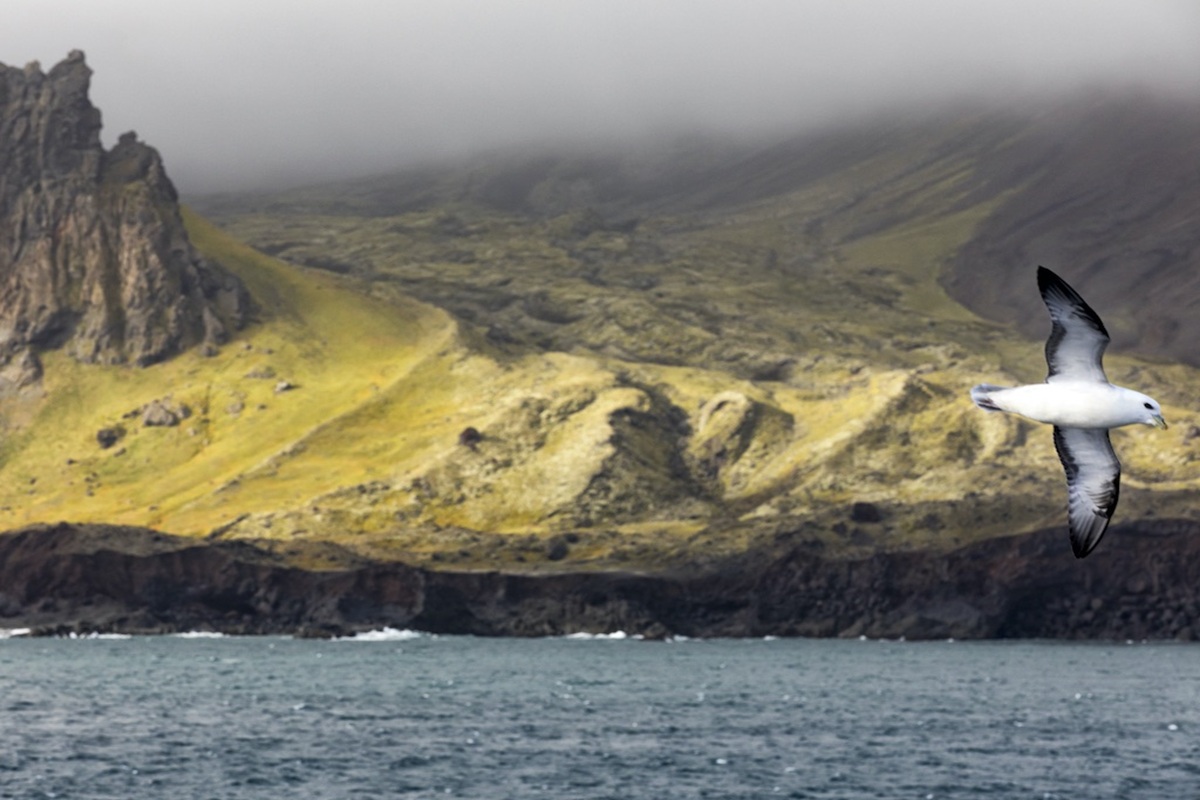
Jan Mayen lies at the meeting point of the Greenland Sea and the Norwegian Sea, and ranks among the most remote and tightly controlled islands in the Arctic. Dominated by the Beerenberg volcano, the island is defined by a glacier capped volcanic cone rising above dark basalt shores. With no permanent civilian population, Jan Mayen remains largely untouched, used primarily for scientific and monitoring purposes, and holds exceptional value as a rare high latitude landing possibility.
Please note: Jan Mayen is administered by Norway and hosts military and meteorological facilities. Permission to approach or land is subject to final approval. If access is not granted, the day will be reallocated to extended exploration in East Greenland.
The ship continues south toward Icelandic waters. This final full sea day offers a slower pace, with time to review the journey, enjoy onboard discussions, and remain alert for wildlife sightings. It serves as a natural transition from Arctic wilderness back toward Iceland.
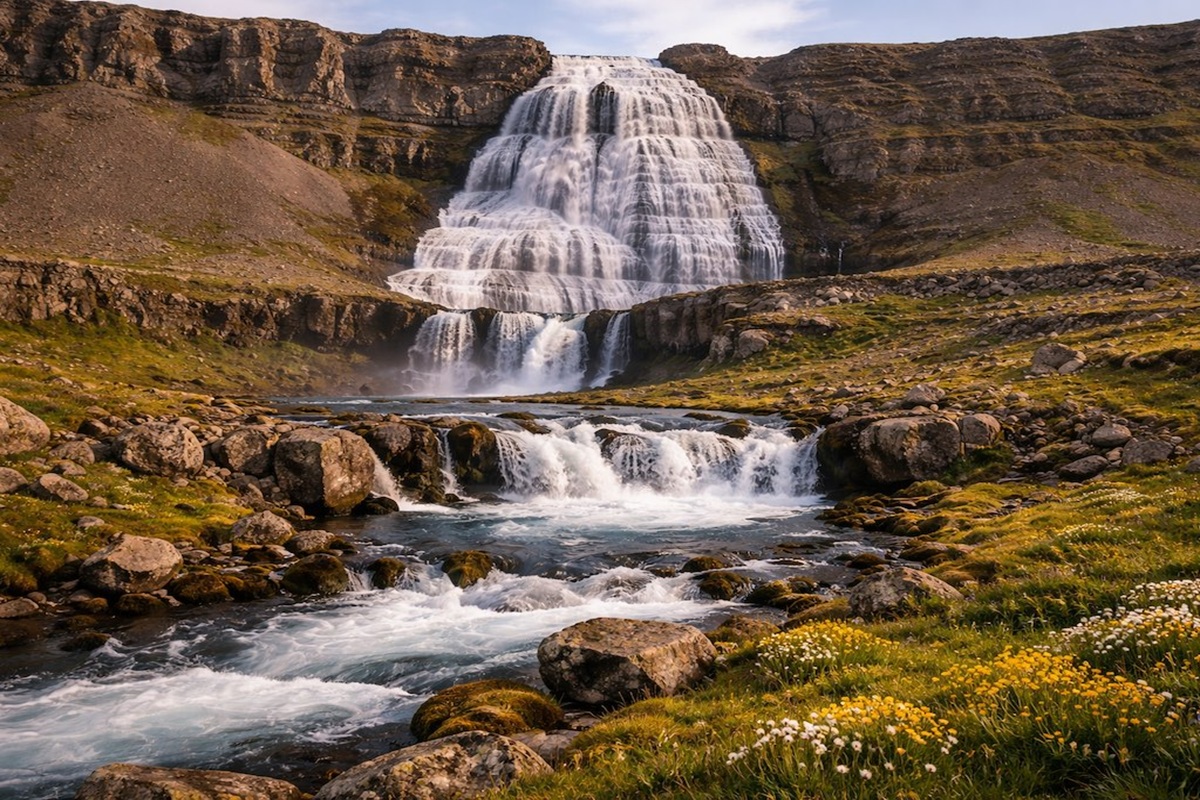
Located in Iceland’s Westfjords, Dynjandi is a monumental multi tiered waterfall cascading down the mountainside at the head of the fjord. If conditions allow, you may go ashore and walk toward the falls, experiencing one of Iceland’s most iconic natural landmarks as the expedition draws toward its conclusion.
Early in the morning, the ship returns to Reykjavik. After breakfast, you will disembark and continue your onward journey.
Included in this voyage:
Excluded in this voyage: