Sort by
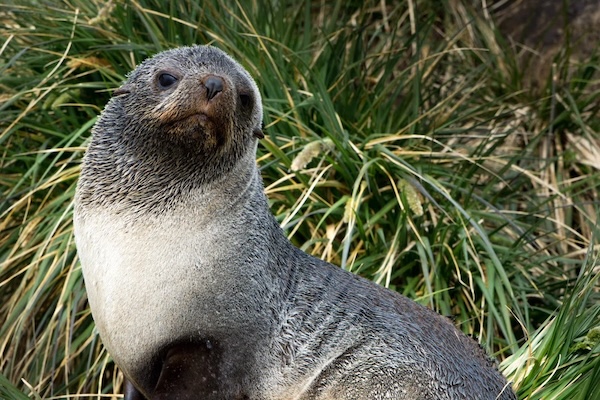
Show Prices
From$11,600

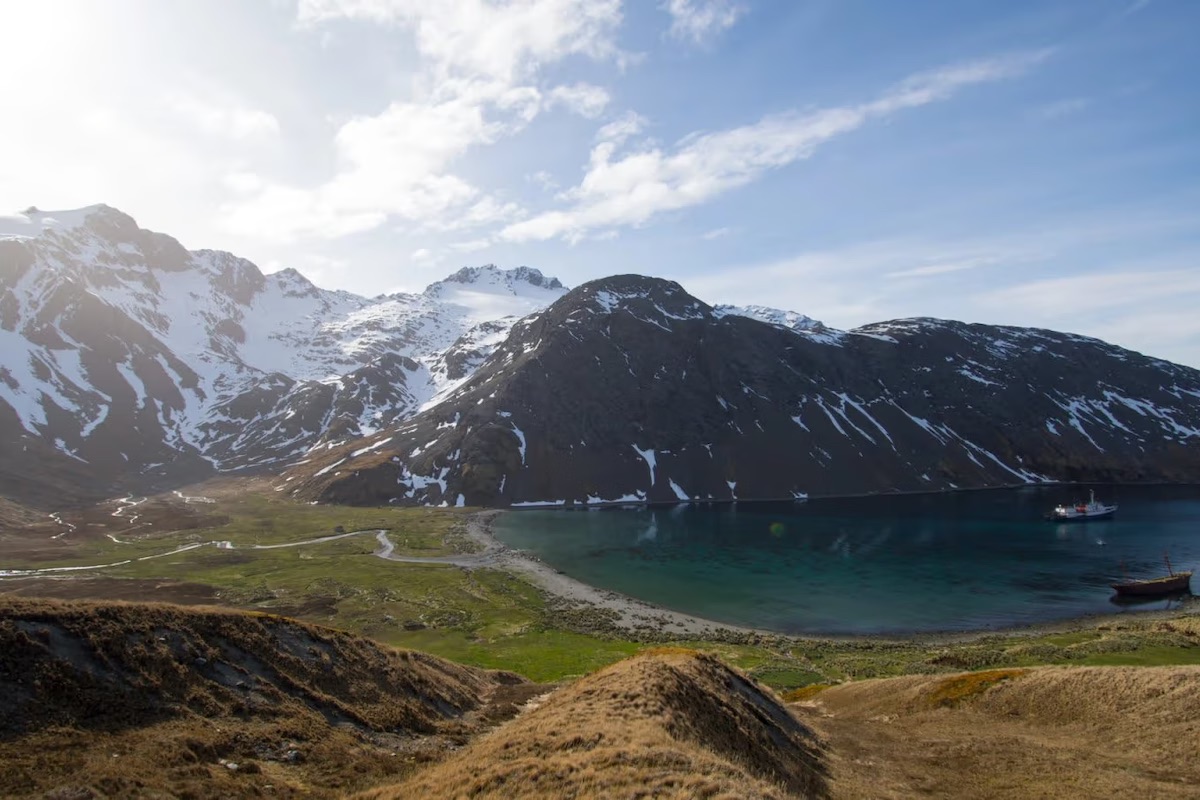
The South Georgia Islands offer visitors the opportunity to appreciate spectacular landscapes, encounter exceptional fauna, discover the history of great human achievements, and at the same time represent a group of islands so remote that coming to know them is a true privilege. It is easy to think “small” when we speak of islands, but with South Georgia this concept is very different. The mountain ranges offer a captivating landscape. There are sheltered valleys with meltwater streams, tussock grasslands and glacial moraines that permit an up-close view of the wildlife of the place. Glaciers cover the mountains, and even enormous tabular icebergs that break away from the ice platforms of the far south strike the coasts of the islands, becoming characteristic of this magnificent landscape. Join our expedition cruise and explore alongside us all the facets that South Georgia has to offer.
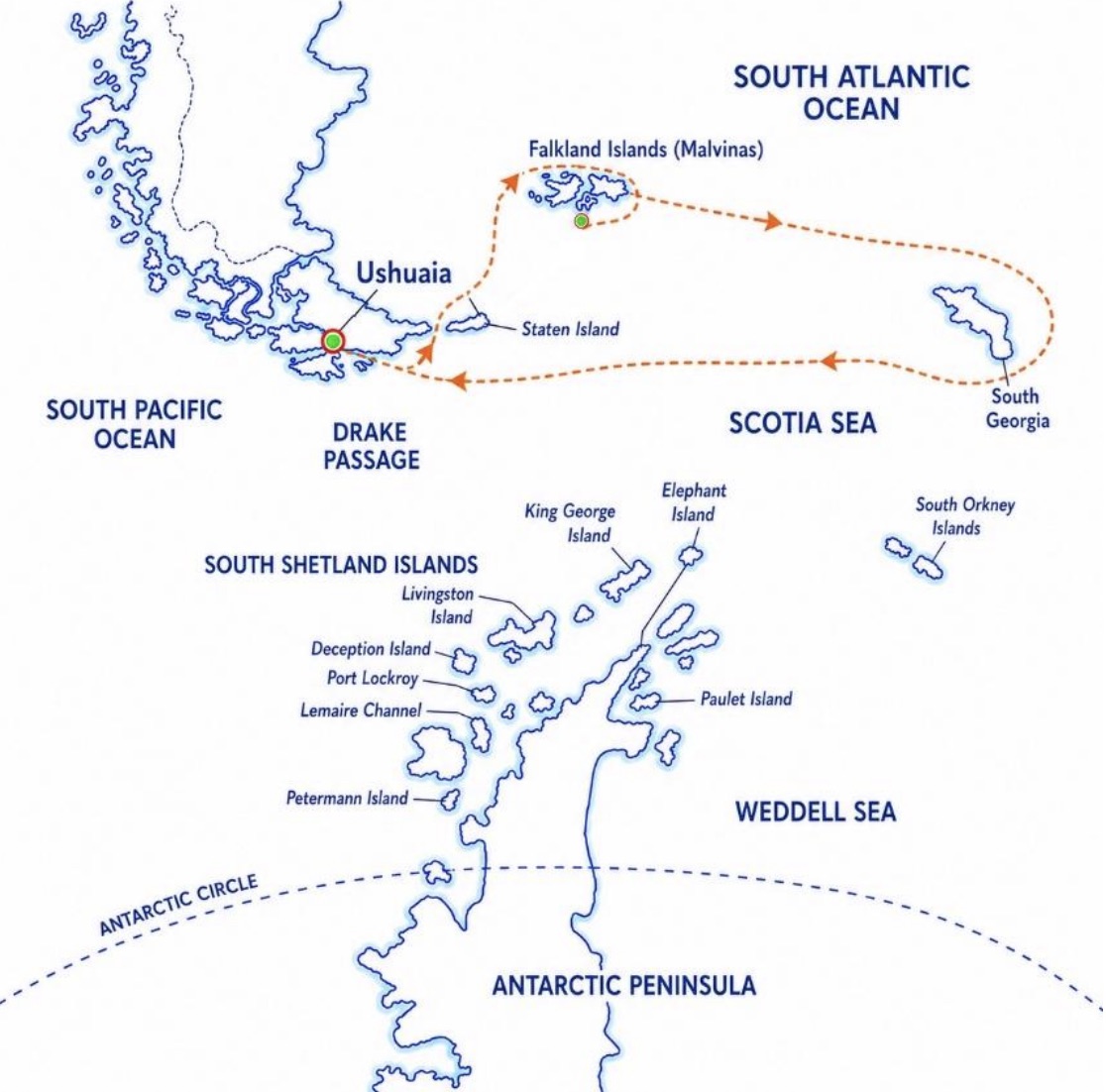
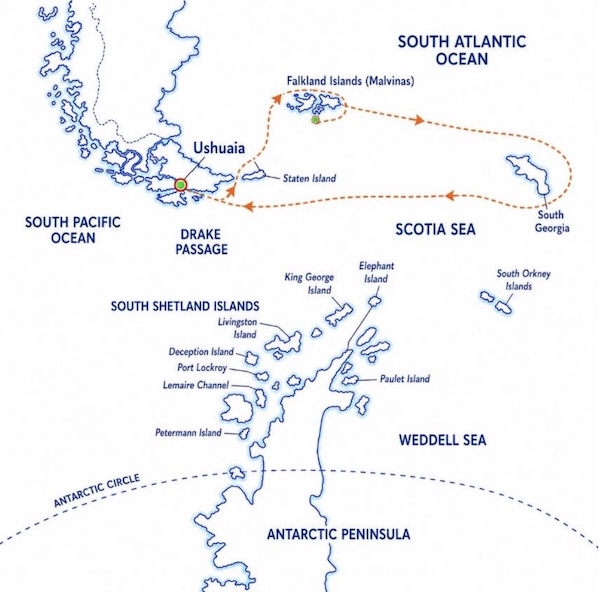
Please note: this itinerary is meant to serve as a general guide. Plans may change along the way, depending on weather, sea conditions, or choices made by the expedition leader and team to give you the safest and most rewarding experience.
In the afternoon we will board the vessel. Following a welcome cocktail and presentation of the crew and expedition staff, you will have time to get to know your fellow travelers. You will navigate toward the islands of the far west of the Falklands (Falkland Islands), known for their rugged beauty and abundance of birds.
The open bridge policy on the USHUAIA allows us to join the officers on the bridge and learn about navigation, watch for marine life, and enjoy the views of the open ocean. These waters are also home to an interesting group of seabirds, which often ride the currents created in the wake of the ship, such as albatrosses and petrels. Join the expedition staff and naturalists on deck whilst we are at sea as we search for seabirds and other local wildlife, such as orcas and dolphins. An interesting selection of lectures will help us to prepare for our first excursions in the Falkland Islands (Malvinas).
With favorable conditions, our lecturers and naturalists will accompany you on your first excursion on day 3. On the western coast we might visit the following islands:
West Point Island
West Point Island lies off the most north-westerly point of mainland West Falkland (Malvinas). The attractive settlement sits on the edge of a small harbor on the eastern side of the Island, in the lee of Black Bog Hill and Michael’s Mount. The valley between these two peaks rolls over the center of the island to the dramatic Devil’s Nose, one of the Island’s main attractions. From here visitors are treated to splendid views of Cliff Mountain, the Island’s highest point at 1,250 ft (381 m), and the highest cliffs in the Falklands (Malvinas).
Carcass Island
Carcass Island lies to the north-west of the Falklands archipelago (Malvinas). A mature tussac plantation covers much of the lower ground below Jason Hill to the east. The availability of abundant cover and the absence of cats, rats and mice throughout the island have made for a spectacularly large population of small birds, which is one of Carcass Island’s most delightful features. Gentoo and Magellanic Penguins do also nest here. Peale’s and Commerson’s dolphins come frequently close to the shoreline to get a glimpse of the visitors as well. At the settlement with its beautiful gardens, we are invited to enjoy tea and cookies with the locals (optional activity with additional cost).
Overnight we will sail around the northern islands of the archipelago in easterly direction to reach the capital, Stanley, in the following morning.
In the morning hours we will have time to explore the quaint little town of Stanley and its wonderful Museum, souvenir shops and pubs. The town was established in the early 1840’s. Isolation and the weather conditions made life hard, but progress was gradual and punctuated by the extremely eventful times of involvement in two world wars.
For those who are more interested in the outstanding wildlife the Islands have to offer, you do not even have to leave town to enjoy it. Southern Giant Petrels often fly close to the shoreline. The endemic Falkland Steamer Ducks abound on the shorelines while Kelp Gulls can often be seen flying together with Dolphin Gulls. The less obvious but frequent visitors to Stanley area are Black-crowned Night Herons, Red-backed Hawks and Peregrine Falcons. Turkey Vultures are regularly seen on top of any prominent building. Many pairs of Upland Geese frequent the park and it might be nice to take a stroll around the gardens of town to see some of the singing birds as well.
In the early afternoon it is time to set sail, heading for South Georgia
The return from subantarctic waters brings us back to the South Atlantic following the same historic course that for centuries connected the Falklands with the ends of the austral world. Instead of navigating directly to Ushuaia, we choose to make a stop at Bleaker Island, at the southwestern extreme of the archipelago, adding one final land experience before undertaking the final crossing toward Beagle Channel. It is a farewell worthy of the voyage: a remote island, with scarcely any human intervention, where nature dictates the pace.
During these days we will continue our extensive onboard conference program. Our expert naturalists share their knowledge of the fauna and unique ecosystems we will encounter during the voyage.
South Georgia is considered one of the most beautiful and inspiring places in the world, with practically greater quantities of fauna than any other place on the planet.
South Georgia will come in sight! Though extremely isolated, it has amazing scenery ranging from high mountains and mighty glaciers to deep fjords and low-lying grassland. If the weather is favorable, we would aim to visit one of the following sites in the late afternoon:
Elsehul
Situated at the northwestern extremity of South Georgia on the eastern side of the knife-edged summit ridges of Parydian Peninsula, Elsehul is a beautiful little harbor. It is the only visitor site on the island, where colonies of Black-browed and Grey-headed Albatrosses can be viewed from zodiacs within the protection of sheltered inshore waters.
Right Whale Bay
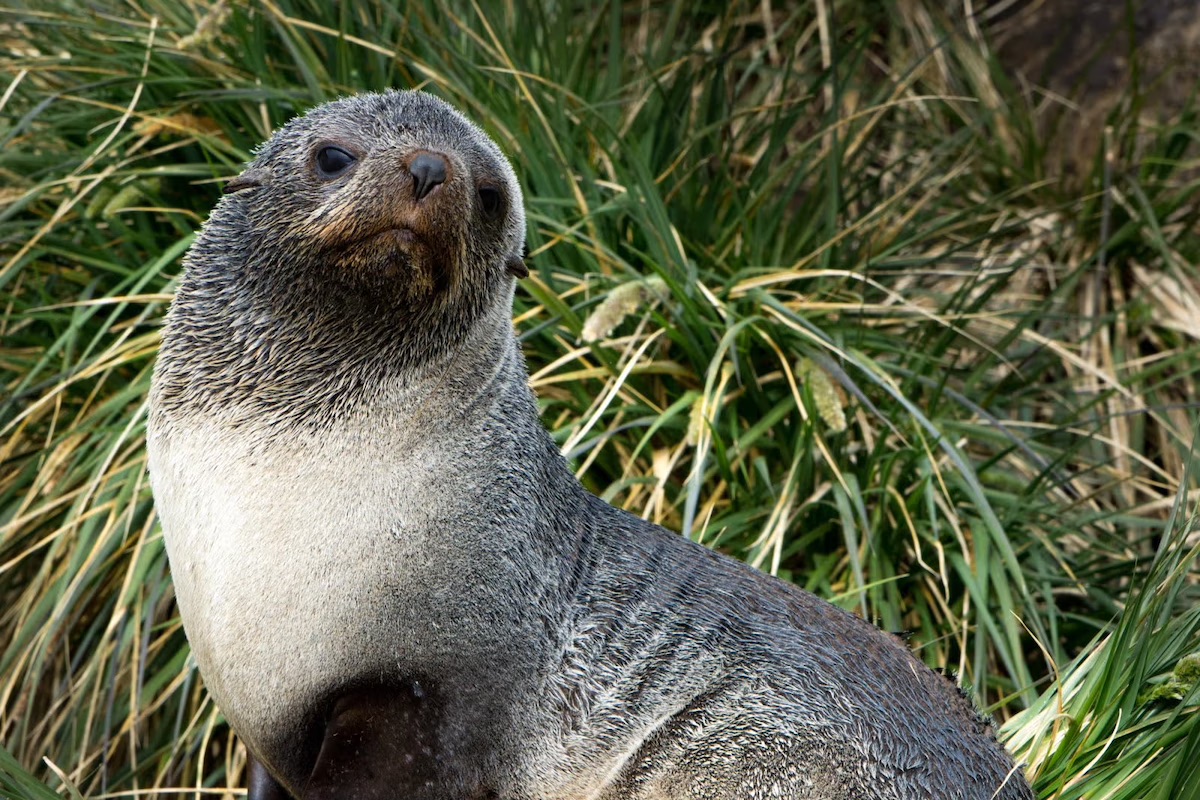
Right Whale Bay is a bay 1.5 miles (2.4 km) wide, entered between Craigie Point and Nameless Point along the north coast of South Georgia. The name dates back to at least 1922, when South Georgia was still a center for commercial whaling. Today we hope to encounter a small colony of King Penguins, along with Giant Petrels, gulls and breeding fur seals on the black ashen beach.
Our exact itinerary will depend on local land and sea conditions but the following destinations are among those that we would like to explore:
Salisbury Plain
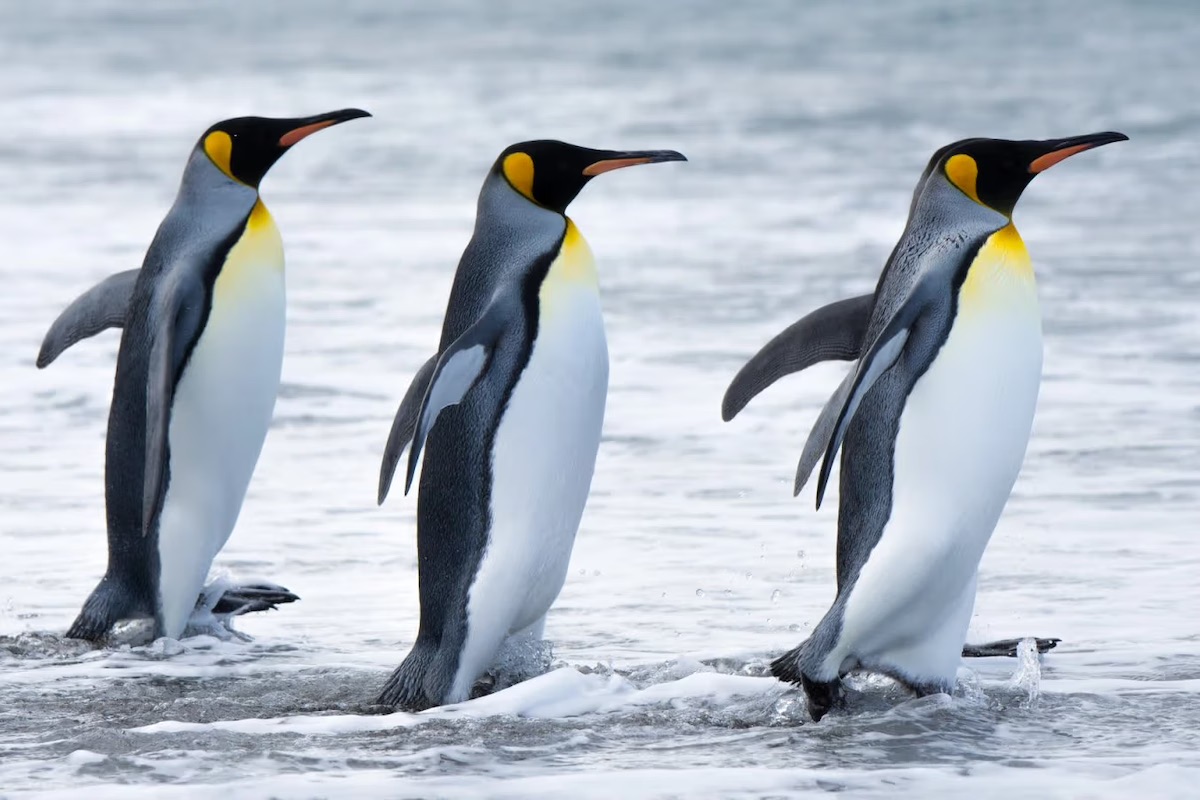
Sometimes called the “Serengeti of the South”, Salisbury Plain is a wildlife site without parallel. Several large glaciers provide a dramatic backdrop for the tens of thousands of King Penguins that nest in the tussac grass of this remarkable ecosystem. The wide beach makes for excellent walking as we visit the colony, where we are literally surrounded and delightfully outnumbered by throngs of curious, gentle penguins. Elephant seals also abound, as well as Southern Giant Petrels and the occasional wandering Gentoo Penguin. Prepare for an awe-inspiring experience.
Willis Islands
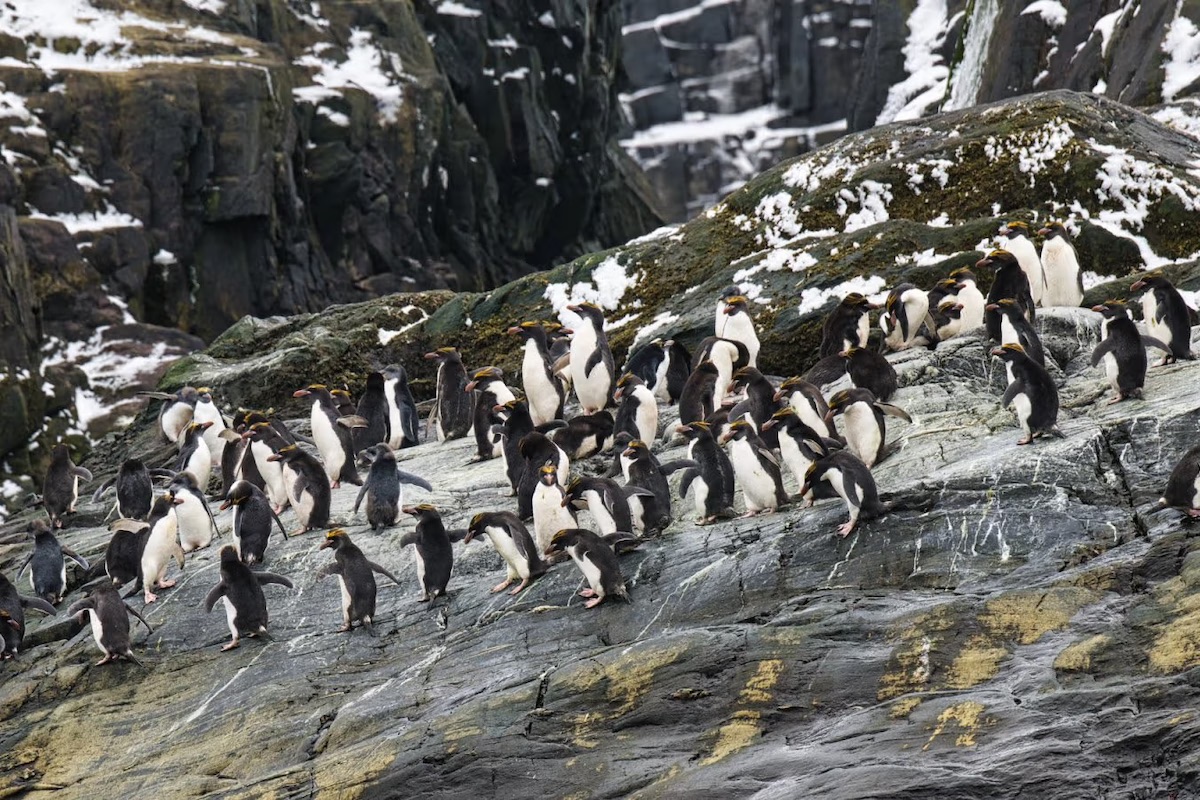
The Willis Islands form a spectacular outpost at the western extreme, rising 550 meters above the South Ocean. These steep summits covered with grasslands form an impressive sanctuary for wildlife, harboring albatross colonies and thriving populations of macaroni penguins. This remote ecosystem offers an unforgettable experience and a privileged window into one of the richest and most biodiverse seabird habitats in the world.
Grytviken
Grytviken lies within King Edward Cove, a sheltered harbor tucked between Hope Point and Hobart Rock on the western shore of Cumberland East Bay. The rusting ruins of the Grytviken whaling station are situated on a level plain at the head of the cove, backed by steep hills and mountains. Now the site of the South Georgia Museum, the station remains a focal point of interest for many visitors, as does Sir Ernest Shackleton´s grave in the nearby whaler´s cemetery and his memorial cross on Hope Point. The scenery in this area is exceptionally beautiful even by South Georgia standards: the glaciers and snow covered peaks of the Allardyce Range – Mt. Sugartop, Mt. Paget, Mt. Roots, Nordenskjöld Peak, Mt. Kling and Mt. Brooker – form a magnificent backdrop to the cove, and the views from King Edward Point in particular, must be among the finest on earth.
Godthul
Situated 9km east of Cumberland East Bay on the eastern shores of Barff Peninsula, Godthul is a 3km long inlet that lies between Cape George and Long Point. Gentoo Penguins are abundant on the tussac plateau and Light-mantled Sooty Albatrosses echo off the natural cliff amphitheater that encircles the harbor. A floating factory ship serviced by two whale catchers was stationed here each summer between 1908 and 1929. A small shore depot supporting the whaling operations was established close by the stream in the southeast corner of the harbor, and the rusting barrels, wooden shed and boats are fascinating relics of the whaling era, as is the impressive collection of whale and elephant seal bones scattered along the beach.
Fortuna Bay
A fjord 6 km in extent on the central north coast of the island, Fortuna Bay opens between Cape Best and Cape Robertson offering a spectacular panorama of glaciers and walls of ice and rock. It was here that Shackleton and his two companions descended to Whistle Cove beach in the final stage of his legendary crossing of the island. A colony of approximately 7,000 breeding pairs of king penguins extends over the plain of glacial debris in front of Glacier König, 1.5 km from the landing point, and constitutes the principal attraction of the site. Dark-mantled light-mantled albatrosses nest on the slopes of Breakwind Ridge, whose jagged silhouette contrasts with the smooth curve of the glacier. Elephant seals and Antarctic fur seals complete an exceptionally rich terrestrial fauna in the surroundings of Whistle Cove. A seal cave with a low stone wall at its entrance, visible at the bottom of the beach, recalls the presence of seal hunters who spent weeks on land under very austere conditions. The 1.5 km walk from the landing point to the penguin colony crosses the glacial plain over level terrain, with permanent views toward the route that Shackleton followed from Breakwind Ridge to the pass that leads to Stromness.
Stromness
Located at the extreme of the bay of the same name, Stromness is a cove dominated by the remains of an old whaling station that began operations in 1907. The extensive valley that extends inland follows the route that Shackleton traveled in 1916 upon completing his epic crossing, arriving exhausted at this station from the other side of the island. Each summer, hundreds of Antarctic fur seal pups congregate near the mouth of the river, while several hundred elephant seals use the ruined buildings as shelter. A small colony of penguins nests among the hills behind the station, and a few pairs of Antarctic terns breed in the gravel riverbed. The remains of the whaling station — permanently closed in the 1960-61 season — include propellers from whale catchers, masts and whale vertebrae scattered on the shore, testimony to an industry that collapsed in the 1930s due to stock depletion and falling world prices.
Cooper Bay
Cooper Bay is found at the southeast extremity of South Georgia. There is a wealth of wildlife at this site, in a spectacular setting. Fascinating volcanic rocks tower over small fjords, giving a stunning invitation for a thrilling zodiac cruise to observe wildlife from the waterfront. Watch out for Chinstrap and Macaroni Penguins.
St Andrews Bay
The surf beaten coastline at St. Andrews Bay runs north-south in a 1.86 mile (3 km) long uninterrupted sweep of fine dark sand, covered in penguins and seals and bounded in the interior by the Cook, Buxton and Heaney Glaciers. The bay hosts the biggest colony of King Penguins on South Georgia. Now in spring time, the beach is also carpeted with elephant seals. Such a large assemblage of wildlife attracts an entourage of persistent and voracious scavengers. Sheathbills dart in and around the penguin colony. Cape Petrels nest in a small number on the cliffs north of St. Andrews Bay. Leopard seals patrol the rocks at this end of the beach too, hunting for penguins along the edge of kelp beds. A few White-chinned Petrels and Light-mantled Sooty Albatrosses nest on the tussac slopes. Brown Skuas and Antarctic Terns breed on the outwash plain and scree slopes at the north end of the beach, defending their nest sites with their characteristic noise and vigor.
Drygalski Fjord
Drygalski Fjord is also located in the far south east of the island. The glaciers found in this dramatic fjord have retreated significantly in recent decades, but they still remain one of the most striking features of this coastline, particularly the Risting and Jenkins Glaciers. With a little luck, we might see the glaciers calve and witness the birth of a new iceberg from on board the ship.
The return from subantarctic waters brings us back to the South Atlantic following the same historic course that for centuries connected the Falklands with the ends of the austral world.
During our final day of navigation toward Beagle Channel, we will continue to expand our knowledge through talks by the expedition team, while we recap and relive the experiences shared on those austral islands. We will also remain attentive to sightings of seabirds and other species that may accompany us on the return.
Gradually we will begin to prepare ourselves to put the final touch on a unique and unrepeatable experience. On our final night aboard we will enjoy a special dinner in the presence of the Captain, following the traditional farewell ceremony, where we will celebrate together with all the expeditioners the memories and bonds created throughout this extraordinary adventure.
We arrive at the port of Ushuaia in the early morning and disembark after breakfast.
This expedition includes:
New inclusions (from season 2027/28):
This expedition excludes:
Optional activities from season 2027/28 (Conditions and fees apply):

All prices are subject to availability, quoted per person and expressed in USD.
Sort by