
Antarctica: Month by Month
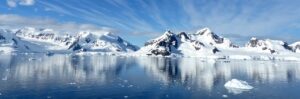
Antarctica is a once-in-a-lifetime journey, and traveling this far south is a real investment of both time and money. That’s why we want you to know how much the continent changes during its short summer, from the landscapes to the wildlife, so you can choose the moment that best matches what you hope to see.
The Early Season (Late October – November)
The Antarctic season runs from late October to March, and each month offers something different. The early season brings colder temperatures and pristine, snow-covered landscapes. Antarctica is waking up after the long, dark winter, penguins are courting and building their nests, and wildlife is arriving by the hundreds of thousands. It’s easy to picture the early explorers, 120 years ago, seeing exactly the same untouched scenery.
Most operators begin their season in November. As in October, landing sites are still free of penguin guano and crowds trampling the snow, so the landscape is at its most pristine. Prices are lower, and good deals are possible.
Summer: The High Season (December – January)
December and January are the most popular months to visit, since they coincide with most people’s holidays, and prices rise accordingly. Temperatures approach their warmest (by Antarctic standards), and the midnight sun shines almost 24 hours a day, giving you plenty of light for photography. Rookeries are fully active, with every nest occupied by busy parents feeding their fluffy chicks. In early January you can expect to see adorable grey penguin chicks, and seals and whales are also commonly spotted.
Departures in these months fill up well in advance, and higher demand pushes prices up. Booking early is therefore advisable, especially if you want to take advantage of our early booking discounts.
Late Season: Whales, Seals and More Affordable Passages (February – March)
February and March are the best months for whale watching, with Humpback, Minke and Orca among the species you may see. Whales arrive early in the season but spend the first weeks feeding, recovering the weight they lost while “holidaying” in the warmer waters where they breed and give birth. Seals are also abundant: Leopard, Weddell and Crabeater seals, along with young Elephant and Fur seal bachelors. You may still see penguin chicks in creches.
The shrinking sea ice allows ships to travel deeper south, across the Antarctic Circle, where you can enjoy tabular icebergs and different wildlife, such as Adélie penguins. Snow is scarce at many landing sites, so camping becomes more challenging and is often not offered.
As March progresses, the season winds down and you’ll see fewer and fewer ships. This is a great month if you want to avoid other vessels and are looking for a more affordable passage. By now it’s too late to see penguin chicks, temperatures are getting colder, and the first pancake ice begins to form. It’s still a great time to spot whales, and seals are abundant along the Antarctic Peninsula. With the summer wrapping up, you can feel the long, cold winter approaching, which makes it a magical time to be there.