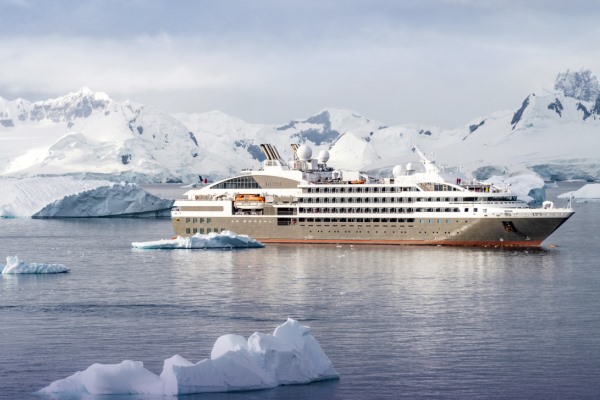
There is a kind of travel that goes beyond the journey. Beyond the landscapes, the wildlife, the landings, and the memories. A kind of travel where simply being there — on the right ship, in the right place — makes you part of something larger than yourself.
A growing number of expedition operators across Antarctica, the Arctic, and beyond are inviting their passengers to actively contribute to real scientific research while at sea. No lab coat required. No scientific background needed. Just curiosity and the willingness to look a little closer at the world around you.
From whale sightings in the Drake Passage to seabird counts in the High Arctic, the data collected by expedition passengers every season feeds research programs that scientists depend on. Programs that, without the reach of expedition ships and the eyes of their passengers, would simply not be possible.
Welcome to Citizen Science at sea.
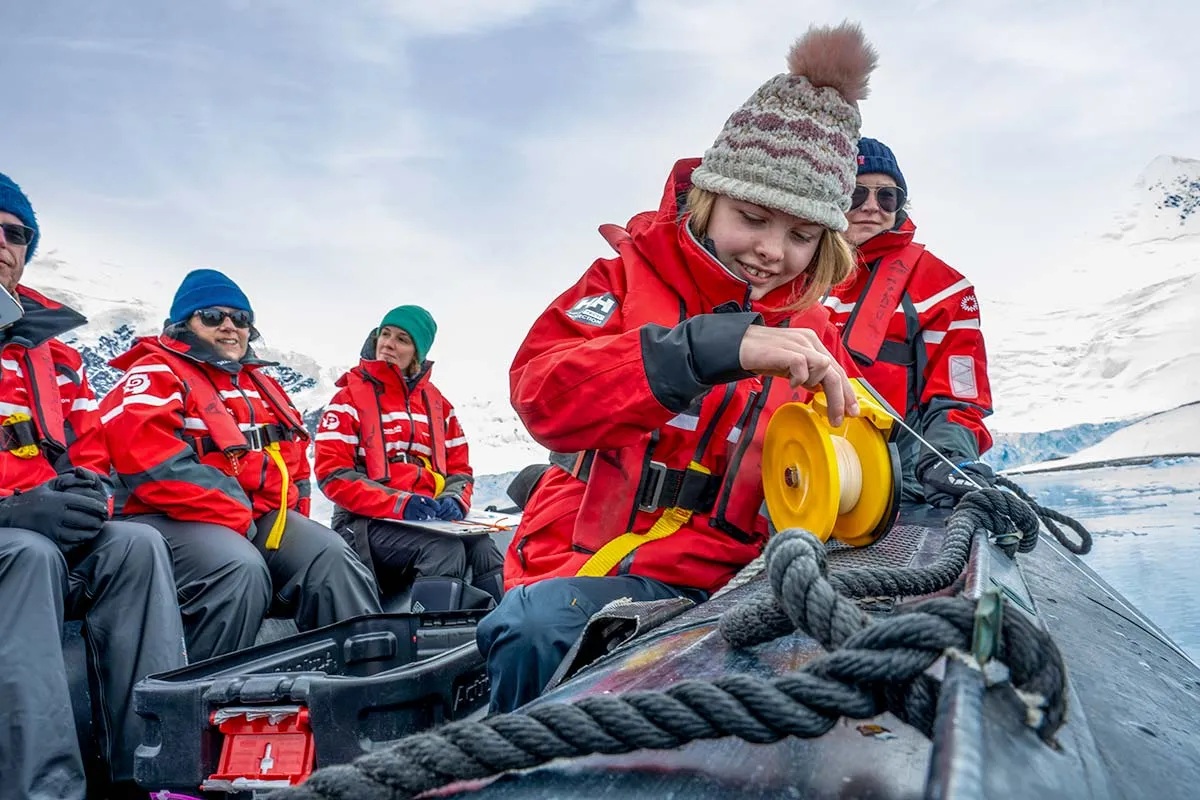

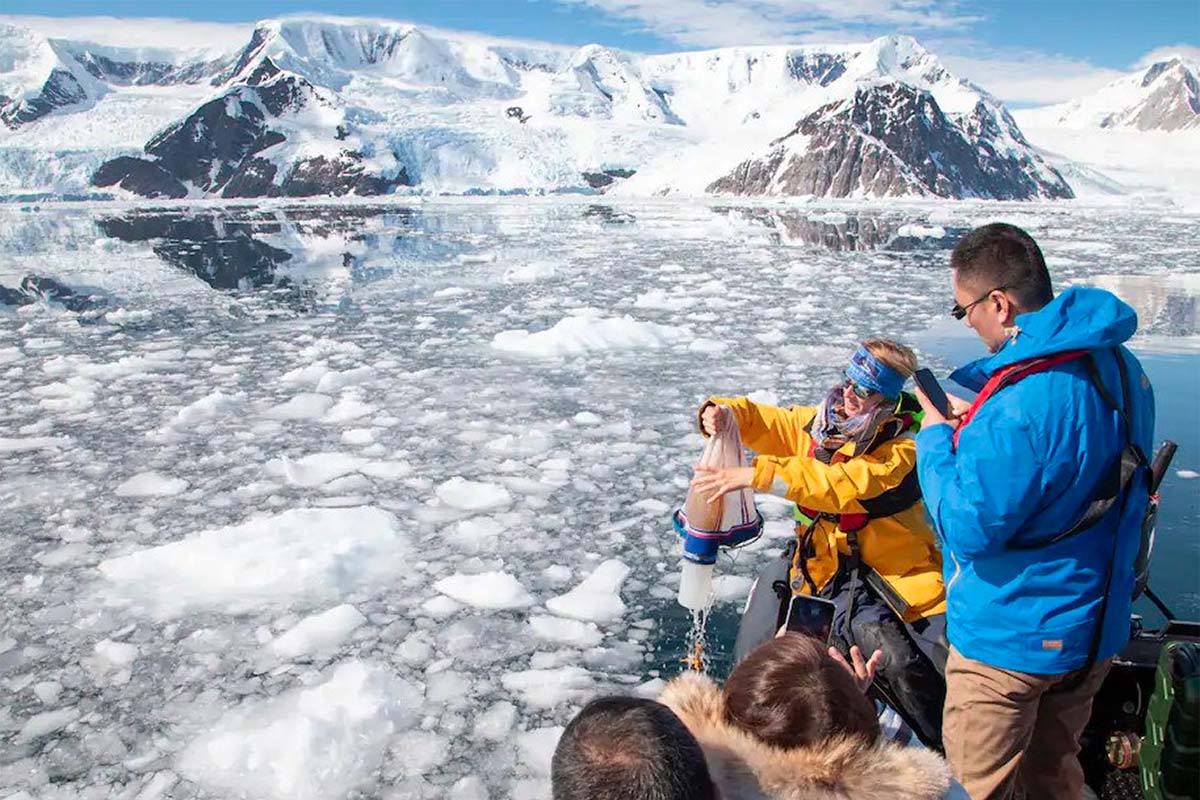
Citizen Science is the collection and analysis of data relating to the natural world by everyday people — as part of collaborative projects with professional scientists around the globe. It is not a new concept. Bird watchers have contributed to ornithological studies for over a century. Weather observers have logged atmospheric data long before satellites existed. But in the context of polar and expedition cruising, Citizen Science takes on an entirely new dimension.
On an expedition cruise, scientific participation happens almost naturally. Your ship is already in places scientists can rarely reach — remote fjords in Svalbard, uninhabited bays along the Antarctic Peninsula, or the ice-choked waters of the Weddell Sea. Your expedition team is already trained to observe. And you are already watching — the whales surfacing alongside the Zodiac, the penguin colonies blanketing the hillsides, the sea ice shifting at the horizon.
All that’s needed is a framework to turn those observations into data that actually matters. And that is exactly what Citizen Science programs on expedition ships provide.
The beauty of it is its accessibility. You do not need a scientific background, specialized equipment, or any prior experience. What you bring — presence, attention, and genuine curiosity — is precisely what makes the data valuable. A single passenger noting the position and behavior of a humpback whale contributes to a global database that researchers use to track migration patterns, population health, and the long-term effects of climate change on marine mammals. That is not a small thing.
The organizations benefiting from passenger-collected data include NASA Globe Observer, the Scripps Institution of Oceanography, Cornell Lab of Ornithology, Happywhale, and Woods Hole Oceanographic Institution — among many others.
On board, a dedicated Citizen Science Coordinator guides passengers through the process — from whale identification and seabird counts to marine surveys and cloud pattern tracking. Activities are relaxed and informal, woven naturally into the rhythm of the expedition.
Many vessels also carry a small onboard laboratory, open to all passengers, where collected data is analyzed and shared with the group. The closest most people will ever get to being a working scientist in the field — and one of the most unexpectedly rewarding experiences of any voyage.
Scientists cannot be everywhere. The polar regions are vast, expensive to reach, and open for research only during narrow seasonal windows. Expedition ships, however, are already there — season after season, covering thousands of nautical miles across some of the most data-scarce environments on Earth.
The Polar Citizen Science Collective, founded in 2017, unites operators, scientists, guides, and travelers in one shared mission: turn every voyage into a contribution. Travel deeper. Connect further. Give back to the regions that gave you so much.